How Long Does It Take Solar Lights to Charge?
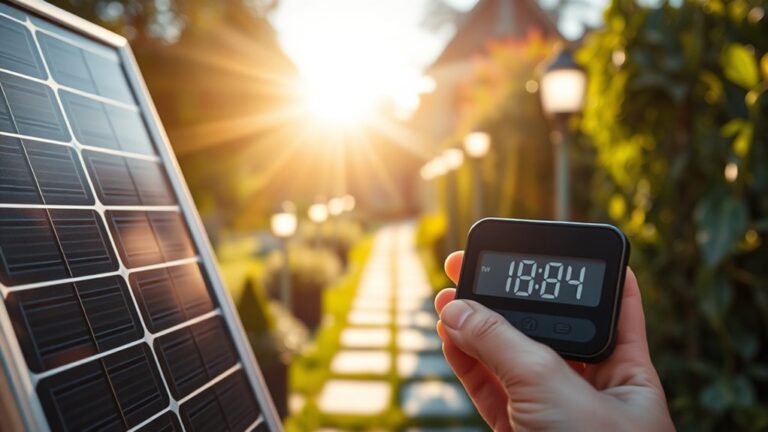
You can usually charge your solar lights fully in 6 to 8 hours of direct sunlight. The charging time depends a lot on the size of the battery—smaller batteries take less time, while larger ones need more.
Keep in mind, cloudy weather, shade, and lower-quality panels can slow down the charging process. So, if you want your solar lights to shine bright, placing them in direct sun is key.
Also, make sure to keep the solar panels clean for the best results.
If you’re curious about how sunlight, different battery types, and weather conditions affect the charging time, there’s plenty more useful info ahead!
Key Takeaways
- Solar lights typically require 6 to 8 hours of direct sunlight to fully charge.
- Keep in mind, larger battery capacities will take longer to charge fully.
- If it’s cloudy, shaded, or rainy, the charging process slows down quite a bit.
- Using high-quality solar panels and making sure they get plenty of sunlight can really boost charging efficiency.
- Also, placing the panels properly and cleaning them regularly helps keep the charging time faster.
How Long Do Solar Lights Take to Charge?
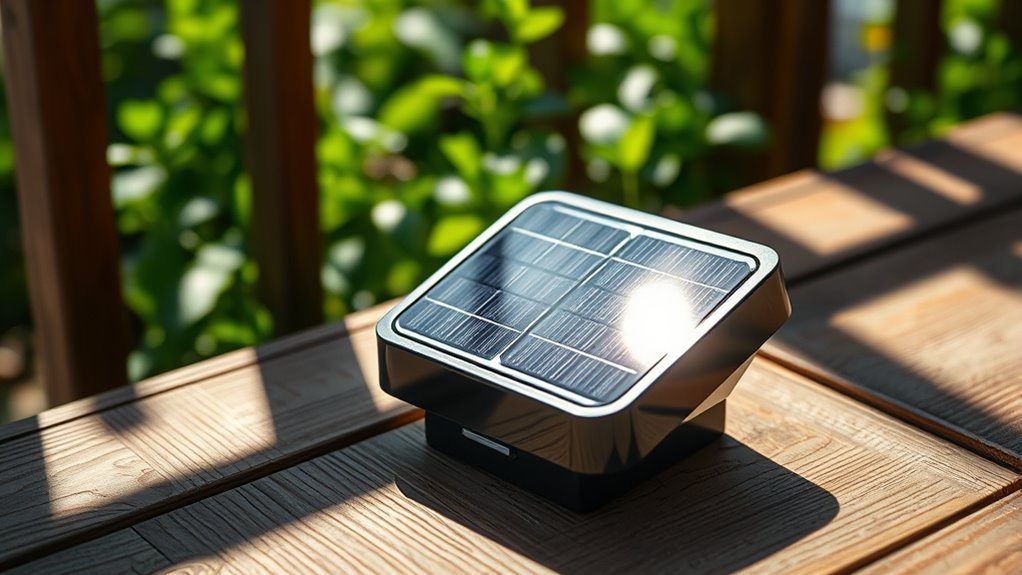
Although charging times can vary, solar lights typically take between 6 to 8 hours of direct sunlight to fully charge. When you place your solar lights outside, the solar panel converts sunlight into energy stored in the battery.
If you get enough sunlight during the day, your lights will run throughout the night. Keep in mind that partial sunlight or shade can extend charging time.
Also, the battery’s capacity influences how long charging takes—larger batteries need more time to fill up. To maximize efficiency, position your solar lights where they receive the most sunlight during peak hours.
How Sunlight and Solar Panel Quality Affect Charging
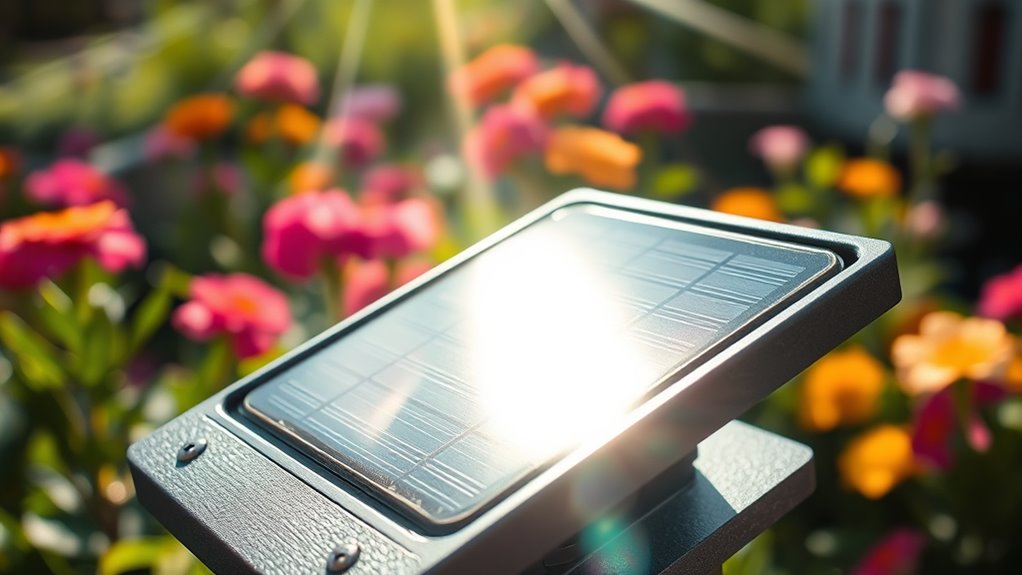
The amount and intensity of sunlight your solar lights receive play a crucial role in how quickly they charge. When your lights get direct, strong sunlight, the solar panels convert more energy, speeding up the charging process.
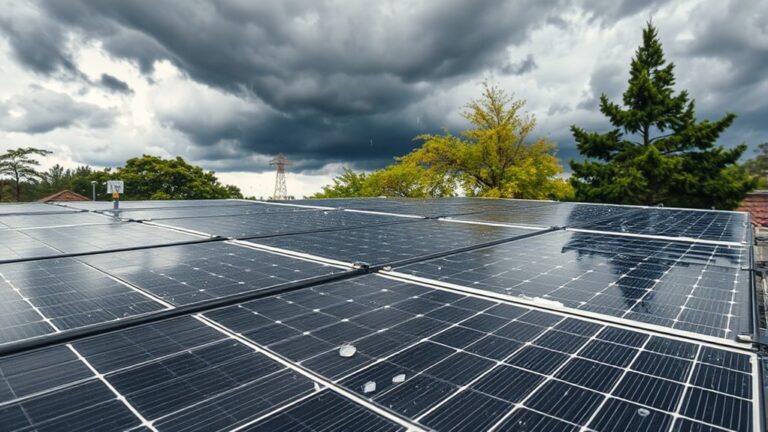
On cloudy or shaded days, the panels absorb less light, so charging takes longer. Beyond sunlight, the quality of the solar panel itself matters.
Cloudy or shaded conditions reduce light absorption, making panel quality essential for efficient charging.
High-efficiency panels capture sunlight more effectively, allowing your lights to charge faster even with limited sun exposure. Cheaper or lower-quality panels may not convert sunlight efficiently, resulting in slower charging times.
To guarantee your solar lights charge promptly, place them in spots with maximum sun exposure and choose products with reputable, efficient solar panels. That way, you get reliable performance day after day.
Why Solar Light Battery Size Changes Charging Time
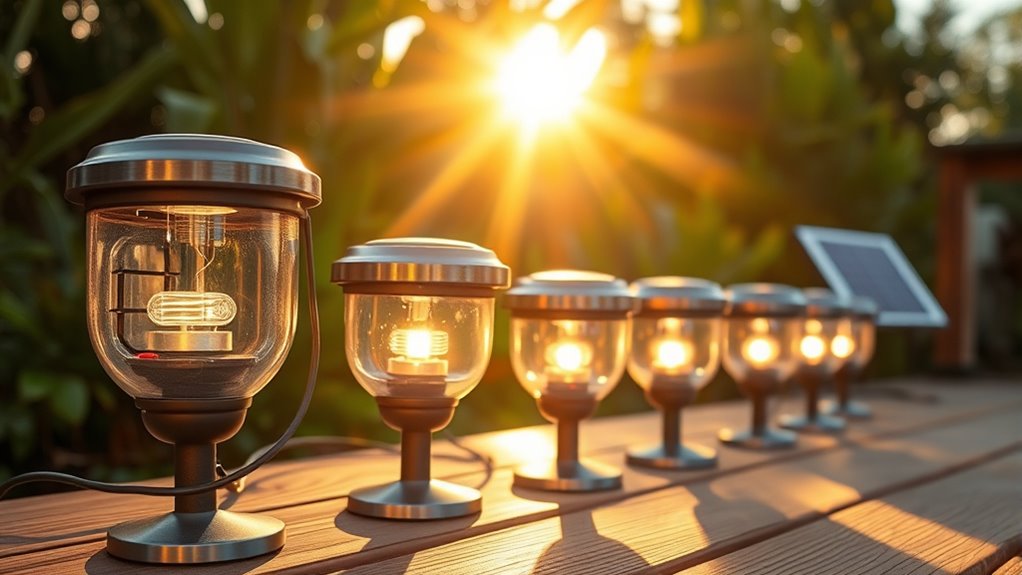
Sunlight and panel quality set the stage for how quickly your solar lights charge, but the battery size directly impacts the actual charging time.
Larger batteries hold more energy, so they take longer to fully charge. Smaller batteries charge faster but might not power the light as long.
When you choose solar lights, consider the battery capacity relative to your lighting needs.
| Battery Size (mAh) | Approximate Charging Time (Hours) |
|---|---|
| 600 | 4-6 |
| 1200 | 8-10 |
| 1800 | 12-15 |
| 2400 | 15-20 |
This table shows how bigger batteries increase charging time. It helps you pick the right balance for your setup.
How Weather Affects Solar Light Charging
Because weather conditions vary, they play a significant role in how quickly your solar lights charge. On sunny days, your solar panels soak up ample sunlight, allowing the batteries to charge efficiently and fully, often within 6 to 8 hours.
However, cloudy or overcast weather diminishes sunlight intensity, slowing down the charging process and extending the time needed for a full charge. Rainy or snowy conditions can also block sunlight, further hindering charging speed.
Additionally, colder temperatures may reduce battery efficiency, causing slower charging and shorter light duration at night. Understanding how weather impacts your solar lights helps you anticipate their performance.
It also ensures you position them where they receive the most consistent sunlight possible, even on less-than-ideal days.
Tips to Speed Up Charging and Extend Light Use
To speed up charging and get the most from your solar lights, make sure they’re placed in direct sunlight without any obstructions.
Use energy-efficient bulbs to reduce power consumption and extend light use.
Also, keep the solar panels clean by wiping off dust and debris regularly to maintain peak performance.
Optimize Sunlight Exposure
If you want your solar lights to charge faster and last longer, positioning them where they receive maximum direct sunlight is essential. Place your lights in open areas free from shade caused by trees, buildings, or other obstacles.
Even a small amount of shade can notably reduce charging efficiency. Aim for south-facing spots if you’re in the northern hemisphere, as these get the most consistent sunlight throughout the day.
Clean the solar panels regularly to remove dust or debris that might block sunlight. Also, adjust the angle of the panels to match the sun’s path, especially during different seasons.
Use Energy-Efficient Bulbs
When you choose energy-efficient bulbs for your solar lights, you’ll speed up charging time and get longer illumination each night. These bulbs require less power, meaning your solar panel doesn’t have to work as hard during the day.
As a result, your lights stay bright longer after sunset, maximizing their usefulness.
Here’s a quick comparison of common bulb types:
| Bulb Type | Power Usage (Watts) |
|---|---|
| LED | 1-3 |
| CFL | 5-15 |
| Incandescent | 40-100 |
| Halogen | 20-50 |
LED bulbs are your best bet—they use the least power and last the longest. Switching to LEDs means your solar lights charge faster and shine brighter, making your setup more efficient overall.
Maintain Solar Panel Cleanliness
Although solar panels work hard to capture sunlight, they can’t perform well if dirt, dust, or debris cover their surface. You need to clean your solar panels regularly to guarantee they absorb the maximum amount of sunlight.
Use a soft cloth or sponge with mild soap and water to gently wipe away grime. Avoid abrasive materials that might scratch the panel.
Cleaning your panels every few weeks, especially after storms or pollen seasons, helps maintain peak efficiency. When your panels stay clean, they charge faster, so your solar lights stay brighter and last longer through the night.
Understanding Solar Energy Storage in Solar Lights
To get the most from your solar lights, you need to understand how they store energy. Different battery types affect how much power your lights can hold, and the energy conversion process determines how efficiently sunlight turns into usable energy.
Knowing these factors helps you choose and maintain solar lights that charge faster and last longer. It’s really about making the right choices for your specific needs.
When you get familiar with these details, you’ll get better performance and more reliable lighting. Plus, you’ll save time and money in the long run!
Solar Battery Types
Understanding the type of battery your solar light uses can considerably impact how efficiently it stores energy and how long it lasts throughout the night. Different batteries have unique characteristics that influence charging time, capacity, and lifespan.
When choosing or evaluating solar lights, you’ll come across several common battery types:
- Nickel-Cadmium (NiCd): Durable but less eco-friendly and lower capacity.
- Nickel-Metal Hydride (NiMH): Higher capacity than NiCd, with less memory effect.
- Lithium-Ion (Li-ion): Lightweight, high energy density, and faster charging.
- Lithium Iron Phosphate (LiFePO4): Longer lifespan and enhanced safety.
- Lead-Acid: Bulkier, typically used in larger solar setups.
Knowing these battery types helps you pick solar lights that best suit your charging needs and nightly usage. It’s really about finding the right fit for how you plan to use your solar setup.
Energy Conversion Process
When sunlight hits the solar panel, it converts light into electrical energy through a process called the photovoltaic effect. This energy then powers the solar light or charges its rechargeable battery.
Understanding this process helps you appreciate how efficiently your solar light captures and stores energy.
| Step | Description | Result |
|---|---|---|
| Light Absorption | Solar panel absorbs sunlight | Photons excite electrons |
| Energy Conversion | Photons create electrical current | Direct current (DC) output |
| Energy Storage | Current charges the battery | Power stored for nighttime |
Storage Capacity Factors
Although solar panels capture sunlight efficiently, the amount of energy your solar light can store depends largely on its battery capacity. The battery’s size and type play crucial roles in determining how long your light stays illuminated after charging.
You’ll want to consider these storage capacity factors to get the best performance:
- Battery type (NiMH, Li-ion, or lead-acid) impacts energy retention and lifespan.
- Battery capacity (measured in mAh or Ah) dictates how much charge it can hold.
- Charging rate affects how quickly the battery fills up during sunlight exposure.
- Temperature sensitivity influences battery efficiency and longevity.
- Battery age and condition can reduce storage capacity over time.
Understanding these factors helps you choose solar lights that meet your needs and charge efficiently. It’s all about making sure you get the most out of your solar setup!
Frequently Asked Questions
Can Solar Lights Work During the Night Without Charging?
No, solar lights can’t work at night without charging first. They rely on sunlight to store energy in their batteries during the day.
Are Solar Lights Waterproof or Weather-Resistant?
You’ll find solar lights waterproof, weather-resistant, and built tough. They withstand rain, snow, and wind, so you don’t worry about damage.
Just place them outside, and they’ll keep shining through all kinds of weather. No need to stress about the elements messing with your lights!
How Often Should Solar Light Batteries Be Replaced?
You should replace solar light batteries every 1 to 2 years, depending on usage and weather conditions.
If your lights dim or don’t last through the night, it’s time to swap the batteries for new ones.
Keeping an eye on their performance helps you know when it’s the right moment to change them.
Can Solar Lights Be Installed Indoors or in Shaded Areas?
You can’t install solar lights indoors or in shaded areas effectively because they need direct sunlight to charge. Without enough light, the batteries won’t store enough energy.
And if that happens, the lights won’t work properly at night. So, it’s really important to place them where they can catch plenty of sun during the day.
Do Solar Lights Pose Any Safety Hazards?
You don’t face major safety hazards with solar lights; over 90% use low-voltage batteries, which really cuts down fire risks.
Just be sure to avoid water damage and faulty wiring. Doing that will keep your solar lights safe and reliable for years.
Conclusion
Think of your solar lights like a garden—they need the right amount of sunlight, care, and time to bloom fully. Just as flowers don’t rush their growth, your solar lights take patience to charge well. Factors like sunlight, battery size, and weather all play a role.
By nurturing them with good placement and care, you’ll enjoy their glow longer. Remember, just like tending a garden, consistent attention turns solar energy into lasting light. With the right conditions, your solar lights can charge efficiently and shine brightly throughout the night.
So, when you’re wondering how long it takes solar lights to charge, keep in mind it varies but patience pays off. Give them enough sunlight exposure, protect them from harsh weather, and choose quality batteries. Doing this will help your solar lights perform at their best, providing sustainable and reliable illumination for your outdoor spaces.