Can You Walk on Solar Panels?
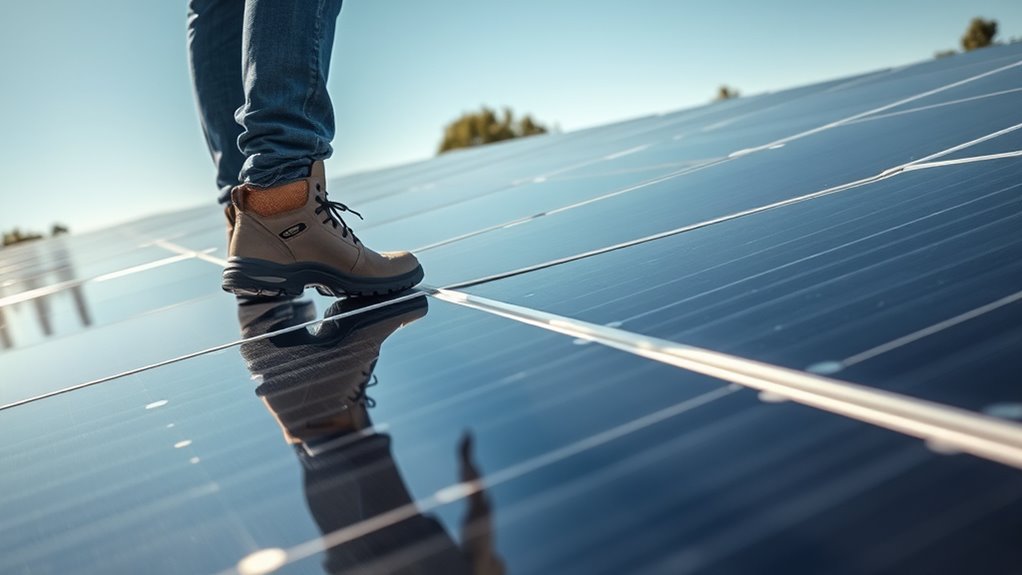
You shouldn’t walk on solar panels because they’re fragile and designed to capture sunlight, not support your weight. Stepping on them risks cracking the glass, damaging cells, voiding warranties, or causing electrical hazards.
Walking on solar panels can cause serious damage, which is why it’s best to avoid it whenever possible.
If you must walk on them, only do so gently on frame edges or designated walkways. Spread your weight evenly and wear soft-soled shoes to minimize the risk.
There are safer ways to maintain your system without stepping on the panels, and knowing these can help protect both you and your investment.
Key Takeaways
- Walking directly on solar panels is generally not recommended because it can damage them and reduce their efficiency.
- If you really need to step on them, try to walk only on the frame edges or any designated walkways to avoid cracking the glass surface.
- Always spread your weight evenly and wear soft-soled shoes to lessen the pressure on the panels.
- Keep in mind, wet or dusty panels can be slippery, so only walk on surfaces that are dry and clean.
- It’s a good idea to check the manufacturer’s guidelines before you step on anything.
- And whenever possible, consider using telescoping tools or hiring professionals to do maintenance safely.
Is It Safe to Walk on Solar Panels?
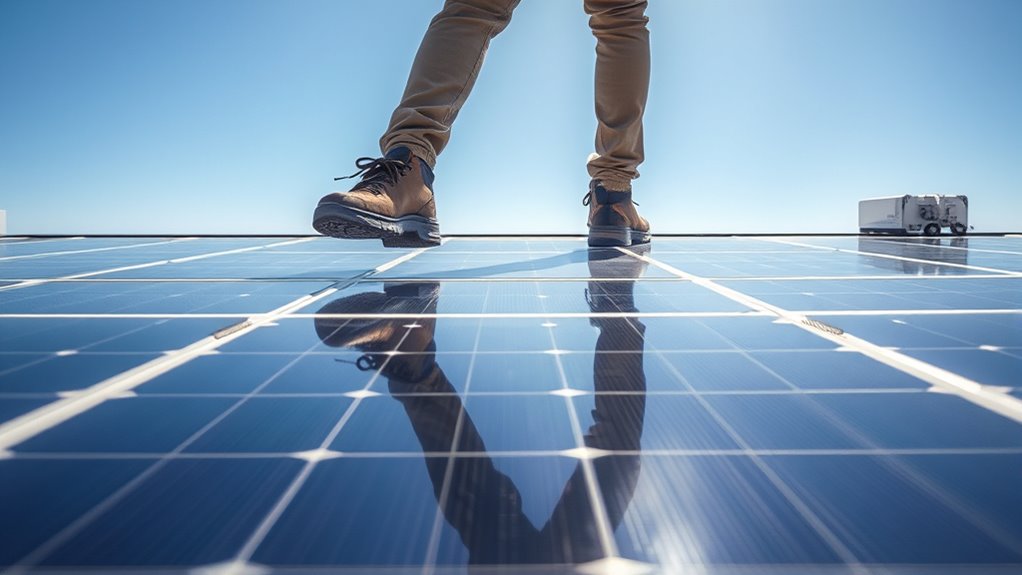
How safe is it to walk on solar panels? Generally, it’s not recommended because they’re designed to capture sunlight, not support your weight.
If you must step on them, you need to be careful and distribute your weight evenly. You should walk on the frame edges or designated walkways, if available, rather than directly on the panels.
Avoid sharp or sudden movements to reduce stress on the glass surface. Some panels are built tougher and can bear limited weight, but most aren’t meant for frequent foot traffic.
Always check the manufacturer’s guidelines before stepping on them. By handling panels gently and cautiously, you can avoid causing damage while maintaining your safety.
But overall, it’s best to minimize walking on solar panels whenever possible.
What Risks Does Walking on Solar Panels Pose?
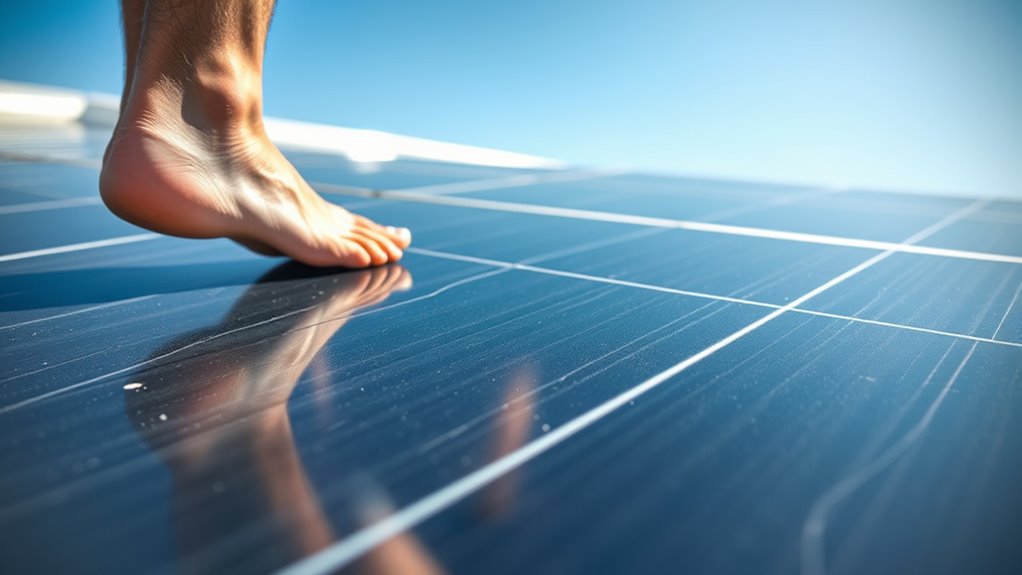
While walking on solar panels might seem harmless if done carefully, it actually carries several risks you should be aware of. You might think you’re just stepping lightly, but these panels are fragile and not designed to bear your weight.
Walking on solar panels may seem safe, but their fragility means they’re not built to support your weight.
Here are four key risks you face:
- Cracking or breaking the panels, which can reduce efficiency or cause costly repairs.
- Slipping hazards, since panels can be slippery, especially when wet or dusty.
- Electrical shock risk, as damaged panels might expose live wiring.
- Voiding warranties, since many manufacturers don’t cover damage caused by walking on panels.
Understanding these dangers helps you protect your investment and stay safe. So, it’s best to avoid walking on them whenever possible.
How Solar Panel Design Affects Your Safety
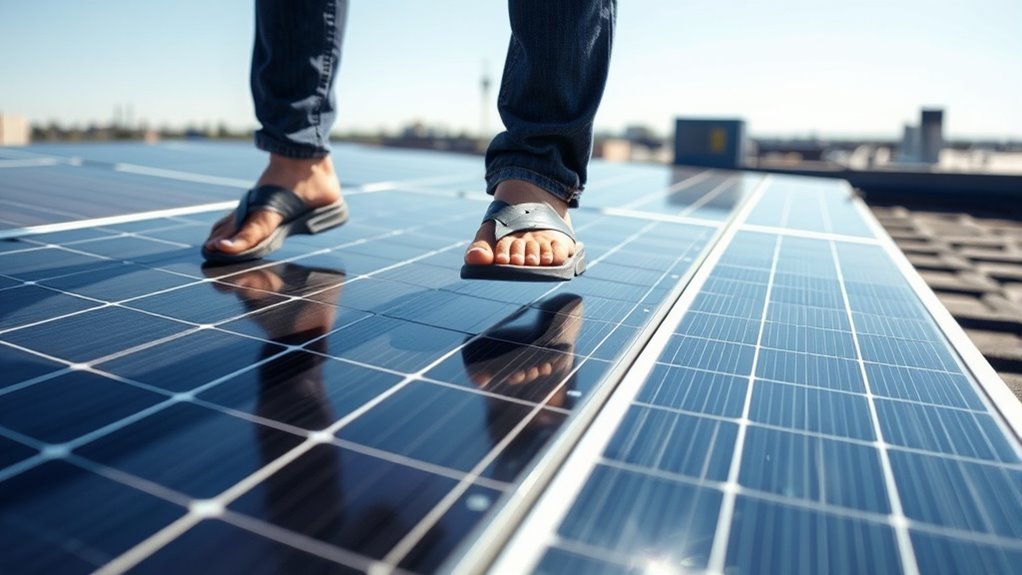
You need to understand how the panel’s material strength impacts its ability to hold weight safely. The frame and mounting support play a vital role in preventing damage when you step on the panels.
Plus, how your weight distributes across the surface can make all the difference in avoiding cracks or breaks. It’s not just about the panel itself, but also how everything works together to keep you safe.
Panel Material Strength
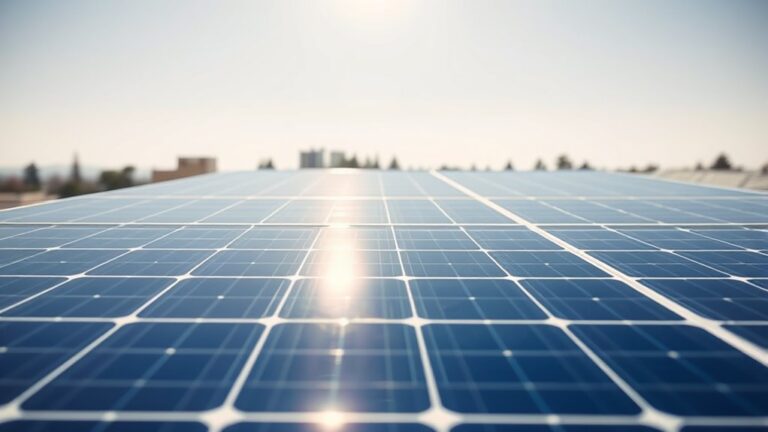
Because solar panels are designed primarily for energy capture rather than foot traffic, their material strength plays a crucial role in your safety if you ever need to walk on them. The panels consist of delicate components like glass, silicon cells, and encapsulants, which aren’t made to withstand heavy pressure.
Here’s what you should consider:
- Glass Thickness – Thicker tempered glass resists cracking better but still isn’t meant for regular walking.
- Cell Fragility – Solar cells are brittle; stepping on them can cause invisible damage.
- Encapsulant Quality – This layer protects cells but doesn’t add much structural support.
- Panel Flexibility – Some panels flex under weight, increasing breakage risk.
Frame and Mounting Support
Although solar panels might look sturdy, their frame and mounting systems play a crucial role in supporting their weight and maintaining stability when you step on them. The frame, usually made of aluminum, provides structural integrity, keeping the panel flat and secure.
Without a strong frame, the glass and cells inside could crack under pressure. The mounting system fastens the panel to your roof or ground, ensuring it stays put even under your weight or harsh weather.
If the mounts aren’t properly installed or designed for load-bearing, the panel can shift or break when walked on. So, before you decide to step on a solar panel, check that its frame and mounting are engineered to handle extra stress safely.
Weight Distribution Considerations
How does the design of a solar panel impact your safety when walking on it? It all comes down to how your weight spreads across the surface. Solar panels aren’t made to hold concentrated pressure in one spot, so understanding weight distribution is key.
Here’s what you should keep in mind:
- Avoid standing in the center—panels are weakest there.
- Step gently and spread your weight by standing on the frame edges when possible.
- Use protective footwear with soft soles to reduce pressure points.
- Distribute your weight evenly if you must move across multiple panels.
When and How to Walk on Solar Panels Safely
If you need to walk on solar panels, you must know the right time and techniques to avoid damage. First, choose a dry day when panels aren’t slippery or fragile due to extreme heat.
Walking on solar panels requires proper timing and techniques to prevent damage.
Walk only when necessary, such as during maintenance. Step gently on the frame or the reinforced areas designed to hold weight, avoiding the glass surface.
Keep your weight evenly distributed by wearing soft-soled shoes and stepping carefully to prevent cracks. Use a sturdy ladder or scaffolding to access panels safely, and never rush.
If you must cross multiple panels, try to spread your weight across several points, minimizing pressure on any single spot. Following these steps helps protect your investment and keeps your solar system efficient.
Alternatives to Walking on Solar Panels
Why risk damaging your solar panels by walking on them when there are safer options? You can protect your investment while keeping your panels in top shape by choosing these alternatives:
- Use a telescoping cleaning tool – Reach your panels from the ground without stepping on them. It’s an easy way to keep things clean without the risk.
- Install a maintenance walkway – Some roofs allow for specially designed paths that minimize panel contact. This makes accessing your panels much safer and simpler.
- Hire professionals – Experts have the right gear and experience to service your panels safely. Letting them handle it means less worry for you.
- Monitor remotely – Use monitoring systems to spot issues early, reducing the need for physical inspections. This way, you catch problems before they get serious.
Maintaining Solar Panels Safely
Though maintaining solar panels may seem straightforward, doing so safely requires careful planning and the right techniques. First, always turn off the solar system before cleaning or inspecting to avoid electrical hazards.
Maintaining solar panels is simple but demands safety precautions and proper preparation to prevent electrical risks.
Use a sturdy ladder and wear non-slip shoes to secure your footing. Avoid stepping directly on the panels, as they can crack under pressure. Instead, walk on the roof’s frame or designated walkways if available.
Use soft brushes or sponges with mild soap and water to clean dirt and debris gently. Never use harsh chemicals or abrasive tools that could damage the surface.
If you’re unsure or the roof is steep, hire professionals trained in safe solar panel maintenance to protect both your panels and yourself. It’s really better to be safe than sorry!
Frequently Asked Questions
How Long Do Solar Panels Typically Last?
You can typically expect solar panels to last around 25 to 30 years. They gradually lose efficiency over time, but with proper care, they’ll keep producing energy effectively for decades.
That means you’ll be saving money on electricity for a long time. It’s a smart investment that just keeps giving back!
Do Solar Panels Work in Cloudy Weather?
You might be surprised, but yes, your solar panels still work on cloudy days! They generate less energy, but don’t stop completely.
Can Solar Panels Increase Home Value?
Yes, installing solar panels can boost your home’s value by lowering energy costs and appealing to eco-conscious buyers.
You’ll attract more interest, and buyers often see solar as a long-term savings investment. It’s a win-win!
How Do Solar Panels Convert Sunlight to Electricity?
You see sunlight hitting panels, electrons moving, and current flowing. Solar panels convert sunlight to electricity by exciting electrons in silicon cells.
This creates a flow of electric charge that powers your home and devices efficiently and cleanly. It’s a smart way to use the sun’s energy without pollution or noise.
What Is the Average Cost of Installing Solar Panels?
You’ll usually pay between $15,000 and $25,000 to install solar panels, depending on your system size and location.
Incentives and tax credits can lower costs, so it’s worth checking local programs before you decide. They might save you more than you expect!
Conclusion
Walking on solar panels isn’t safe or smart. Stepping softly and staying steady can still stress the sturdy surfaces, risking cracks and costly damage. Solar setups are specially structured for sunlight, not your steps.
Instead, seek safer solutions like using ladders or professional pros for panel maintenance. These options help keep your system intact without putting unwanted pressure on the panels.
By being cautious and choosing care over chance, you’ll protect your panels’ power and prolong their performance. Taking care not to walk on solar panels ensures your solar system stays strong and shining for years. Remember, proper maintenance is key to keeping your solar energy efficient and your investment worthwhile.