How Do Solar Panels Work in Snow?
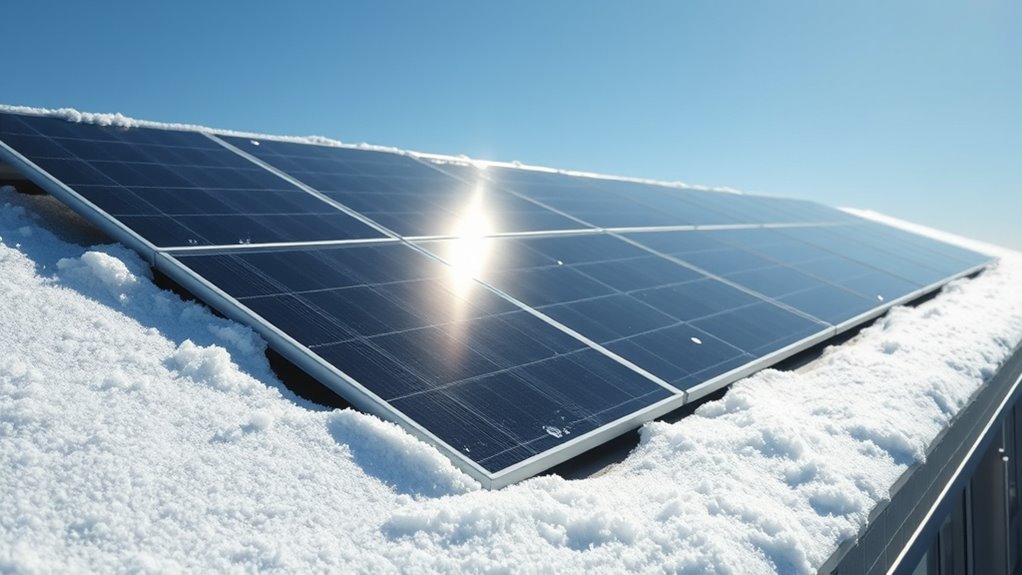
You can depend on your solar panels to generate power even when snow is present. Snow may temporarily reduce output by covering the panels, but partial exposure and reflected light still allow energy production.
The panels’ angled design helps snow slide off naturally, while heat absorption speeds melting. Proper maintenance and safe snow removal guarantee they stay efficient and undamaged.
Keep exploring to discover tips on maximizing your solar power during snowy weather. With a little care, your solar panels can keep working effectively no matter the season!
Key Takeaways
- Snow partially covering panels reduces energy production, but the exposed areas still generate some electricity during winter. So, even if your panels aren’t fully clear, they’re still working for you.
- The tilt of the panels and their smooth surfaces help snow slide off naturally. This means less shading for longer periods and less loss in efficiency overall.
- Plus, sunlight reflected off the surrounding snow can actually give a little boost to power generation. So, partial coverage isn’t always a total loss.
- The panels also absorb heat, which helps melt the snow over time. This keeps energy output up and stops long-term blockages from forming.
- When you do need to clear snow, using gentle tools and choosing the right time is key. This way, you protect your panels and get your system back up and running sooner.
How Snow Impacts Solar Panel Energy Production
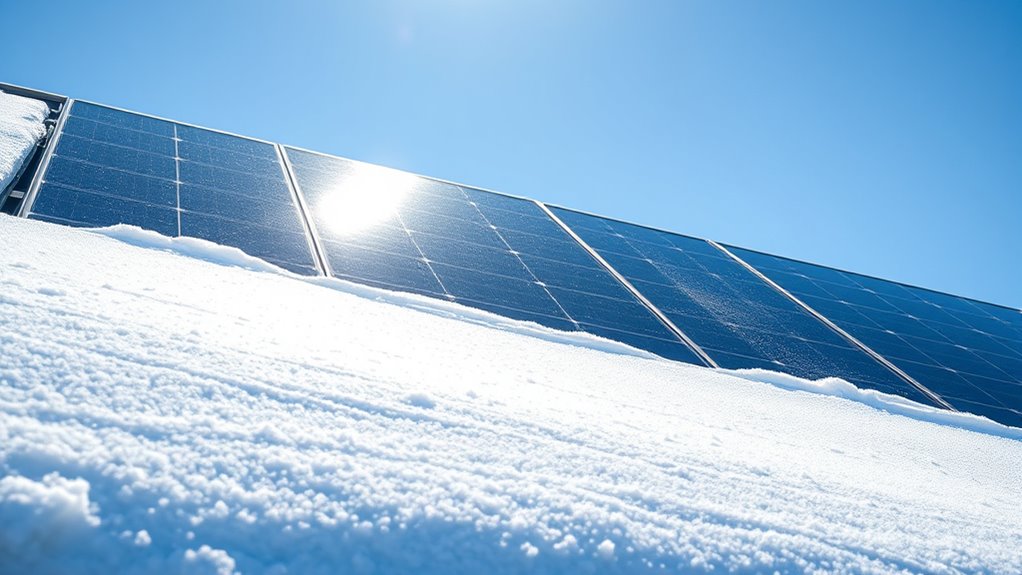
Although snow can cover your solar panels and block sunlight, it doesn’t always mean a significant drop in energy production. You might notice that a thin layer of snow reduces output, but panels often shed snow quickly due to their smooth surface and angle.
Also, solar panels can still generate some electricity from sunlight reflecting off the snow around them. However, if snow accumulates heavily and stays for days, your panels’ efficiency will decrease more noticeably.
You should regularly check your panels during snowy weather to confirm they’re not buried under thick snow. Taking simple steps, like gently brushing off excess snow, can help maintain your system’s performance during winter months without damaging the panels.
How Solar Panels Produce Power Even When Covered by Snow
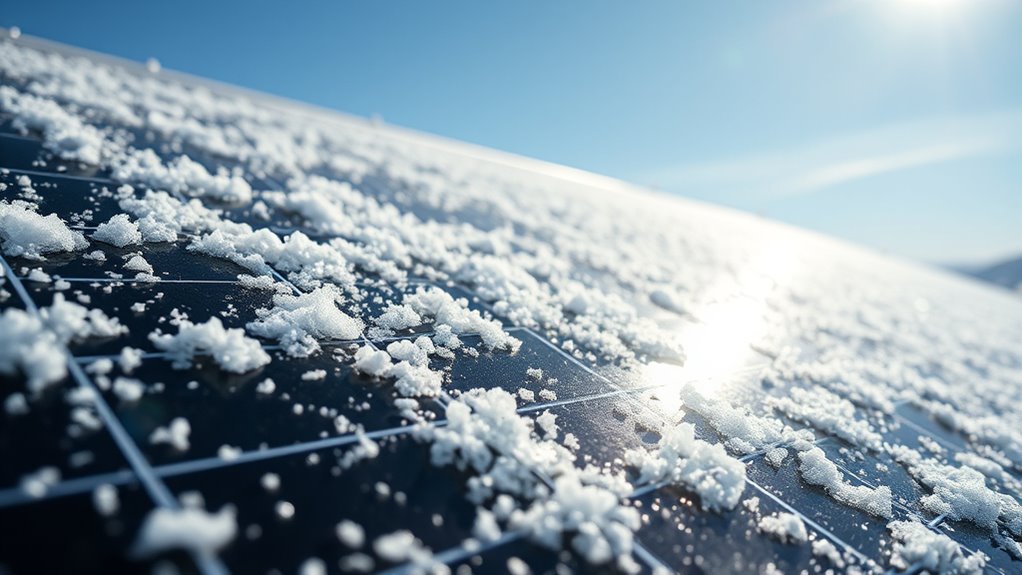
Even when snow partially covers your solar panels, they can still produce power. Snow rarely blankets the panels completely, so sunlight can reach the exposed areas.
Also, solar cells generate electricity from visible light. That means even diffused light coming through snow can create energy. Plus, panels absorb heat from the sun, which helps melt the snow and get them back to full functionality.
Here’s a quick look at how snow coverage impacts power generation:
| Snow Coverage | Light Penetration | Power Output |
|---|---|---|
| None | Full | 100% |
| 25% | High | 75-85% |
| 50% | Moderate | 40-60% |
| 75% | Low | 10-30% |
| 100% | Minimal | Near 0% |
You’ll see that even with partial coverage, your panels can still create some power.
How Solar Panels Are Designed to Shed Snow and Stay Efficient
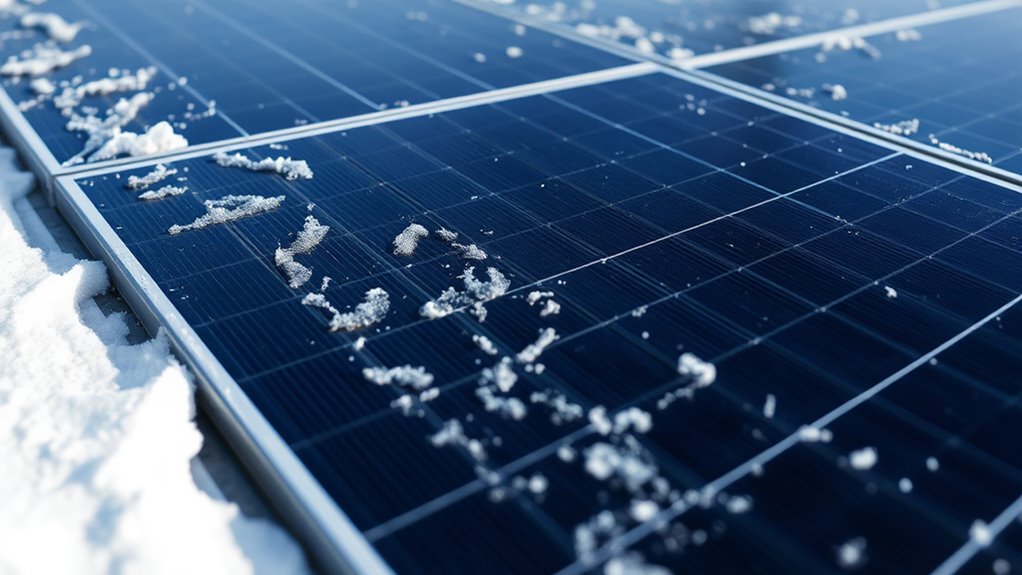
Because solar panels are installed at an angle, they naturally encourage snow to slide off rather than accumulate. This tilt helps prevent snow from building up and blocking sunlight.
Plus, many panels have smooth surfaces and anti-reflective coatings that reduce snow sticking around. This makes it way easier for snow to slide away.
Some solar panel systems even use materials that soak up heat from the sun. That little bit of warmth speeds up snow melting without wasting energy.
The frames and mounts are built to hold this angled setup securely, even when there’s heavy snow.
How to Safely Clear Snow From Your Solar Panels
You’ll want the right tools, like a soft snow rake, to clear your panels without causing damage. Make sure to use gentle techniques to avoid scratching the surface or dislodging wires.
Timing matters too—clearing snow during daylight hours helps your panels start working again quickly. It’s all about being careful and smart with your approach.
Best Tools For Snow
How can you safely remove snow from your solar panels without causing damage? Choosing the right tools is key to protecting your panels while clearing snow effectively.
Avoid anything abrasive or heavy that could scratch or break the surface. Instead, use tools designed to be gentle yet efficient.
Here are three of the best tools to help you clear snow safely:
- Soft-bristled snow brush: Lightweight and non-abrasive, perfect for brushing snow off without scratching.
- Roof rake with a foam head: Allows you to reach panels from the ground, minimizing risk and pressure on the panels.
- Plastic shovel: Use carefully to remove heavy snow buildup, but only if necessary and with gentle motions.
Using these tools helps keep your panels safe and functioning optimally during snowy weather.
Safe Cleaning Techniques
When should you clear snow from your solar panels to protect their efficiency and longevity? You want to remove snow carefully to avoid damaging the panels or voiding your warranty. Use a soft-bristled broom or a specially designed roof rake with a foam edge to gently sweep snow off.
Avoid using metal or sharp tools that can scratch the glass. Never climb onto your roof if it’s icy or steep; instead, use a stable ladder and take proper safety precautions. If the snow layer is thin, remember that panels often generate enough heat to melt it naturally.
Clearing only heavy, persistent snow reduces risks. Always follow the manufacturer’s cleaning guidelines and consider professional help for hard-to-reach installations. Safety and care go hand in hand.
Timing Your Snow Removal
Although it might be tempting to clear snow off your solar panels immediately after a snowfall, choosing the right time guarantees safety and efficiency. You want to avoid rushing and risking damage or injury.
Wait until the snow softens slightly, usually mid-morning, when the sun’s warmth makes removal easier and safer. Also, consider weather forecasts—clearing panels just before another snowfall wastes effort.
Keep these tips in mind:
- Remove snow when it’s light and fluffy rather than icy or packed.
- Use a soft brush or roof rake with an extension handle to avoid climbing.
- Don’t clear panels during freezing temperatures or icy conditions to prevent slips.
Timing your snow removal properly ensures your solar panels perform at their best without compromising your safety.
When Snow Can Cause Long-Term Damage to Solar Panels
You need to watch out for ice expansion risks that can crack your solar panels over time. When snow melts slowly, prolonged moisture exposure can lead to corrosion and other damage.
Understanding these dangers helps you protect your investment through proper maintenance. It’s all about staying ahead of the problem before it gets worse.
Ice Expansion Risks
Since ice expands as it freezes, it can put a lot of pressure on your solar panels and the structures that hold them up. This pressure gets worse during freeze-thaw cycles when ice keeps forming and melting.
You might not see damage right away, but over time, this constant pressure can cause cracks or make the mounts loosen.
Here are some key ice expansion risks to keep an eye on:
- Micro-cracks in the solar cells caused by uneven ice pressure
- Warping or bending of mounting brackets due to ice buildup
- Sealant failure around panel edges, which can let water in
Prolonged Moisture Exposure
When snow lingers on your solar panels, it can trap moisture against their surfaces for extended periods. This prolonged moisture exposure increases the risk of damage to the panel’s components, such as corrosion of metal parts and degradation of sealants.
Over time, water can seep into tiny cracks or gaps, compromising the panel’s efficiency and structural integrity. You might not notice this damage immediately, but it can lead to costly repairs or reduced energy output down the line.
To protect your system, it’s essential to clear snow promptly and guarantee proper drainage around your panels. Regular inspections help catch any moisture-related issues early, keeping your solar investment safe and performing well even in snowy conditions.
Tips to Maximize Solar Power in Snowy Conditions
Although snowy conditions can challenge solar panel efficiency, you can take several steps to maximize their power output. First, tilt your panels at a steep angle to help snow slide off naturally.
Second, keep your panels clean by gently removing snow with a soft brush or a roof rake designed for solar panels. Third, consider installing microinverters or power optimizers to maintain energy production even if some panels are shaded by snow.
Additionally, trimming nearby trees can increase sunlight exposure during winter months. By taking these measures, you guarantee your solar system performs at its best despite the snow. This helps you maintain consistent energy savings and reduce reliance on the grid during colder seasons.
Frequently Asked Questions
Can Snow on Solar Panels Cause Electrical Hazards?
Snow on solar panels rarely causes electrical hazards because panels are sealed and designed to handle weather.
However, heavy, wet snow might increase risk if moisture seeps into damaged areas.
Do Solar Panel Warranties Cover Snow-Related Damage?
Most solar panel warranties don’t cover snow-related damage since it’s considered natural wear and tear. You should check your specific warranty, but typically, snow accumulation or melting won’t be included in coverage for repairs or replacements.
It’s kind of because snow is seen as a normal part of weather conditions, not something that the panel maker is responsible for fixing. So, if you live in a snowy area, it’s a good idea to be proactive about clearing snow off your panels safely. That way, you can avoid potential damage that might not be covered under your warranty.
How Do Different Solar Panel Types Perform in Snowy Climates?
You’ll find monocrystalline panels perform best, crystalline panels handle snow moderately, and thin-film panels struggle more.
You’ll get better efficiency, better durability, and better snow shedding with monocrystalline, making them ideal for snowy climates.
Are There Special Solar Panels Designed for Extreme Winter Conditions?
Yes, you’ll find solar panels designed for extreme winter conditions with enhanced durability, anti-slip coatings, and better cold-weather efficiency.
These panels help you maximize energy even when temperatures drop and snow accumulates.
They’re built to handle the harsh stuff so you don’t have to worry about losing power in the cold.
What Maintenance Is Needed for Solar Panels After Heavy Snowfall?
You’ll want to gently clear heavy snow off your panels to maintain efficiency, using a soft brush or roof rake. Avoid sharp tools to prevent damage.
Also, check for ice buildup or debris that might block sunlight. It’s a good idea to stay on top of this so your panels keep working well.
Conclusion
Even with snow, your solar panels can still produce up to 50% of their usual energy. This is thanks to their smart design and the sun’s reflective power bouncing off the snow.
By understanding how they work and taking simple steps to clear heavy snow safely, you’ll keep your system efficient all winter long. It’s easier than you might think!
Don’t let snow slow you down—embrace the season and keep your solar panels shining bright. With a little care, your solar energy system can keep powering your home through the cold months. Remember, maintaining your panels during snowy weather ensures you get the most out of your investment and enjoy clean, renewable energy all year round.