What Direction Do Solar Panels Face?
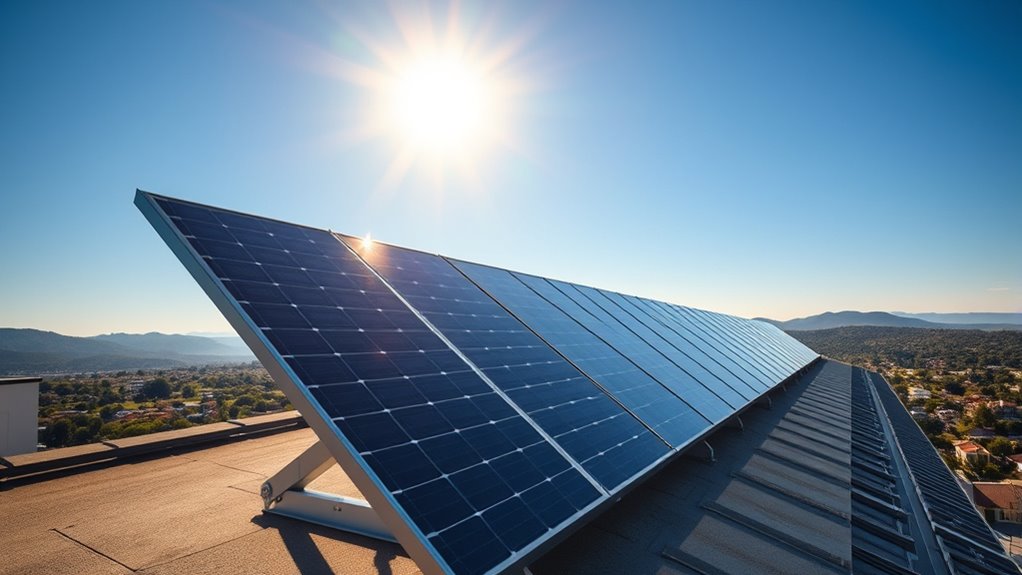
You should face your solar panels true south if you’re in the Northern Hemisphere and true north if you’re in the Southern Hemisphere to capture the most sunlight. This direction helps maximize the amount of solar energy your panels can absorb throughout the day.
Adjust the tilt angle based on your location and season for better efficiency. Small direction changes can reduce your system’s performance considerably, so getting it right matters.
Avoid shading from trees or buildings to maximize output. If you want to reveal more about optimizing panel angles, seasonal tweaks, and helpful tools, there’s plenty to explore ahead.
Key Takeaways
- In the Northern Hemisphere, solar panels should face true south for maximum sunlight exposure. This positioning helps capture the most sun throughout the day.
- In the Southern Hemisphere, panels should face true north to capture optimal sunlight. Facing the right direction makes a big difference in energy production.
- Slight deviations like southeast or southwest orientations can work but reduce efficiency slightly. So, it’s best to aim as close to true south or north as possible.
- Adjust panel tilt seasonally: steeper in winter, flatter in summer for better energy capture. Changing the angle helps make the most of the sun’s path.
- Avoid shading and use tools like Solar Pathfinder to ensure unobstructed, optimal panel direction. Even small shadows can cut down on solar power output.
Which Direction Should Solar Panels Face in the Northern Hemisphere?
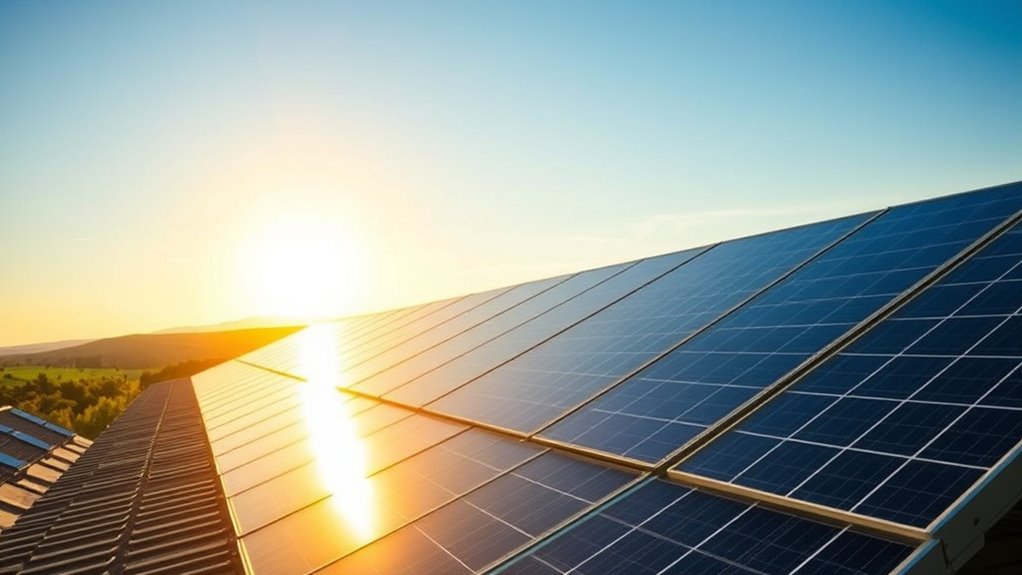
When installing solar panels in the Northern Hemisphere, you’ll want to face them true south to maximize sunlight exposure throughout the day. Positioning them this way ensures they capture the sun’s path from east to west, optimizing energy production.
You should also consider the tilt angle, which depends on your latitude, to enhance efficiency further. Avoid shading from trees, buildings, or other obstructions that can reduce output.
If you can’t face panels exactly south, southeast or southwest orientations can still work but may reduce performance slightly. Regularly cleaning and maintaining your panels will help keep their efficiency high.
Which Direction Should Solar Panels Face in the Southern Hemisphere?
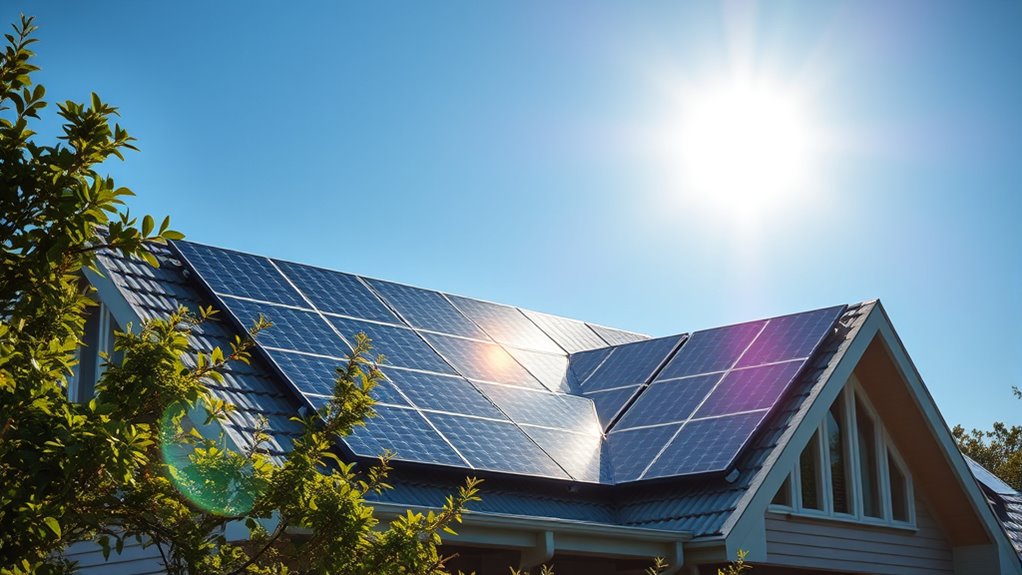
Although the sun’s path differs from the Northern Hemisphere, you’ll want to face your solar panels true north in the Southern Hemisphere to capture the most sunlight throughout the day. Positioning panels north maximizes exposure to the sun’s arc across the northern sky, ensuring your system performs efficiently.
Avoid facing panels south, as that reduces direct sunlight and lowers energy output. Also, make sure there are no obstructions like trees or buildings blocking the northern view.
Installing panels at the correct tilt angle complements this north-facing orientation, but we’ll discuss tilt specifics later. By orienting your solar panels true north, you’ll harness the sun’s energy effectively, boosting your system’s power production and maximizing your renewable energy benefits.
Seasonal Adjustments to Solar Panel Direction
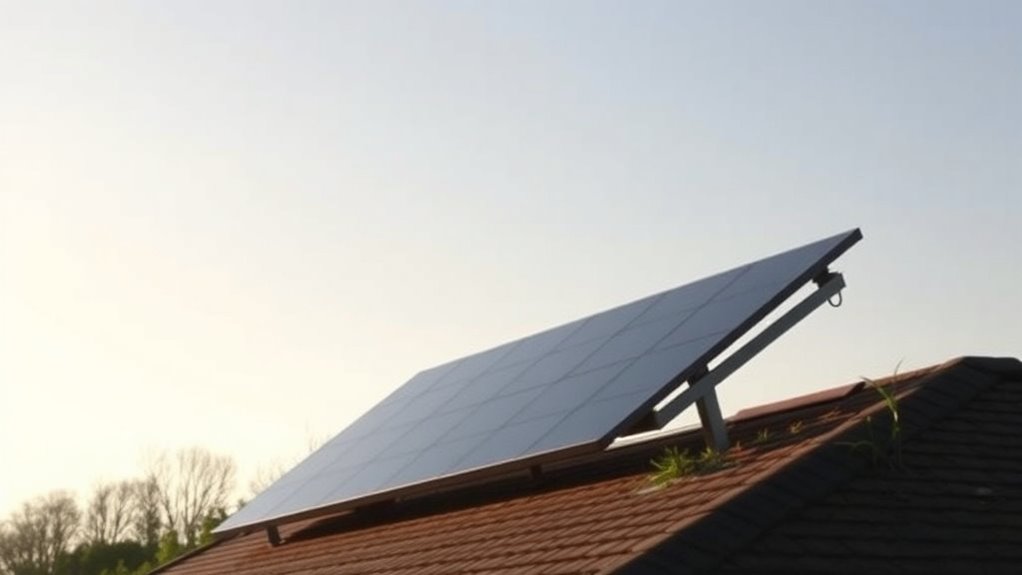
Since the sun’s position shifts throughout the year, adjusting your solar panels seasonally can boost their efficiency. You’ll want to tilt and angle them differently to capture the most sunlight during each season.
Here’s how you can maximize your panels:
- Winter: Tilt panels steeper to face the lower sun, maximizing exposure.
- Summer: Flatten the angle to capture high, direct sunlight efficiently.
- Spring and Fall: Set panels at a moderate angle as the sun moves between extremes.
- Regular Checks: Monitor and adjust every few months to maintain ideal positioning.
Making these adjustments ensures your solar panels perform well year-round. This way, you get the most from your investment without needing complicated equipment.
How Solar Panel Direction Affects Efficiency and Savings
You’ll want to position your solar panels to face the ideal direction for your location to maximize energy output. Even small changes in orientation can considerably impact how much power your system generates.
Adjusting the angle seasonally can help you save more by capturing the most sunlight throughout the year. It’s a simple tweak that makes a big difference!
Optimal Panel Orientation
When you position your solar panels in the right direction, you maximize their exposure to sunlight and boost their efficiency. The ideal orientation depends on your location and roof layout, but generally, facing panels true south in the Northern Hemisphere or true north in the Southern Hemisphere yields the best results.
You should also consider the tilt angle to capture sunlight effectively throughout the year.
To optimize your panel orientation, keep these tips in mind:
- Aim for minimal shading during peak sunlight hours.
- Adjust tilt angles seasonally if possible.
- Avoid facing panels west or east unless necessary, as they produce less energy overall.
- Consult local solar guidelines to refine placement for your climate.
Following these steps helps you get the most from your investment without unnecessary adjustments. It’s really about finding the sweet spot for your location and setup.
Impact on Energy Output
Getting your solar panels facing the right direction sets the stage for how much energy they’ll produce. When your panels are oriented toward the sun’s path—usually true south in the northern hemisphere—they capture maximum sunlight, boosting efficiency.
If your panels face east or west, they’ll generate less power, especially during peak hours. That affects your overall savings. Even a small deviation from the ideal direction can reduce output by up to 20%, meaning you won’t get the full return on your investment.
Proper alignment helps you maximize daily energy production, lowering your electricity bills and shortening the payback period. So, by carefully considering your panels’ direction, you ensure they work as hard as possible. This gives you more energy and greater financial benefits over time.
Seasonal Direction Adjustments
Although fixed solar panels capture a good amount of sunlight year-round, adjusting their direction seasonally can markedly boost efficiency. By tilting or rotating your panels to follow the sun’s changing path, you’ll maximize exposure and increase energy production.
This simple strategy helps you save more on electricity bills and get the most from your investment.
Consider these seasonal direction tips:
- In winter, angle panels more southward and lower to catch the sun’s lower path.
- In summer, tilt panels higher to avoid overheating and optimize midday sun.
- During spring and fall, adjust panels to balance between high and low sun angles.
- Use adjustable mounts or trackers for hassle-free seasonal changes.
Seasonal adjustments might take some effort but pay off in long-term savings.
How Roof Angle and Tilt Affect Solar Panel Performance
Since solar panels capture sunlight most efficiently when positioned at the ideal angle, the tilt and slope of your roof play a crucial role in their performance. If your roof angle closely matches your location’s latitude, your panels will receive more direct sunlight year-round, boosting energy output.
A steep roof tilt can catch more sunlight during winter when the sun is lower, while a flatter roof benefits summer sun at a higher elevation. However, if your roof angle is less than ideal, you might need adjustable mounts to optimize tilt.
Keep in mind, too steep or too flat angles can reduce efficiency. Understanding how your roof’s angle affects sunlight exposure helps you make informed choices for positioning panels to maximize energy production.
Best Tools and Apps to Choose Solar Panel Direction
When you’re planning the direction of your solar panels, using the right tools and apps can make the process much easier and more accurate. These tools help you analyze sun paths, roof angles, and shading to optimize panel placement for maximum energy production.
Here are some of the best options you can use:
- PVWatts Calculator: Estimates solar energy production based on location and system details.
- Solar Pathfinder: Helps identify shading issues by mapping sun paths around your roof.
- Sun Surveyor: Provides detailed sun tracking and augmented reality views to find the best panel angle.
- HelioScope: Combines system design and performance modeling for precise panel positioning.
Using these tools ensures your solar panels face the ideal direction. This way, you maximize efficiency and save more on energy costs.
Frequently Asked Questions
How Do Shading and Obstructions Impact Solar Panel Placement?
Shading and obstructions reduce your solar panels’ efficiency by blocking sunlight. You’ll want to avoid placing panels near trees, buildings, or anything casting shadows.
Make sure they get maximum sun exposure throughout the day for peak energy. It really makes a difference in how well your system performs.
What Maintenance Is Required for Optimal Solar Panel Performance?
You should clean your panels at least twice a year, as 20% efficiency loss can occur from dirt buildup.
It’s also important to regularly check for shading and wiring issues. Keep an eye on your system’s output too, so you know it’s performing at its best.
Can Solar Panels Face East or West Effectively?
Yes, you can face solar panels east or west effectively. While south-facing panels capture the most sunlight, east or west orientations still generate good energy.
They work especially well during morning or afternoon hours. This can really fit your specific energy needs.
How Does Weather Affect Solar Panel Efficiency?
Weather impacts your solar panels’ efficiency by reducing sunlight exposure during cloudy or rainy days. Snow and dirt can block rays, which means less energy for you.
Plus, extreme heat might actually decrease their performance a bit. So, it’s not just about sunshine!
Regular maintenance helps you keep them working well. Cleaning off dirt and snow can make a big difference. Keeping an eye on them ensures you get the most from your panels.
Are There Benefits to Adjustable Solar Panel Mounts?
If you adjust your panels seasonally, like a homeowner in Arizona did, you’ll boost energy capture by up to 25%.
Adjustable mounts let you track the sun’s path, maximizing efficiency and saving more on energy bills year-round.
Conclusion
No matter where you live, facing your solar panels the right way is like catching sunlight in a perfect net—it maximizes your energy and savings. In the Northern Hemisphere, aim south; down south, point north.
Don’t forget to tweak the angle with the seasons and your roof’s tilt. With the right direction, you’ll harness the sun’s power efficiently, turning every ray into real value.
After all, why settle for less when the sun’s generosity is unlimited? Proper solar panel orientation ensures you get the most out of every sunbeam. So, whether it’s adjusting the tilt or choosing the best direction, these steps boost your solar energy production and savings. Remember, optimizing your solar panels’ direction is key to unlocking their full potential and enjoying clean, renewable energy all year round.