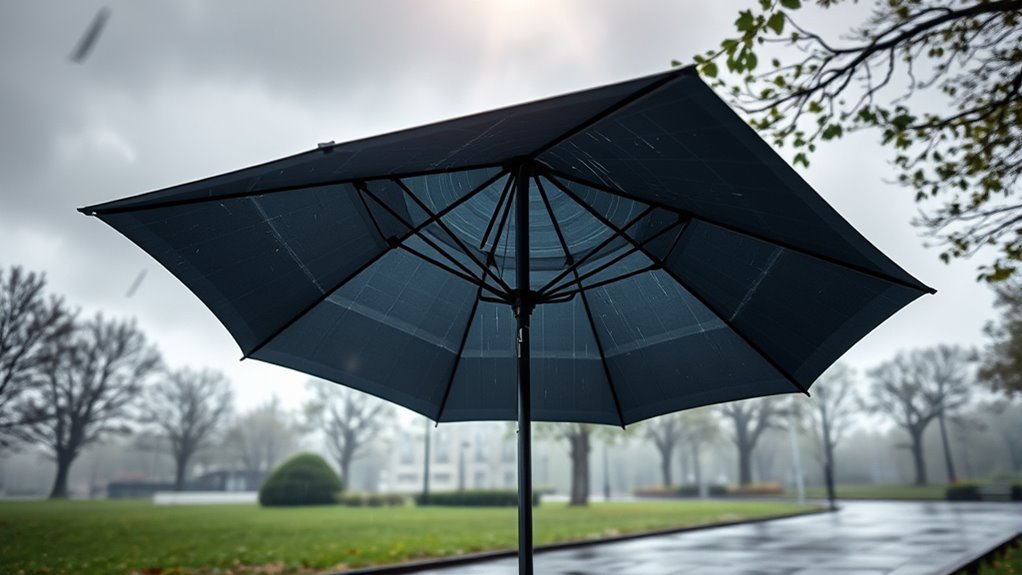
How Do Solar Umbrellas Charge on Cloudy Days?
You can keep your devices charged under a solar umbrella even on cloudy days because its panels capture scattered, diffused sunlight rather than relying solely on direct rays. This means even when the sky is overcast, there’s still enough ambient light to generate power.
Although charging slows down when clouds block the sun, the umbrella’s larger solar surface and efficient panel types help sustain steady energy collection.
Plus, built-in storage ensures power is ready whenever you need it. So, you don’t have to worry about sudden drops in sunlight affecting your device charging.
Keep reading to discover how weather conditions, thoughtful design, and handy tips can boost your umbrella’s performance in low-light situations. It’s easier than you think to stay powered up, rain or shine!
Key Takeaways
- Solar umbrellas absorb scattered and diffuse sunlight, so they can still collect energy even when there aren’t direct sun rays on cloudy days.
- Cloud cover does reduce light intensity, but the panels can still convert ambient light into usable energy. This means charging happens slower, but it’s continuous.
- Having larger solar panel surfaces and efficient monocrystalline cells really helps capture more energy during overcast conditions.
- Plus, built-in power banks store the energy generated during these low-light times. So, you can still charge your devices later on.
- To get the best charging efficiency in cloudy weather, make sure the panels are properly positioned and maintained. Cleaning them regularly and avoiding shade makes a big difference.
How Solar Umbrellas Catch Energy Even When the Sun Isn’t Shining

Even when the sun hides behind clouds, solar umbrellas still manage to collect energy by capturing diffuse sunlight. You might think that without direct sunlight, these umbrellas wouldn’t work, but they’re designed to absorb scattered light all around.
Clouds scatter sunlight in multiple directions, so your solar umbrella’s panels pick up this ambient light, converting it into usable energy. This means you don’t have to wait for a perfectly clear day to charge your devices.
The solar cells inside your umbrella are built to be sensitive enough to harness even low levels of sunlight. So, whether it’s cloudy or partly sunny, your solar umbrella keeps gathering energy, ensuring a reliable power source wherever you go.
What Diffused Light Means for Charging Your Devices

When sunlight passes through clouds, it scatters and becomes diffused light. This light still carries energy your solar umbrella can capture.
You might notice your devices charge slower under diffused light, but they’re still gaining power. It’s good to understand this so you can set realistic expectations for charging on cloudy days.
Understanding Diffused Light
How does diffused light affect the way your solar umbrella charges devices? Diffused light happens when sunlight scatters as it passes through clouds or atmospheric particles. This softens direct rays into a more even, gentle illumination.
Instead of sharp, focused beams, your solar umbrella absorbs this scattered light from multiple angles. While diffused light is less intense than direct sunlight, your solar panels can still convert it into energy. So, your umbrella keeps working even under overcast skies.
Knowing this helps you realize that solar umbrellas don’t rely only on bright, sunny days to function. They harness diffused light to keep your devices charged. That makes them practical for various weather conditions and ensures your power source stays reliable when the sun isn’t shining directly overhead.
Impact on Charging Efficiency
Although diffused light is less powerful than direct sunlight, your solar umbrella still captures enough energy to charge your devices, albeit at a slower rate. This means you may notice longer charging times on cloudy days, but your devices won’t be left powerless.
The umbrella’s solar panels remain effective because they use diffused light, which scatters evenly across the sky. To help you understand this better, here’s a quick comparison of charging efficiency under different conditions:
| Lighting Condition | Approximate Charging Rate |
|---|---|
| Direct Sunlight | 100% (Optimal) |
| Overcast/Cloudy Light | 40-60% |
| Heavy Cloud Coverage | 20-30% |
Knowing this, you can plan device usage accordingly and avoid surprises when relying on solar power.
How Weather Affects Your Solar Umbrella’s Power
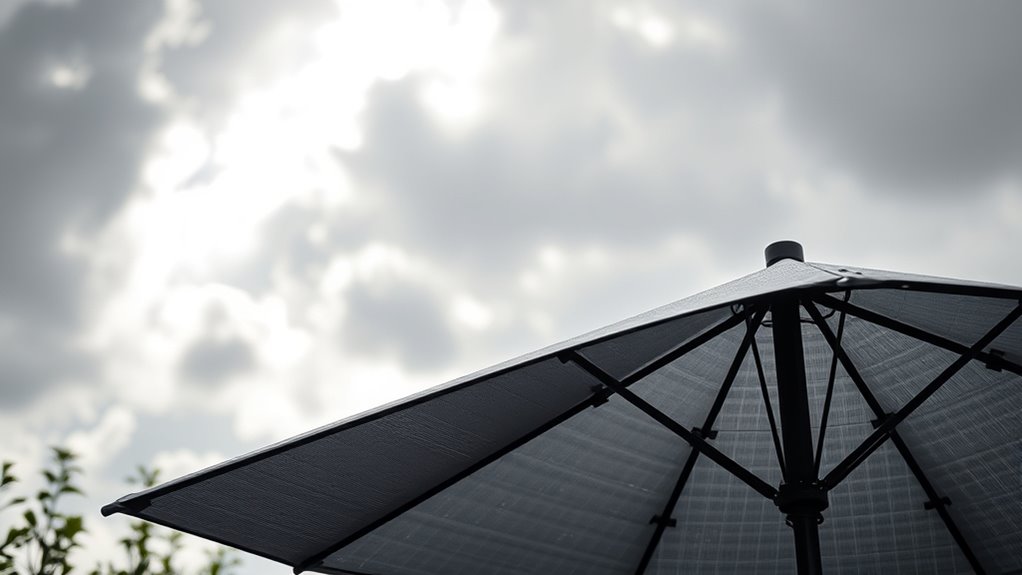
You’ll notice that cloud coverage directly affects how much power your solar umbrella can generate. Changes in light intensity during different weather conditions impact the charging speed and efficiency.
Plus, your umbrella’s battery performance can shift depending on these factors, so it’s important to understand how weather plays a role. It’s pretty interesting how a little change in sunlight can make a big difference!
Cloud Coverage Impact
Even when clouds cover the sky, your solar umbrella can still generate power, though at a reduced rate. Clouds block some sunlight, which means less energy reaches the solar panels.
However, solar cells can capture diffused light scattered by the clouds, allowing your umbrella to keep charging. Thicker or denser cloud coverage decreases power output more markedly than light or patchy clouds.
You might notice slower charging times on overcast days, but your umbrella won’t stop working entirely. Keep in mind that consistent cloud cover over long periods can affect battery levels, so it’s wise to monitor your umbrella’s performance during extended gloomy weather.
Understanding how cloud coverage impacts power helps you manage expectations and optimize your solar umbrella’s use.
Light Intensity Variations
Cloud coverage directly influences the amount of light your solar umbrella receives, but the overall intensity of sunlight also plays a significant role in its power generation. Even on cloudy days, some sunlight penetrates the clouds, though its intensity is lower than on clear days.
Your solar umbrella’s panels adjust to these changes, capturing diffuse light rather than direct rays. However, during overcast or stormy weather, the light intensity can drop dramatically, reducing charging speed.
You’ll notice that on partly cloudy days, your umbrella charges more efficiently as intermittent sunlight passes through. Understanding these variations helps you set realistic expectations about power output in different weather conditions.
That way, you can plan your usage accordingly to keep your devices charged.
Battery Efficiency Changes
How does weather impact the battery efficiency of your solar umbrella? Battery performance can drop in colder or cloudy conditions because chemical reactions inside the battery slow down. While your solar umbrella still charges, it might not store energy as effectively.
Warm, sunny days boost battery efficiency, allowing your umbrella to hold and deliver power ideally.
Here’s a quick look at how weather affects battery efficiency:
| Weather Condition | Battery Efficiency Impact |
|---|---|
| Sunny & Warm | High (90-100%) |
| Cloudy | Moderate (60-80%) |
| Cold | Low (40-60%) |
| Rainy | Minimal (20-40%) |
Understanding these changes helps you manage your solar umbrella’s power better during varying weather. So, keep an eye on the forecast to get the most out of your umbrella’s battery!
Why Your Solar Umbrella Still Works on Cloudy Days
Although sunlight may seem weak on overcast days, your solar umbrella continues to absorb enough diffuse light to generate power. Even when clouds block direct sunlight, scattered light still reaches the solar panels.
These panels capture this indirect light and convert it into electricity, allowing your umbrella to charge. The photovoltaic cells are designed to be sensitive to various light intensities, so they don’t rely solely on bright, direct sun.
This means that while charging might slow down, your umbrella won’t stop working entirely. So, you can still enjoy its benefits during cloudy weather without worrying about a dead battery.
Your solar umbrella’s ability to harness diffuse light ensures consistent energy collection, rain or shine.
Easy Tips to Charge Faster When It’s Cloudy
When the sun hides behind thick clouds, you can still boost your solar umbrella’s charging speed by positioning it strategically. Angle the umbrella toward the brightest part of the sky, even if the sun isn’t visible.
Keep the solar panels clean and free from debris to maximize light absorption. Also, avoid placing the umbrella under dense tree cover or near tall buildings that block ambient light.
| Tip | Why It Helps | How to Do It |
|---|---|---|
| Adjust Angle | Captures more diffused sunlight | Tilt toward brightest sky area |
| Clean Panels | Removes dirt blocking light | Wipe with a soft cloth weekly |
| Avoid Shade | Prevents light obstruction | Place away from trees/buildings |
These simple steps help your solar umbrella charge faster, even on cloudy days. Give them a try, and you’ll notice the difference!
Best Solar Umbrellas for Cloudy Weather
Since cloudy days can limit sunlight, choosing the right solar umbrella makes all the difference in keeping your devices charged. Look for umbrellas with highly efficient monocrystalline solar panels; they perform better in low-light conditions compared to polycrystalline types.
You’ll also want a model with a larger solar surface area to capture as much diffused sunlight as possible. Some umbrellas come with built-in power banks, letting you store energy when the sun peeks through clouds.
Weather-resistant and durable designs ensure your umbrella works well even in damp or windy weather. Brands like Solustar and Sunnytech are known for reliable performance on cloudy days.
Frequently Asked Questions
How Long Do Solar Umbrella Batteries Typically Last?
You can expect solar umbrella batteries to last around 2 to 5 years, depending on usage and care.
Regular charging and avoiding extreme temperatures will help you extend their lifespan. This way, they’ll keep working efficiently for longer.
Can Solar Umbrellas Be Used Indoors to Charge Devices?
Think of your solar umbrella as a sun-capturing butterfly. You can’t use it indoors to charge devices because it needs direct sunlight to generate power.
Without sunlight, it won’t gather enough energy to function properly. So, if you’re inside, it just won’t work the way you want it to.
Are Solar Umbrellas Waterproof and Weather-Resistant?
Yes, your solar umbrella is waterproof and weather-resistant, designed to handle rain and sun. You can leave it outside without worry.
But it’s smart to store it during extreme weather to keep it lasting longer. Taking a little extra care goes a long way!
What Types of Devices Can Solar Umbrellas Charge?
You might think solar umbrellas only charge small gadgets, but they can power your phone, tablet, Bluetooth speakers, and even portable batteries.
Just connect your device via USB, and you’re good to go outdoors anywhere. It’s super convenient when you’re out and about!
How Do I Maintain My Solar Umbrella for Optimal Performance?
You should clean the solar panels regularly and avoid using harsh chemicals. This helps keep them working efficiently without any damage.
When you’re not using the umbrella, make sure to store it in a dry place. It’s a simple step that can really extend its lifespan.
Also, don’t forget to check for any damage from time to time. And keep an eye on the battery charge to make sure your solar umbrella is always ready to go.
Conclusion
Even when the sun’s playing hide-and-seek behind clouds, your solar umbrella is quietly gathering energy through diffused light. It might not charge at lightning speed, but it still keeps your devices powered when you need them most.
By positioning your umbrella wisely and avoiding heavy shade, you’ll make the most of every gentle ray. So, don’t let a cloudy day dim your outdoor vibe—your solar umbrella’s got your back, rain or shine.
Remember, solar umbrellas charge on cloudy days by absorbing indirect sunlight, making them a reliable source of power even without direct sun. This means you can enjoy outdoor activities without worrying about your device’s battery life. With a little care in placement, your solar umbrella will keep charging steadily, ensuring you stay connected and powered up, no matter the weather.