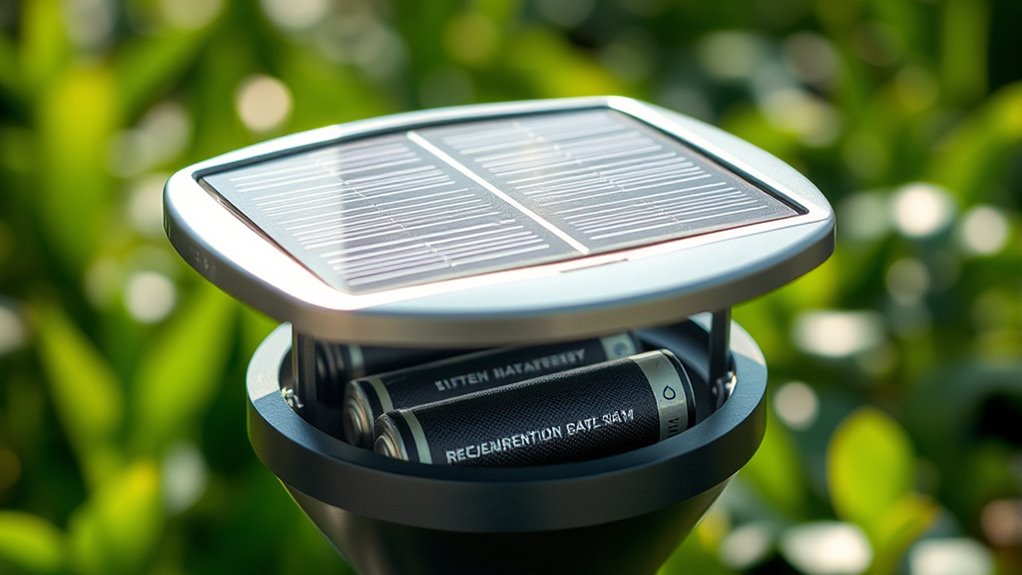
What Batteries Do Solar Lights Have?
Solar lights typically use rechargeable batteries like NiMH, NiCd, or lithium-ion to store energy from the sun. These batteries play a big role in how well your solar lights perform.
NiMH batteries offer good capacity and lifespan, while NiCd batteries are tough but have a lower capacity.
More modern solar lights often favor lithium-ion batteries because they’re lighter, last longer, and hold more charge.
Choosing the right battery affects your light’s brightness and runtime.
Knowing when to replace and maintain them can keep your lights shining bright for a longer time.
There’s a lot more to discover about these batteries and how to take care of them.
Understanding your solar light’s battery can help you get the best performance and enjoy your outdoor lighting without interruption.
Key Takeaways
- Solar lights commonly use rechargeable batteries such as NiMH, NiCd, and increasingly lithium-ion types.
- NiMH batteries offer good capacity and eco-friendliness without toxic cadmium.
- NiCd batteries are affordable and durable but have lower capacity and memory effect issues.
- Lithium-ion batteries provide higher energy density, longer lifespan, and better performance in compact sizes.
- Battery choice impacts solar light runtime, brightness, lifespan, and environmental safety.
It’s important to pick the right battery because it affects how long your solar light will shine and how bright it can get. Plus, choosing eco-friendly options helps keep the environment safe.
Common Battery Types Used in Solar Lights
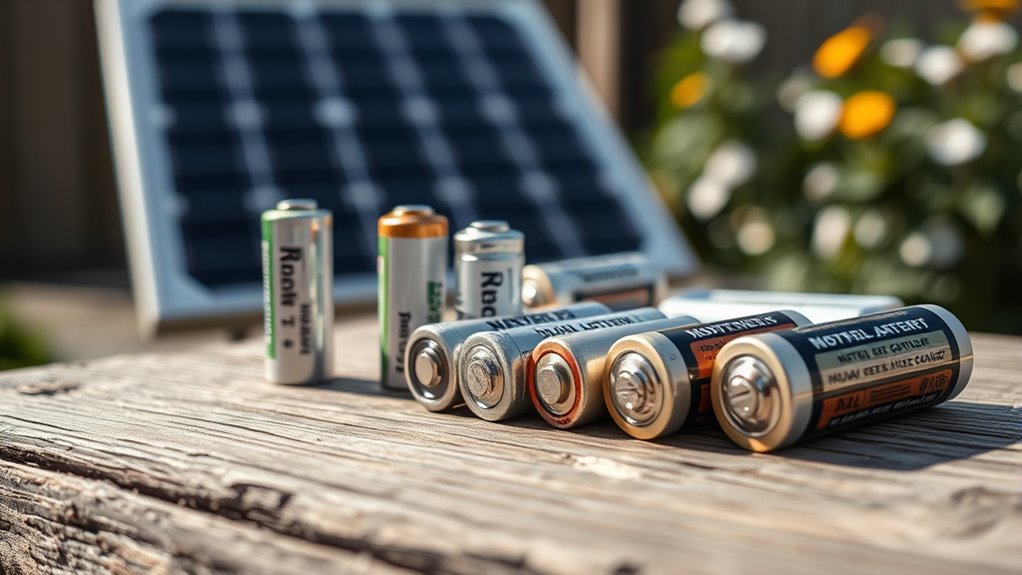
Although solar lights come in various designs, the type of battery they use plays a crucial role in their performance and lifespan. You’ll most often encounter three main types: nickel-metal hydride (NiMH), nickel-cadmium (NiCd), and lithium-ion (Li-ion).
NiMH batteries are popular because they offer a good balance between capacity and cost. They last longer than NiCd and don’t contain toxic cadmium, which is a big plus.
NiMH batteries strike the perfect balance of affordability, capacity, and eco-friendliness, lasting longer without toxic cadmium.
NiCd batteries are less common now due to their environmental impact and something called the memory effect. But you might still see them in some models.
Lithium-ion batteries provide the highest energy density and tend to last longer. The downside? They usually come with a higher price tag.
Understanding these battery types helps you appreciate why some solar lights last longer or charge faster. And that’s even before you consider specific features or brands.
How to Choose the Right Battery for Your Solar Light
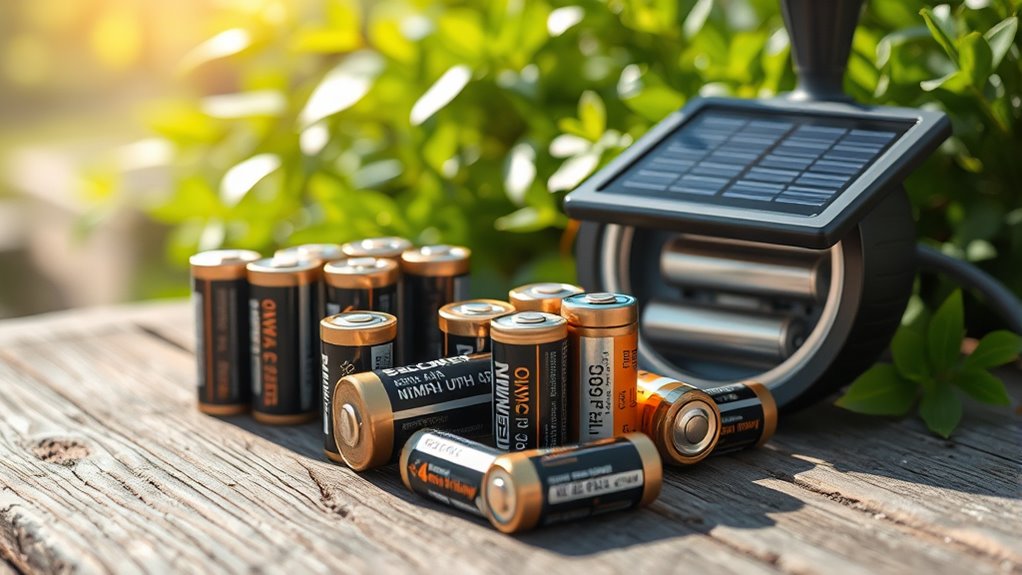
When selecting the right battery for your solar light, you need to take into account factors like capacity, lifespan, and environmental impact to get the best performance.
Start by checking the battery’s capacity to ensure it powers your light long enough through the night. You want something that won’t leave you in the dark too soon.
Consider lifespan to avoid frequent replacements, saving money and effort. After all, nobody likes swapping batteries all the time.
Also, think about environmental friendliness. Choosing rechargeable options helps reduce waste and is better for the planet.
| Factor | What to Look For |
|---|---|
| Capacity | Higher mAh for longer lighting duration |
| Lifespan | Batteries with more charge cycles |
| Environmental | Rechargeable, non-toxic, and recyclable |
How NiMH and NiCd Batteries Power Solar Lights
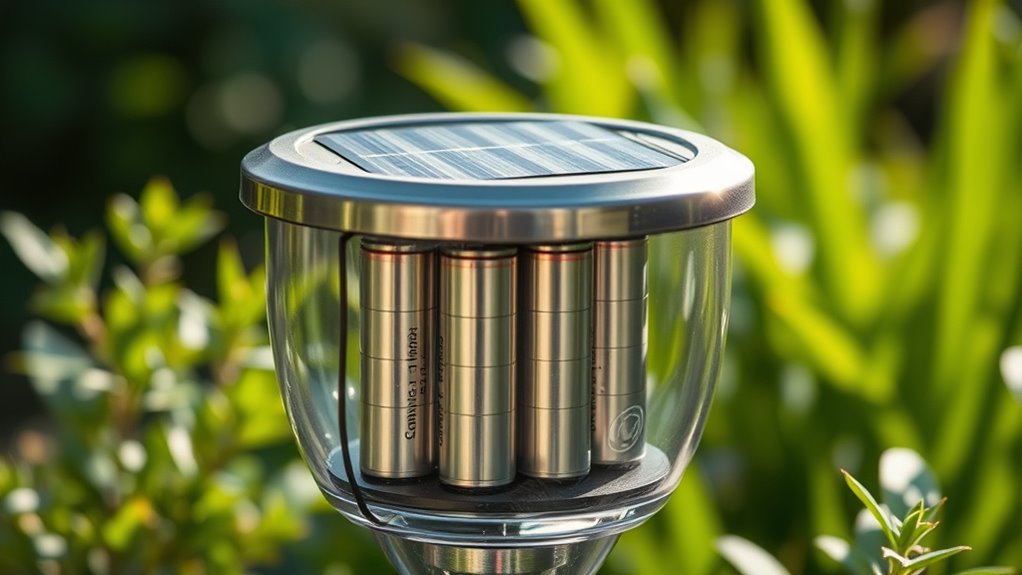
Since solar lights rely on rechargeable batteries to store energy, understanding how NiMH (Nickel-Metal Hydride) and NiCd (Nickel-Cadmium) batteries work can help you choose the best option for your setup.
NiMH batteries offer higher capacity and better energy density than NiCd, meaning they can power your solar light longer between charges. They’re also less prone to memory effect, so you don’t have to fully discharge them before recharging.
NiMH batteries last longer and resist memory effect, so you can recharge anytime without full discharge.
NiCd batteries, while more affordable and durable under extreme conditions, have lower capacity and suffer from memory effect. This can reduce their lifespan if not managed properly.
Both battery types recharge using the solar panel’s energy during the day. Then, they release stored power to your light at night, ensuring continuous illumination without external power sources.
Why More Solar Lights Use Lithium-Ion Batteries
Because lithium-ion batteries provide higher energy density and longer lifespan, more solar lights are adopting them as their power source. You’ll notice these batteries store more energy in a compact size, meaning your solar light can shine brighter and longer throughout the night.
Unlike older battery types, lithium-ion batteries handle multiple charge cycles without significant capacity loss. So, you won’t need to replace them as often.
They also have lower self-discharge rates, which means your solar light retains power better during cloudy days or extended periods without sunlight. Plus, lithium-ion batteries are lighter, making solar lights easier to install and more durable.
Signs It’s Time to Replace Your Solar Light Battery
Even the best lithium-ion batteries won’t last forever, and knowing when your solar light’s battery needs replacing can save you frustration.
If your solar light dims quickly, flickers, or doesn’t last all night, these are clear signs the battery is weakening. You might also notice the light fails to turn on after charging fully.
| Sign | What It Means | Action to Take |
|---|---|---|
| Dim or Flickering | Battery losing charge | Replace battery soon |
| Shorter lighting time | Battery capacity down | Consider immediate swap |
| Won’t turn on | Battery dead or faulty | Replace battery now |
| No charging | Battery or panel issue | Test battery first |
Keep an eye out for these symptoms to make sure your solar lights keep shining bright and performing at their best.
Tips to Maintain and Extend Your Solar Light Battery Life
To get the most out of your solar light battery, you should take simple steps that prevent premature wear and optimize performance. First, regularly clean the solar panel to guarantee it absorbs sunlight efficiently. Avoid placing lights where shadows or dirt block sunlight.
During winter or extended cloudy periods, store your solar lights indoors to protect the batteries from cold damage. Replace batteries promptly when you notice dimming or shorter runtimes.
Use high-quality rechargeable batteries recommended by the manufacturer to assure compatibility and longevity. Also, avoid leaving your solar lights on continuously; let them cycle naturally by turning off during the day to prevent overuse.
Following these tips helps you extend your battery’s life, saving you money and keeping your solar lights shining brightly longer.
Frequently Asked Questions
Can I Use Rechargeable AA Batteries in Solar Lights?
Yes, you can use rechargeable AA batteries in solar lights as long as they fit and match the required voltage.
Just make sure to choose NiMH or NiCd types, since alkaline batteries won’t recharge properly.
These rechargeable options work better and last longer in solar lights. So, they’re definitely the way to go!
How Long Do Solar Light Batteries Typically Last on a Full Charge?
You’ll typically get 6 to 12 hours of light on a full charge, depending on the battery type and sunlight exposure.
Keep in mind, battery capacity can decrease over time, so performance might drop after a year or two.
It’s just part of how batteries work, really. So, don’t be surprised if your solar light doesn’t shine as brightly after a while.
Are Solar Light Batteries Safe to Dispose of in Regular Trash?
You might be surprised, but you shouldn’t toss solar light batteries in regular trash—they contain chemicals that can harm the environment.
Instead, take them to a proper recycling center to keep nature safe and sound.
Do Temperature Changes Affect Solar Light Battery Performance?
Yes, temperature changes do affect your solar light battery performance. Cold weather slows chemical reactions, reducing capacity.
On the other hand, extreme heat can damage the battery. You’ll notice shorter run times or slower charging in such conditions. It’s pretty common with most solar batteries.
Can Solar Light Batteries Be Used in Other Devices?
You can’t use solar light batteries like they’re magic energy crystals in any device! They’re often specialized rechargeable types with specific voltages, so swapping them into other gadgets might cause more harm than good.
Always check compatibility first! It’s really important to make sure the battery matches the device’s requirements before trying to use it.
Conclusion
Choosing the right battery for your solar light is key to keeping it shining bright. For example, if you picked a lithium-ion battery for your garden path lights, you’d enjoy longer-lasting, consistent power even on cloudy days.
Remember, when your light dims or flickers, it’s probably time to replace the battery. By maintaining your batteries—like avoiding overcharging—you’ll extend their life and keep your solar lights glowing beautifully all year round.
Batteries in solar lights, such as nickel-metal hydride (NiMH) or lithium-ion types, play a crucial role in storing energy collected from the sun. Proper care and timely replacement ensure your solar lights perform at their best. So, choosing the right batteries for solar lights and maintaining them well will keep your outdoor spaces bright and inviting, no matter the weather or season.