Do Solar Panels Work When Covered With Snow?
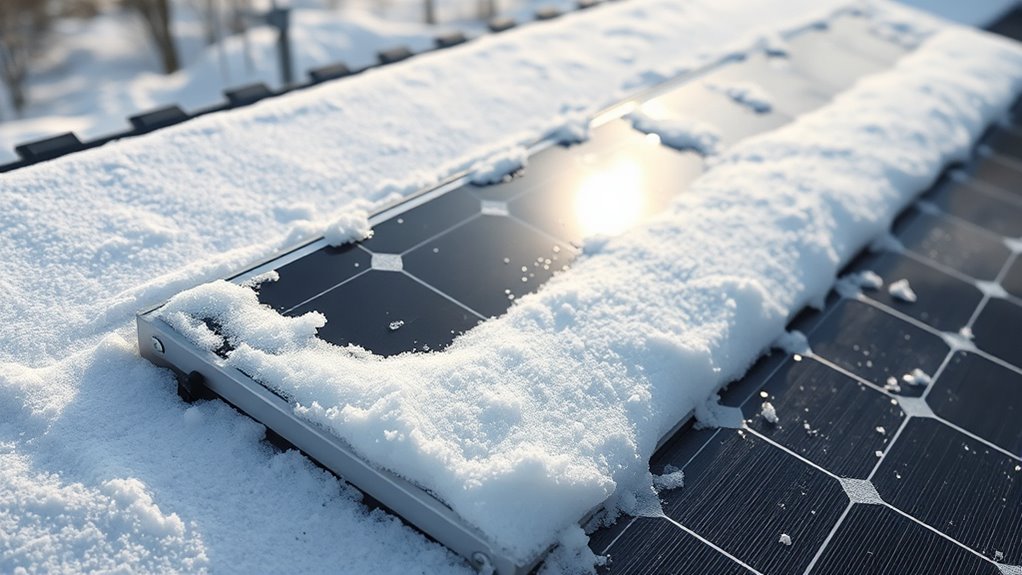
If your solar panels are covered with snow, they’ll lose significant power since snow blocks sunlight. This means less energy production during those snowy days. However, the good news is that they can still generate some electricity when partial snow melts or slides off.
Steeper angles and warmer days help snow clear faster, which gets your panels back to work sooner. Plus, reflected sunlight from fresh snow can even boost output a bit, surprising as that sounds.
Using gentle snow removal tools or heating options speeds up recovery and keeps your panels efficient.
So, don’t worry too much when snow hits your panels. Keep exploring to discover the best ways to maintain your panels and maximize efficiency in winter. It’s all about staying proactive and making the most of your solar setup year-round!
Key Takeaways
- Snow coverage blocks sunlight, which means solar panels can’t work very well when they’re covered. This significantly reduces their efficiency and power output until the snow melts or is cleared away.
- If only part of the panel is covered with snow, it can still generate some electricity, but when the whole panel is covered, energy production drops a lot.
- Solar panels are built to handle the weight of snow, and they’re usually installed at an angle. This helps the snow slide off naturally, which is pretty clever.
- Snow doesn’t usually stick around for too long because sunlight and warmer temperatures help it melt faster.
- To keep panels working well during snowy weather, people sometimes remove snow manually or use tech like heating mats to speed things up and maintain performance.
How Snow Affects Your Solar Panels
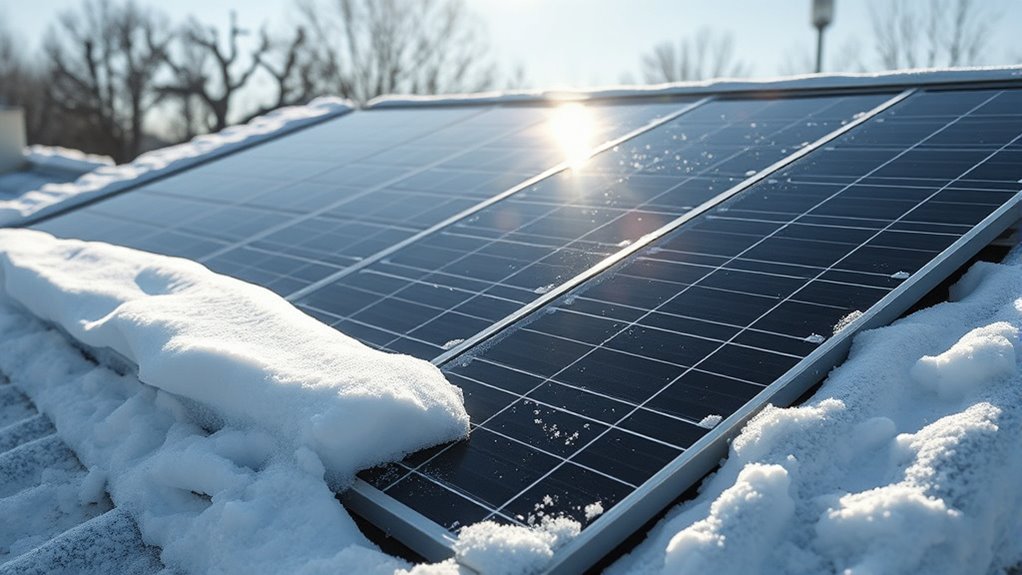
Although snow can cover your solar panels and block sunlight, it doesn’t usually cause permanent damage. Your panels are built to withstand harsh weather, including snow loads and freezing temperatures.
The frame and glass are sturdy enough to handle the weight without cracking or warping. Snow buildup might reduce your panels’ efficiency temporarily, but once it melts or slides off, normal function resumes.
You should keep an eye on heavy snow accumulation, though, since excessive weight could strain mounting hardware. Luckily, most systems are installed at an angle, encouraging snow to slide off naturally.
To safeguard your investment, you can gently clear snow if it’s safe to do so. Just avoid using sharp tools that might scratch the surface.
Regular inspection ensures your panels stay in good condition through winter. It’s a simple way to keep things running smoothly all season long.
Can Solar Panels Generate Power Under Snow?
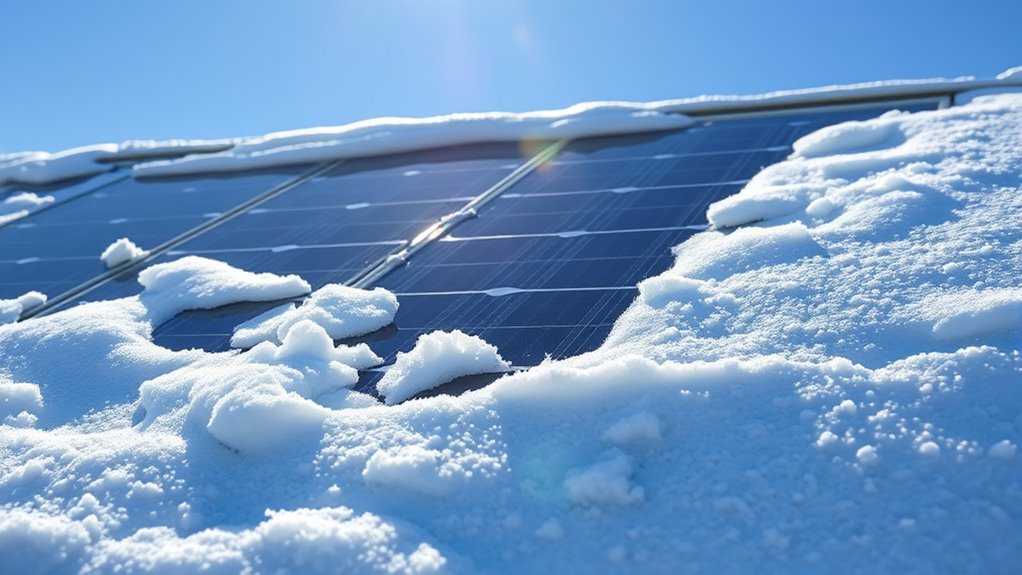
You might wonder if your solar panels can still produce power when covered by snow. While snow can reduce efficiency, some panels continue generating electricity beneath a light layer.
Understanding how snow impacts power output helps you manage your system during winter. It’s good to know what to expect and how to keep things running smoothly.
Snow Impact On Efficiency
When snow covers your solar panels, it can considerably reduce their ability to generate power because the white layer blocks sunlight from reaching the cells. You’ll notice a significant drop in efficiency until the snow melts or slides off.
But the impact really depends on a few things.
- Thickness of Snow: Thicker snow means less light penetration and lower output.
- Panel Angle: Steeper panels shed snow faster, reducing coverage time.
- Temperature: Cold, sunny days can help panels work better once snow clears.
- Snow Type: Wet, heavy snow sticks longer, while light, powdery snow tends to blow off.
Knowing these factors can help you get a better idea of what to expect from your solar energy system during snowy weather. It’s all about understanding how snow affects performance so you’re not caught off guard.
Power Generation During Snow
How much power can solar panels generate under snow? While snow coverage usually blocks sunlight and reduces output, solar panels can still produce some electricity. Thin layers of snow or partially cleared panels allow sunlight to reach the cells, enabling limited power generation.
Plus, solar panels absorb heat, which helps melt snow faster and restores efficiency. If snow fully covers the panels, power drops significantly or stops entirely until it melts or is cleared away.
However, even under snowy conditions, reflected sunlight off the snow can contribute some energy. So, while you won’t get full capacity during heavy snow coverage, your panels can still generate power in certain situations, especially with partial snow coverage or after snow starts melting.
How Long Does Snow Usually Cover Solar Panels?
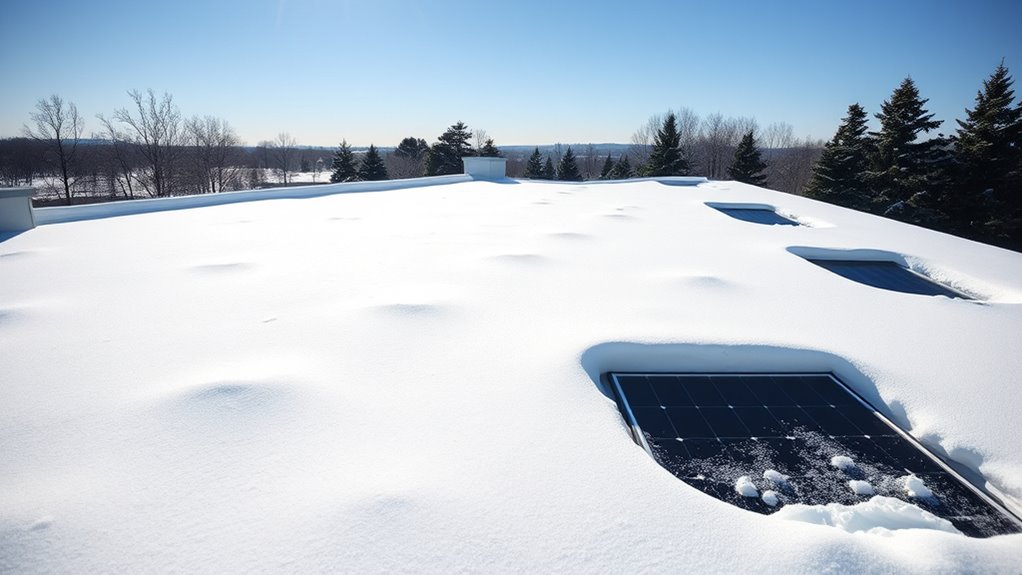
Although snow can temporarily cover solar panels, the duration rarely exceeds a few days in most climates. How long snow sticks around depends on several factors you can keep in mind:
- Temperature: Warmer days speed up melting, clearing panels faster.
- Sunlight: Direct sunlight helps melt snow, even if air temperatures stay low.
- Tilt Angle: Steeper panels shed snow more quickly than flat ones.
- Snowfall Amount: Heavy snow can cover panels longer, but lighter dustings usually melt within hours.
Does Snow Reflection Boost Solar Panel Output?
Since snow reflects sunlight, it can actually increase the amount of light reaching your solar panels, boosting their output under the right conditions. When the snow around your panels is bright and fresh, it acts like a natural mirror, sending extra light onto the panels.
This reflection can sometimes compensate for the shorter daylight hours in winter. So, it’s not all bad news when those snowy days roll in!
Here’s a quick look at factors affecting snow reflection benefits:
| Factor | Impact on Output |
|---|---|
| Fresh, clean snow | High reflection, more energy |
| Dirty or melting snow | Lower reflection, less impact |
| Panel angle | Steeper angles capture more reflected light |
How to Safely Clear Snow From Solar Panels
When clearing snow from your solar panels, using safe tools is essential to prevent damage. You’ll want to avoid anything sharp or abrasive that might scratch the surface.
Let’s explore the best techniques to remove snow effectively without harming your system. It’s easier than you might think! Just a little care goes a long way.
Safe Tools For Clearing
To protect your solar panels while clearing snow, you’ll want to use tools designed specifically for the job. Using the right equipment helps you clear snow effectively without risking damage.
- Roof Rake with a Soft Blade – This tool lets you reach panels from the ground or ladder. It gently removes snow without scratching.
- Foam Broom – Perfect for light snow, it sweeps off flakes without applying harsh pressure.
- Telescoping Pole – This extends your reach safely. You can clear snow from panels without climbing on the roof.
- Snow Brush with Plastic Bristles – Use this to carefully brush away snow. Just avoid any metal parts that could scratch the surface.
Avoiding Panel Damage
Although clearing snow from your solar panels is important for maintaining efficiency, you’ll want to handle the process carefully to avoid causing damage. Always avoid using sharp or abrasive tools that can scratch the panel’s surface or damage the protective glass.
Don’t apply excessive force, as solar panels are fragile and too much pressure may crack or dislodge them. Use gentle, controlled movements when removing snow, and avoid standing on the panels or putting weight on their frames.
If you’re working from a ladder or roof, prioritize safety to prevent accidents. Also, avoid using hot water or chemicals, since rapid temperature changes or corrosive substances can harm the panels.
Taking these precautions guarantees your solar system stays intact while maximizing energy production throughout winter.
Best Snow Removal Techniques
Clearing snow from your solar panels requires more than just gentle handling; using the right techniques can make the process safer and more effective. To protect your panels and guarantee peak performance, follow these steps:
Use a soft-bristled brush or a roof rake with a foam head to gently sweep snow off without scratching the surface. Avoid sharp tools or metal shovels, which can damage the panels.
Work from the bottom edge upward, preventing snow from falling onto already cleared sections. If possible, clear snow on warmer days when it’s easier to remove and less likely to cause sudden temperature changes that might stress the panels.
Keep Your Solar Panels Efficient This Winter
How can you guarantee your solar panels keep generating power even when winter hits hard? Start by positioning panels at a steep angle to encourage snow to slide off naturally.
Regularly clear snow with a soft brush or roof rake to avoid damage. If heavy snowfall is common, consider using heating cables or anti-snow coatings.
Remember, maximizing sunlight exposure is key.
| Tip | Action | Benefit |
|---|---|---|
| Panel Angle | Install at 30-45 degrees | Snow slides off easily |
| Snow Removal Tools | Soft brush or roof rake | Prevents scratching |
| Heating Solutions | Electric cables or mats | Melts snow efficiently |
| Anti-Snow Coatings | Apply hydrophobic coating | Reduces snow adhesion |
| Regular Maintenance | Inspect and clean frequently | Ensures peak performance |
Frequently Asked Questions
Do Solar Panels Work Better in Cold or Warm Weather?
You’ll find solar panels work better in cold weather because they operate more efficiently at lower temperatures. Warm weather can reduce their performance, so keeping them cool helps you get maximum energy output throughout the day.
It’s pretty interesting, right? Even though we usually think of the sun and heat as good for solar energy, cooler temps actually give panels a bit of an edge. So, if you’re in a colder climate, your panels might actually perform better than you’d expect!
Can Snow Damage Solar Panels or Reduce Their Lifespan?
Snow won’t be your solar panels’ Achilles’ heel; it rarely damages them or cuts their lifespan.
You just need to clear heavy buildup occasionally, so they keep shining bright like Helios’ chariot across winter skies.
Are There Solar Panels Designed Specifically for Snowy Climates?
Yes, you’ll find solar panels designed for snowy climates with features like enhanced durability, anti-snow coatings, and steeper angles to shed snow faster.
These help maintain efficiency even during heavy snowfall in cold regions. It’s pretty neat how they’re built to keep working well, no matter the weather.
How Does Shading From Snow Impact Solar Panel Warranty?
You’re in good hands—most warranties gently overlook minor snow shading, as it’s a natural occurrence.
Just avoid heavy, prolonged coverage or damage; otherwise, your solar panels’ protection stays intact.
This keeps your investment secure and worry-free.
What Maintenance Is Required for Solar Panels in Winter?
You should regularly clear snow and debris from your panels using a soft brush or roof rake.
Also, check for ice buildup and inspect wiring for any damage.
Make sure your panels stay unobstructed to keep them running efficiently during the winter months.
It might seem like a hassle, but these small steps really help your solar panels perform their best when it’s cold outside.
Conclusion
Think of your solar panels like a windshield in winter—just a little snow can blur the view, but once cleared, they shine bright again. Even a thin layer cuts power drastically, sometimes up to 80%, but don’t worry.
With gentle brushing or letting the sun do its work, you’ll keep them running efficiently all season long. So, stay proactive, and your panels will bounce back like a fresh morning after a snowfall.
Remember, snow-covered solar panels won’t work well, but a bit of care goes a long way. Regularly clearing snow helps maintain their energy production during winter. This way, your solar power system stays effective even when the weather gets cold and snowy.