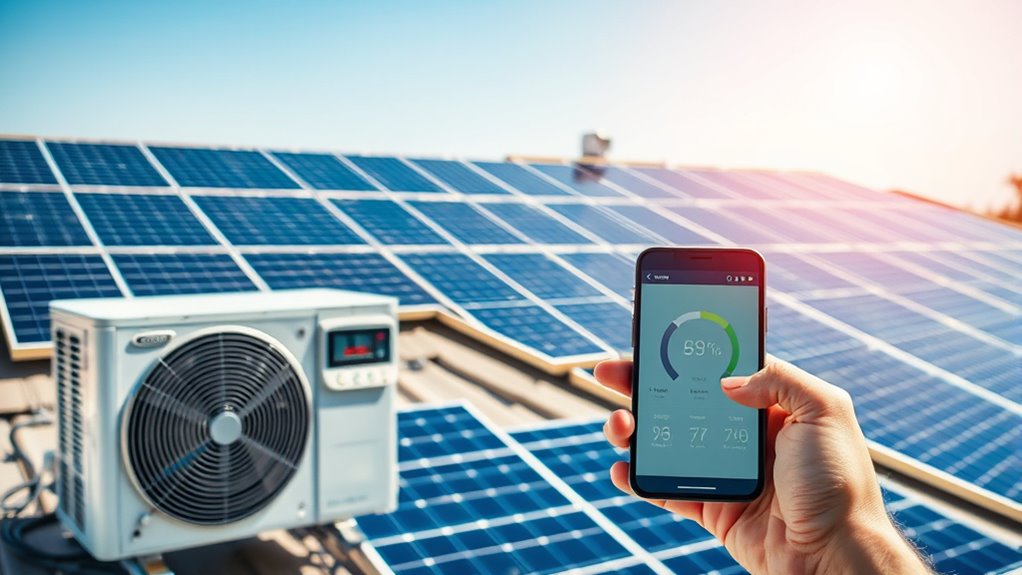
How Many Solar Panels to Run an Air Conditioner Step-by-Step
To find out how many solar panels you need to run an air conditioner, start by checking your AC’s power rating and estimating how long you run it each day. If your AC’s power is given in amps, convert that to watts so you have the right numbers. Then, calculate the total energy your AC uses in kilowatt-hours (kWh).
Next, divide this energy use by the peak sunlight hours in your area. Don’t forget to factor in system losses, which are usually around 20%. This helps you get a more accurate idea of how much solar power you’ll really need.
Also, consider the peak demand of your air conditioner—sometimes it needs more power when it first turns on. And if you want to run your AC at night or on cloudy days, think about how much battery capacity you’ll need.
Keep exploring and you’ll find great tips to optimize your solar setup and save even more on cooling costs!
Key Takeaways
- Determine the AC’s power consumption by checking its wattage or converting amps to watts using your home voltage. This step helps you understand how much energy your unit uses.
- Estimate daily AC runtime to calculate total energy usage in watt-hours or kilowatt-hours. Knowing this will give you a clearer picture of your daily power needs.
- Divide daily energy needs by your location’s average peak sunlight hours to find required solar panel wattage. This tells you how much solar power you’ll need to generate each day.
- Add a 20% buffer for system losses like wiring and inverter inefficiencies to size the solar array accurately. It’s always better to have a little extra capacity to cover these losses.
- Ensure the solar system meets peak AC power demand to avoid relying on grid or batteries during hot hours. That way, your air conditioner runs smoothly when you need it most.
Calculating Your Air Conditioner’s Power Needs
Before you can determine how many solar panels you need, you’ll first have to calculate your air conditioner’s power requirements. Start by checking your AC unit’s power rating, usually listed in watts or amps on the nameplate or manual.
If it’s given in amps, multiply by your home’s voltage (typically 120V or 240V) to find watts. Next, estimate how many hours you run the AC daily. Multiply the power rating by those hours to get daily energy consumption in watt-hours or kilowatt-hours.
Keep in mind startup surges can demand more power briefly, so factor in a buffer. Knowing your AC’s exact energy use guarantees a solid foundation before sizing your solar panel system accurately. This way, you can be sure your panels can handle the load efficiently.
Determining Solar Panel Capacity for Your AC
Once you know your AC’s daily energy needs, you can figure out the total solar panel capacity needed to meet that demand. Start by dividing your AC’s daily watt-hour consumption by the average peak sunlight hours your location gets. This will give you the minimum wattage your solar panels need to produce each day.
Don’t forget to factor in system losses from wiring and inverter inefficiencies, which are usually around 20%. It’s important to keep those losses in mind so your system runs smoothly.
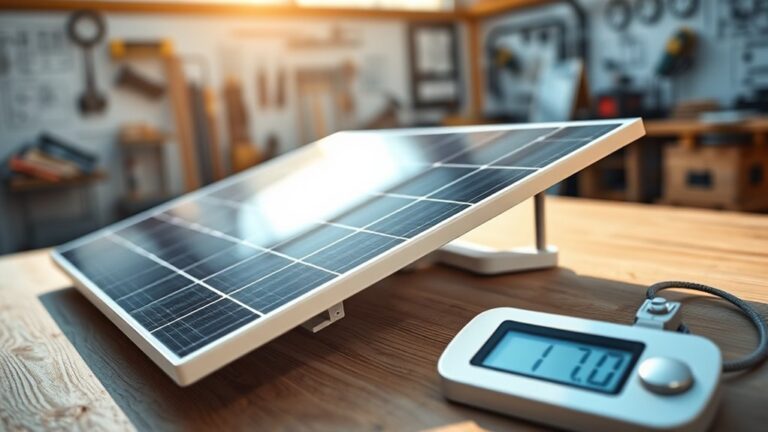
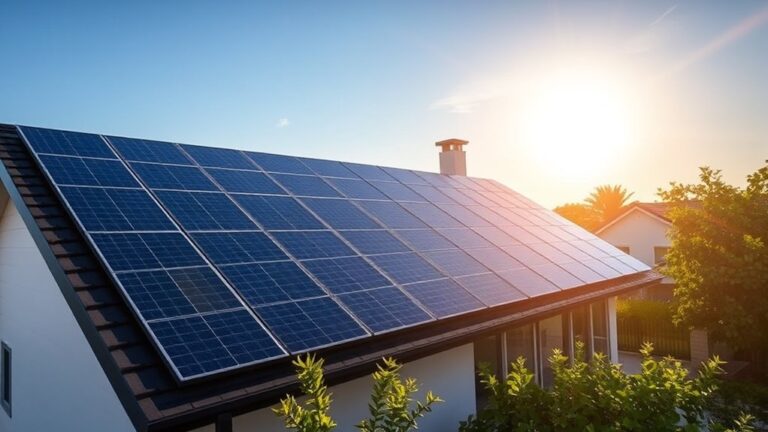
To help you picture your system size, imagine rows of sleek solar panels angled perfectly toward the sun. Think about a sunny rooftop with panels soaking up peak sunlight all day long. You can even picture a digital meter tracking your real-time solar output as your system works.
Sizing Your Solar System for Peak AC Usage
When you size your solar system for peak AC usage, you need to account for the highest energy demand during the hottest parts of the day. Your air conditioner works hardest when temperatures soar, so your solar setup must supply enough power at this peak time.
Start by identifying your AC’s maximum wattage and estimate how many hours it runs during peak heat. Then, calculate the total energy in watt-hours needed during those hours.
From there, determine how many solar panels can generate that energy under ideal conditions. Remember, sizing for peak usage guarantees your system won’t fall short when you need cooling most.
This approach helps avoid relying on the grid or batteries, keeping your AC running efficiently and your energy bills lower. It’s all about making sure you stay cool without any surprises.
Effects of Weather and Location on Solar Output
You’ll notice your solar panels perform differently depending on the temperature and where you live. Higher temperatures can reduce their efficiency, while geographic location affects how much sunlight they receive daily.
Understanding these factors helps you estimate how many panels you’ll need to keep your air conditioner running smoothly. It’s pretty handy to know this so you can plan just right!
Impact of Temperature Variations
How does temperature influence the efficiency of your solar panels powering an air conditioner? Solar panels actually perform better in cooler temperatures. When it’s hot, the panels can overheat, causing their efficiency to drop and producing less electricity than you expect.
So, even on a sunny day, very high temperatures can reduce your system’s output.
Consider how these temperature effects play out: Scorching summer afternoons when your AC needs power most but panels run less efficiently. Cooler mornings that boost panel performance but might not meet your full cooling needs. Rapid temperature swings that challenge your system’s consistent energy supply.
Understanding these impacts helps you size your solar array right and keep your AC running smoothly.
Geographic Solar Radiation Differences
Because solar radiation varies widely by location and weather, the number of panels you need to power your air conditioner depends heavily on where you live.
If you’re in a sunny region like Arizona, your panels will generate more electricity daily compared to someone in Seattle, where cloud cover reduces solar output. Seasonal changes also matter; winter days are shorter and often cloudier, cutting your system’s efficiency.
You’ll want to check the average peak sun hours for your area to estimate how much energy your panels can produce. And keep in mind that shading from nearby trees or buildings can further reduce output.
Accounting for Battery Backup in Your Solar AC System
When adding battery backup to your solar AC system, you need to carefully calculate the additional energy storage required to keep your air conditioner running during cloudy periods or at night. This means considering your air conditioner’s wattage, how many hours you want it to run without sunlight, and the battery’s efficiency.
You’ll want to size your battery bank to cover these needs without draining it completely. Keep in mind, deeper discharges diminish battery life.
Visualize it like this: your air conditioner humming steadily through a cloudy afternoon. Batteries safely storing enough power to last till morning. A seamless switch from solar to battery without any cooling interruption.
Properly accounting for battery backup ensures you stay cool around the clock, no matter the sun.
Tips to Slash Your Cooling Bills With Solar Panels
You can cut your cooling bills by positioning your solar panels where they get maximum sunlight throughout the day.
Pairing your system with energy-efficient air conditioners also reduces electricity use considerably.
Together, these steps help you get the most out of your solar setup while keeping your home cool.
Optimize Solar Panel Placement
Maximizing the efficiency of your solar panels starts with smart placement. You want to position them where they’ll soak up the most sunlight throughout the day.
Avoid shady spots caused by trees or buildings, as even small shadows can considerably reduce their output. Here’s what to focus on:
- South-facing roofs usually capture the most sun, especially if you’re in the northern hemisphere.
- Tilt the panels at an angle that matches your latitude to maximize exposure.
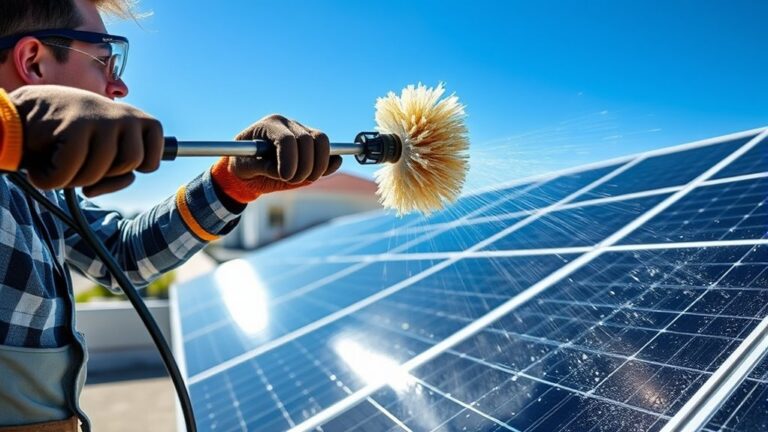
- Keep panels clean and free from debris to maintain peak performance.
Use Energy-Efficient Cooling
Placing your solar panels well sets the stage for effective energy use, but pairing that with energy-efficient cooling can drastically cut your electricity bills. Start by choosing an air conditioner with a high SEER rating—it uses less energy to cool your space.
Consider a programmable thermostat to keep your AC from running unnecessarily when you’re not home. Also, sealing leaks and adding insulation helps your home retain cool air, reducing your AC’s workload.
Using fans alongside your AC circulates air more efficiently, allowing you to raise the thermostat a few degrees without sacrificing comfort. By combining these energy-saving strategies with your solar setup, you’ll maximize your system’s benefits and keep cooling costs low, making your investment in solar panels truly pay off.
Frequently Asked Questions
How Long Do Solar Panels Typically Last for AC Systems?
Solar panels typically last 25 to 30 years, but you’ll often get even more use.
With proper maintenance, they’ll keep powering your AC efficiently. This means saving you money and energy for decades without needing frequent replacements.
What Maintenance Do Solar Panels Require for Optimal AC Performance?
Keeping your solar panels clean is like giving your AC a revitalizing gust.
You’ll want to wipe off dust, check connections, and inspect for damage regularly. This helps make sure they perform at their best and don’t lose efficiency.
A little upkeep goes a long way in keeping your system running smoothly!
Can Solar Panels Power Other Home Appliances Alongside the AC?
Yes, you can power other home appliances alongside your AC with solar panels. Just make sure your system’s capacity matches your total energy needs.
Also, consider adding a battery for backup during cloudy days or nighttime use. That way, you won’t have to worry about power interruptions.
Are There Government Incentives for Installing Solar Panels for AC Use?
Yes, you can often get government incentives like tax credits or rebates for installing solar panels to power your AC.
Check local programs and federal offers—they’ll help lower your upfront costs and make solar more affordable for you.
It’s definitely worth looking into what’s available in your area before you start. You might be surprised by the savings!
How Noisy Is a Solar-Powered Air Conditioning System?
You won’t find solar-powered air conditioners noisy since the solar panels themselves make no sound.
The AC unit’s noise depends on its design, but many modern models run quietly. So, you won’t be disturbed.
Conclusion
So, you want to cool your home with solar power and think it’s as simple as slapping a panel on your roof? Not quite. Calculating your AC’s power needs, sizing your system right, and factoring in weather and batteries all matter.
But hey, if you enjoy sweating through summer or paying sky-high bills, maybe skip the math. Otherwise, invest smartly—your cool comfort depends on it, ironically powered by the sun’s heat itself!
When figuring out how many solar panels to run an air conditioner, you need to consider your AC’s wattage, daily usage, and local sunlight hours. Don’t forget to include battery storage if you want to keep cool at night or during cloudy days.
In short, running an air conditioner with solar power isn’t just about having solar panels on your roof. It’s about correctly sizing your solar system to meet the AC’s energy demands, considering weather variations, and including battery backup. Doing this ensures efficient cooling and maximizes your investment in solar energy for air conditioning.