How Much Watts Does a Solar Panel Produce?
You can expect a typical solar panel to produce between 250 and 400 watts depending on its type—monocrystalline panels tend to be higher, while thin-film panels produce less. Your panel’s size, efficiency, and how well it’s positioned toward the sun also play a big role.
Weather, temperature, shading, and your location can further impact actual output. While the rated wattage shows peak capacity, real-world conditions usually mean less power.
Keep exploring to understand what truly affects your solar system’s performance. It’s all about knowing how these factors come together to make the most of your solar energy setup.
Key Takeaways
- Solar panels typically produce between 100 and 400 watts, depending on the type and size of the panel.
- Monocrystalline panels usually offer 300 to 400 watts, while polycrystalline range from 250 to 350 watts per panel.
- Thin-film panels generate lower power, typically between 100 and 200 watts per panel.
- Actual wattage varies due to sunlight intensity, shading, temperature, orientation, and geographic location.
- Real-world output is often lower than rated wattage because of environmental and installation factors.
Typical Watt Ranges for Different Solar Panel Types

Although solar panels come in various types, each one typically produces a specific range of wattage that affects its efficiency and suitability for your needs. For instance, monocrystalline panels usually generate between 300 to 400 watts per panel, making them highly efficient and ideal if you want to maximize energy output in limited space.
Polycrystalline panels tend to produce slightly less, around 250 to 350 watts, which can be a budget-friendly option for larger installations. They’re a solid choice if you’re looking to balance cost and performance.
Thin-film panels, while less efficient, generally offer wattages between 100 and 200 watts. These often fit unique or flexible applications where traditional panels might not work as well.
Understanding these typical watt ranges helps you choose the right panel type based on space, budget, and power requirements without getting overwhelmed by technical details. It’s all about finding what works best for your situation.
Key Factors That Determine Solar Panel Wattage
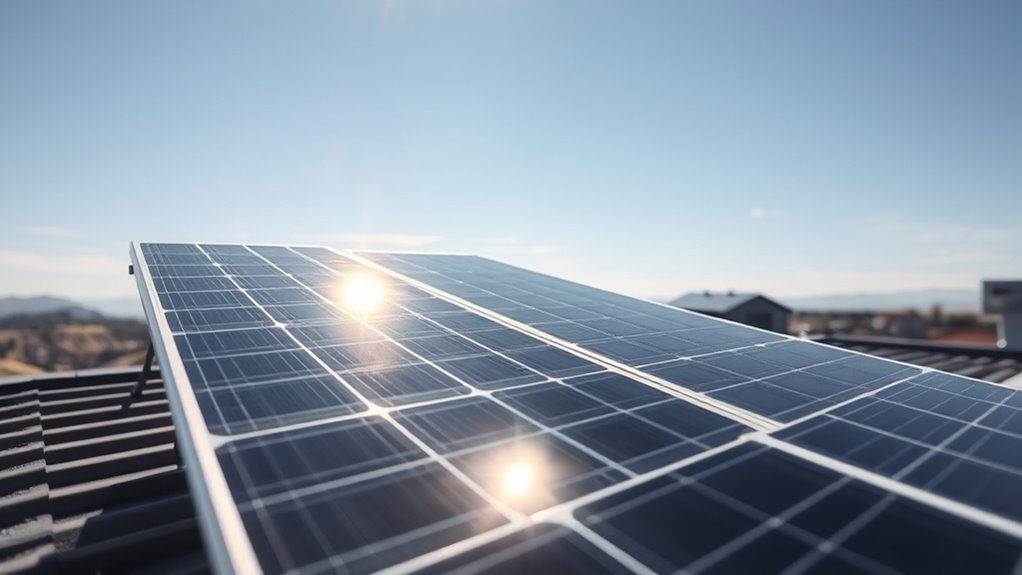
To understand how much power your solar panel produces, you need to take into account factors like panel efficiency ratings, how much sunlight it actually gets, and the temperature it operates in.
Each of these can considerably impact the wattage output. Let’s break down how these elements work together to affect your panel’s performance.
Panel Efficiency Ratings
When you evaluate solar panels, their efficiency ratings play an essential role in determining how much power they can generate. Efficiency tells you the percentage of sunlight the panel converts into usable electricity.
For example, a 20% efficient panel turns 20% of the sunlight it receives into electrical energy. Higher efficiency means you get more watts from the same panel size, which is critical if you have limited roof space.
Panels typically range from 15% to over 22% efficiency. While higher efficiency panels might cost more upfront, they often deliver better performance and value over time.
Understanding these ratings helps you choose the right panel that fits your energy needs and space constraints without guessing how much power it will produce.
Sunlight Exposure Levels
Since sunlight exposure directly impacts how much energy your solar panels generate, understanding the key factors that affect it is essential. The amount of sunlight your panels receive determines their power output, so you want to maximize this exposure for better efficiency.
Several aspects influence how much sunlight hits your panels:
- Geographic location: Areas closer to the equator receive more direct sunlight throughout the year.
- Orientation and tilt: Panels facing south (in the northern hemisphere) and angled properly capture more sunlight.
- Shading: Trees, buildings, or other obstructions can block sunlight and reduce energy production.
- Daylight hours: Longer daylight in summer means more sunlight exposure compared to shorter winter days.
Temperature Effects
Although sunlight is essential for generating power, temperature plays a significant role in how efficiently your solar panels perform. As the temperature rises, your panels’ efficiency tends to drop because the semiconductor materials inside them become less effective at converting sunlight into electricity.
This means on hot days, even with plenty of sun, your solar panel might produce fewer watts than expected. Manufacturers usually specify a temperature coefficient, showing how much power output decreases per degree above 25°C (77°F).
To maximize wattage, you should guarantee good airflow around your panels to help dissipate heat. Understanding temperature effects helps you set realistic expectations and optimize your solar system’s placement and maintenance for better overall performance.
How Panel Size and Efficiency Affect Solar Panel Wattage
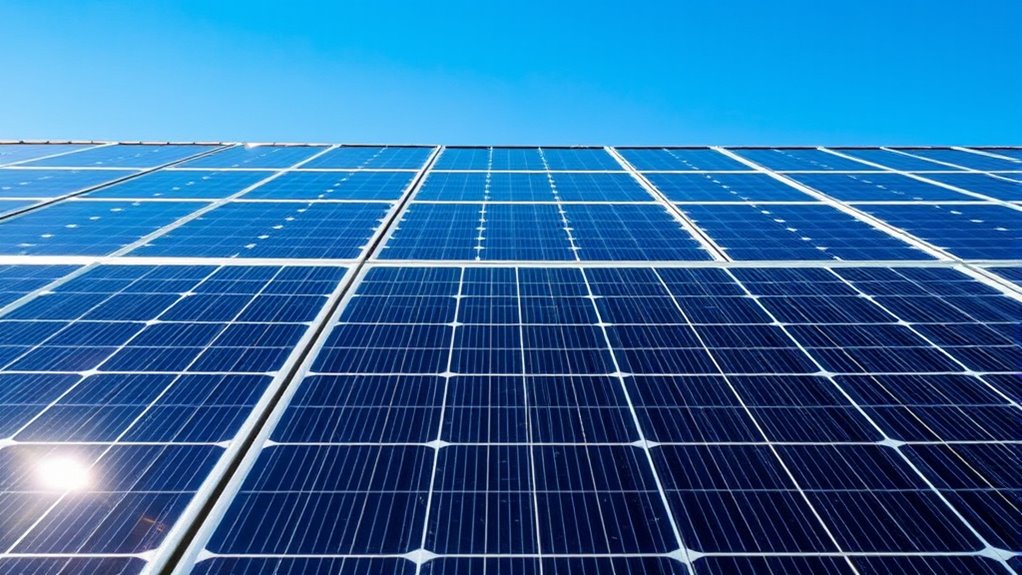
You’ll find that bigger panels generally produce more watts because they capture more sunlight. But size isn’t everything—efficiency ratings show how well a panel converts sunlight into electricity.
Understanding both helps you choose the right panel for your energy needs. It’s kind of like picking the best tool for the job.
Panel Size Impact
How does the size of a solar panel influence the amount of power it produces? Simply put, larger panels have more surface area to capture sunlight, which often means they generate more watts.
But size isn’t the only factor; you need to consider how the panel is designed and constructed.
Here’s what to keep in mind about panel size impact:
- Bigger panels usually produce higher wattage due to increased sunlight absorption.
- Smaller panels generate less power but fit better in limited spaces.
You might need more small panels to match the output of one large panel. Panel size also affects installation options and overall system design.
Efficiency Ratings Explained
Panel size plays a big role in how much power a solar panel can produce, but efficiency ratings are just as important to understand. Efficiency tells you what percentage of sunlight hitting the panel converts into usable electricity.
For example, a panel with 20% efficiency converts 20% of the sunlight into power, while 15% efficiency means less energy output from the same size panel. If you have limited roof space, higher efficiency panels help you maximize wattage without needing more surface area.
On the other hand, if you have ample space, you might opt for larger panels with slightly lower efficiency at a better price. Knowing both size and efficiency helps you select panels that meet your energy needs and budget effectively.
How Weather and Location Change Solar Panel Wattage
Although solar panels have a rated wattage, the actual power they produce depends heavily on weather conditions and your location. You’ll notice fluctuations in output because sunlight intensity varies with:
- Cloud cover: Thick clouds reduce sunlight, cutting wattage considerably.
- Temperature: Higher temps can lower panel efficiency, decreasing power output.
- Geographic location: Areas closer to the equator get more direct sunlight year-round.
- Seasonal changes: Shorter days and lower sun angles in winter reduce energy production.
Understanding these factors helps you set realistic expectations for your solar panel’s performance. While your panel might be rated at 300 watts, on a cloudy or hot day, it might only produce a fraction of that.
Your location’s climate and weather patterns play a vital role in the energy you can harness.
Calculating Your Solar Panel System’s Total Wattage
Once you know the wattage of individual solar panels, you can calculate your system’s total wattage by adding up the output of all panels combined. For example, if each panel produces 300 watts and you have 10 panels, your total wattage is 3,000 watts (300 watts × 10 panels). This total wattage represents your system’s peak power capacity under ideal conditions.
Keep in mind, the total wattage helps you estimate how much energy your system can generate, but it doesn’t account for losses or real-world factors like shading or temperature. Still, calculating total wattage is a crucial first step in sizing your solar setup and understanding its potential output.
It also aids in selecting compatible inverters and batteries for your system. So, while it’s not the whole picture, knowing your total wattage sets you up for making smarter decisions with your solar energy setup.
Real-World Solar Panel Wattage Expectations
Even if your solar panels have a high wattage rating, you won’t always get that full output in everyday conditions. Real-world factors often reduce the power your panels can produce.
You should keep these influences in mind:
- Sunlight intensity: Cloud cover and time of day affect how much sunlight reaches your panels.
- Panel angle and orientation: Misalignment with the sun lowers efficiency.
- Temperature: Higher temperatures can decrease panel performance.
- Shading: Trees, buildings, or debris blocking sunlight reduce wattage output.
Understanding these factors helps you set realistic expectations for your solar system’s performance. Don’t be discouraged if you see lower wattage than the rated maximum; this variability is normal and accounted for in system design.
Frequently Asked Questions
How Long Do Solar Panels Typically Last?
You can expect solar panels to last about 25 to 30 years. Over time, their efficiency slowly drops, but they’ll still produce power well beyond that.
If you keep them clean and well-maintained, they can keep working effectively for many more years. It’s all about giving them a little care now and then!
What Maintenance Is Required for Solar Panels?
Think of your solar panels as sun-hungry plants; you’ll just need to gently wash off dust and check connections yearly.
Keep them shaded-free and clear, and they’ll keep soaking up rays without a fuss.
Are Solar Panels Safe During Storms?
Yes, your solar panels are safe during storms. They’re designed to handle harsh weather, including strong winds and hail.
Just make sure they’re properly installed and grounded. This helps protect both your home and system from electrical surges.
Can Solar Panels Work Indoors or at Night?
You won’t get much power indoors or at night since solar panels need sunlight to work.
They can produce about 10-25% of their capacity with indirect light, but at night, they don’t generate any electricity at all. So, if you’re thinking about using solar panels indoors, just keep in mind they won’t be as effective.
At night, it’s a no-go because there’s no sunlight to capture.
How Much Do Solar Panels Cost on Average?
You’ll usually pay between $15,000 and $25,000 for a full solar panel system before incentives. Prices vary based on size, brand, and installation complexity.
But here’s the good news — government rebates and tax credits can help lower your upfront costs considerably. So, the final price might be a lot friendlier than it seems at first!
Conclusion
Now that you know how watts work with weather, wattage, and watt-worthy panels, you’re well-equipped to weigh your watt options wisely. Whether you want a small setup or a solar system that shines strong, understanding size, efficiency, and location lets you lock in lasting, lean energy.
So, start sizing your solar solution today and save smartly with sun-powered success! Getting the right wattage from your solar panels means balancing your energy needs with the best conditions and panel quality.
Remember, a solid grasp of watts and panel performance helps you maximize your solar investment. By choosing the right system for your space and climate, you can enjoy clean, efficient energy that pays off over time. Solar power isn’t just bright—it’s smart energy for a sustainable future!