How Do I Start a Solar Farm in 10 Essential Steps?
To start a solar farm, first pick a sunny, stable site near power lines with minimal shading. Location is key because it affects how much energy your panels can produce.
Check local zoning rules and get all the necessary permits lined up early to avoid any legal hiccups.
Next, secure financing and assemble a skilled team to manage construction and equipment selection—think solar panels, inverters, and more.
Designing an efficient layout is crucial for maximizing energy output.
Then, connect your solar farm to the grid and closely monitor its performance to catch any issues early on.
Regular maintenance is key to long-term success.
Keep exploring to uncover detailed steps that guarantee your project runs smoothly and profitably.
Starting a solar farm takes effort, but with the right planning, it’s a rewarding way to invest in clean energy.
Key Takeaways
- Select a sunny, flat site near power lines with stable soil. Make sure to avoid flood-prone areas for the best solar farm setup.
- Research and assemble a qualified team of contractors who have solar experience. Don’t forget to verify their certifications before you get started.
- Obtain all the necessary permits and zoning approvals. It’s a good idea to coordinate early with local government agencies to keep things moving smoothly.
- Choose the right solar panels, inverters, and mounting systems. Then, design the layout to maximize sunlight exposure.
- Plan for grid connection by working closely with utilities. Install metering equipment and set up ongoing monitoring and maintenance to keep everything running efficiently.
Choose the Best Location for Your Solar Farm
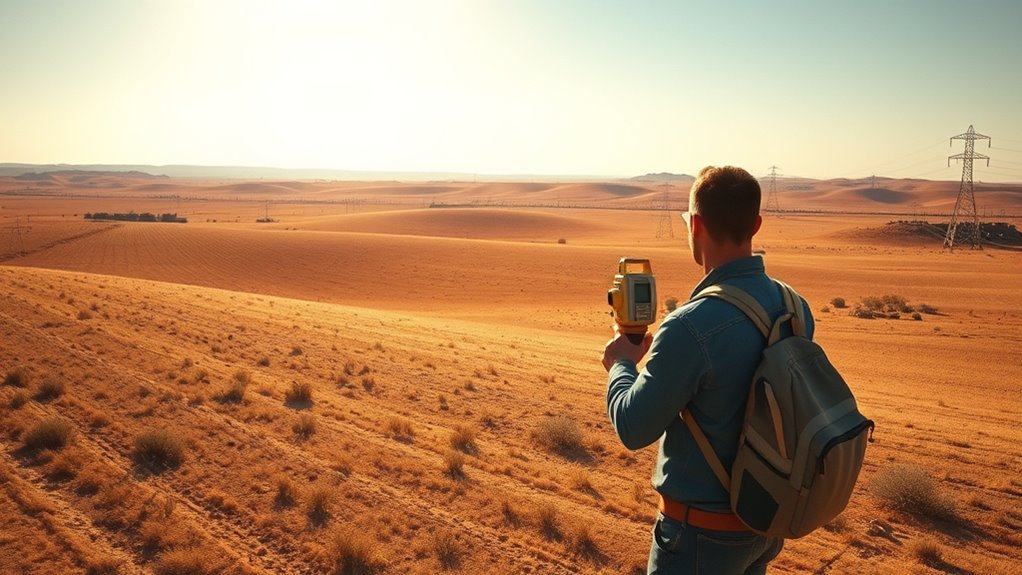
Where should you set up your solar farm to maximize efficiency and output? You want a site with plenty of sunlight year-round, ideally in a region with minimal cloud cover and low pollution.
Flat or gently sloping land works best, making installation easier and reducing shading from uneven terrain. Avoid areas prone to frequent shading from trees, buildings, or other obstacles.
Consider soil stability and drainage since poor ground conditions can complicate construction and maintenance. Proximity to existing power lines can save costs and simplify connecting to the grid.
Ensure stable soil and good drainage, and choose a site near power lines to ease installation and reduce costs.
Also, pick a location away from flood zones to protect your equipment. By carefully selecting a sunny, accessible, and stable site, you’ll guarantee your solar farm runs efficiently and generates maximum power.
Check Local Zoning and Permitting Requirements
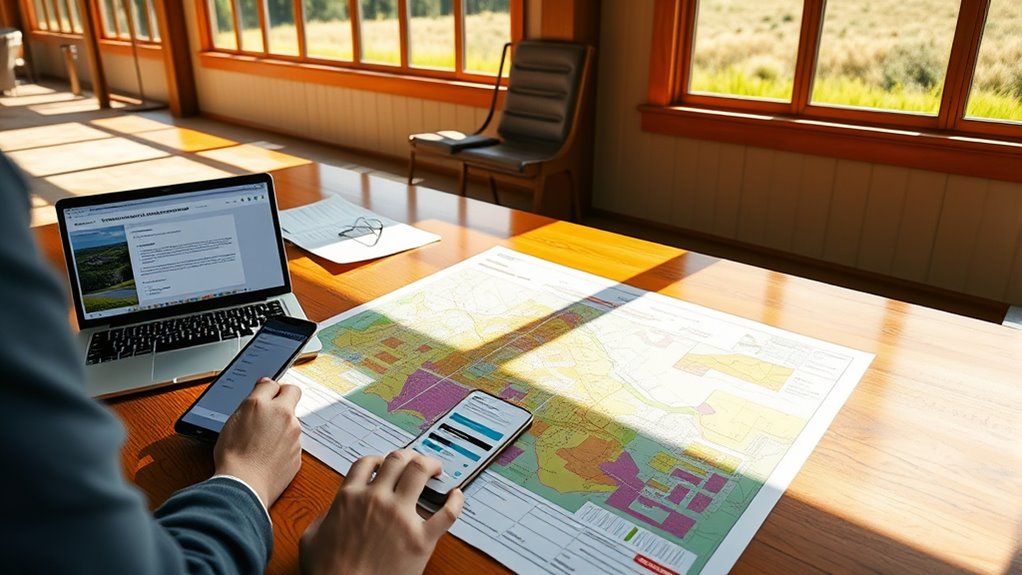
Before you start building, check your area’s zoning rules to make sure solar farms are allowed. You’ll need to understand the permit application process and gather all necessary documents.
Reach out to local government offices early to get the specific requirements and avoid delays. It’s better to get all the info upfront so you don’t hit any roadblocks later on.
Zoning Regulations Overview
Although starting a solar farm can be an exciting venture, you’ll need to navigate local zoning and permitting requirements carefully. Zoning regulations determine where you can place your solar farm and what type of structures you can build.
You’ll want to check if your chosen land is zoned for agricultural, industrial, or renewable energy use. Some areas have restrictions on solar farm size, setbacks from roads or property lines, and height limits for panels.
Understanding these rules early prevents costly delays or redesigns. Contact your local planning department or zoning board to get detailed information.
They can provide zoning maps, ordinances, and guidance specific to solar installations. Staying informed about zoning guarantees your project complies with local laws and moves forward smoothly.
Permit Application Process
Since local zoning and permitting rules vary widely, you’ll need to gather all the specific requirements before applying for your solar farm permits. Start by researching your area’s zoning laws to confirm solar farms are allowed.
Next, identify the necessary permits, which may include building, environmental, and electrical permits. Prepare to submit detailed site plans and environmental impact assessments as required.
Finally, be ready to pay any application fees and meet deadlines.
- Review local zoning ordinances for solar farm allowances.
- List all required permits for construction and operation.
- Compile and submit detailed documentation (plans, impact studies).
- Pay application fees and track submission deadlines carefully.
Following these steps will help streamline your permit application process.
Local Government Contacts
Here’s a quick reference table to help you identify key contacts:
| Department | Contact Type | Purpose |
|---|---|---|
| Planning | Planner | Zoning regulations |
| Zoning | Zoning Officer | Land use permissions |
| Building | Building Inspector | Construction permits |
| Environmental | Env. Specialist | Impact assessments |
| Economic Dev. | Coordinator | Incentives and support |
Reach out early, and keep track of communications to stay organized.
It really helps to stay on top of things from the start!
Secure Financing for Your Solar Farm Project
How will you fund your solar farm project? Securing financing is essential to turn your vision into reality.
Start by exploring various funding options to find what fits best.
- Bank Loans – Approach traditional lenders for business loans with competitive interest rates.
- Grants and Incentives – Research government programs offering grants, tax credits, or rebates for renewable energy projects.
- Private Investors – Pitch your project to investors interested in sustainable energy ventures.
- Crowdfunding – Use platforms to raise capital from individual supporters passionate about green initiatives.
Estimate Solar Farm Energy Output and Capacity
What factors determine the energy output and capacity of your solar farm? Mainly, it depends on your farm’s location, the amount of sunlight it receives, and the size of the installation.
Key factors for solar farm output include location, sunlight availability, and installation size.
You’ll want to analyze solar irradiance data for your site to predict how much sunlight hits the area throughout the year. Then, consider the total land area available, as this limits how many panels you can install.
Don’t forget to account for system losses from shading, inverter efficiency, and weather conditions. By calculating the peak capacity in kilowatts (kW) and estimating annual energy production in kilowatt-hours (kWh), you’ll have a solid projection of your solar farm’s performance.
This helps guarantee your project meets energy goals and attracts investors.
Select Solar Farm Panels and Equipment
After estimating your solar farm’s energy output and capacity, you’ll need to choose the right panels and equipment to match those projections. Picking high-quality solar panels is vital—they’ll determine your farm’s efficiency and lifespan.
You’ll also need inverters to convert DC power to usable AC power. Don’t forget mounting systems to securely place your panels and wiring to connect everything safely.
Here’s what to focus on:
- Solar Panels: Choose between monocrystalline or polycrystalline panels based on efficiency and cost.
- Inverters: Select string or central inverters depending on your farm size.
- Mounting Systems: Decide on fixed or tracking mounts for maximum sunlight exposure.
- Electrical Components: Use durable wiring, combiner boxes, and safety switches to guarantee reliable operation.
Selecting the right equipment sets the foundation for a successful solar farm. It’s worth taking your time to get it right!
Design Your Solar Farm Layout
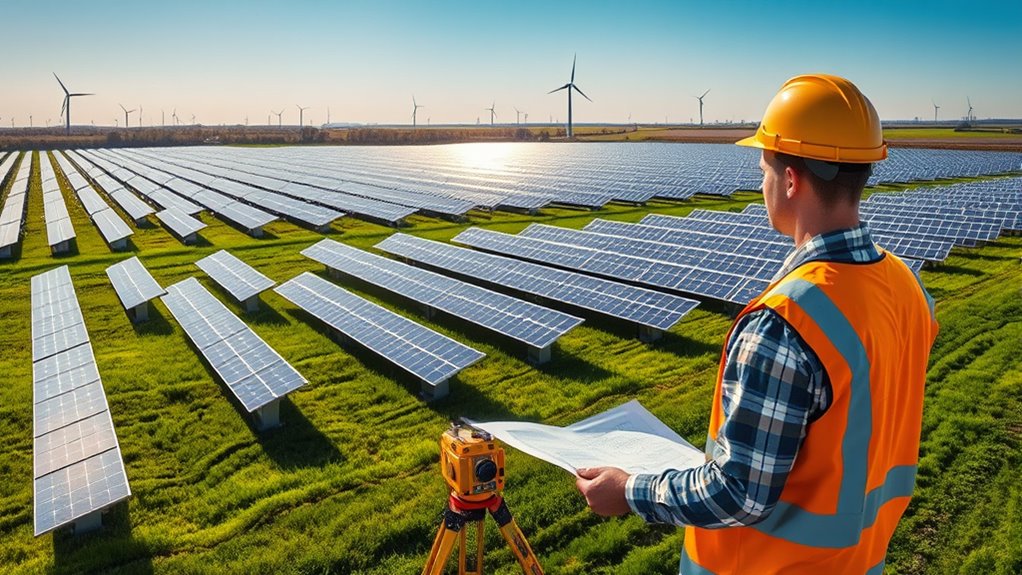
Since efficient space use directly impacts your solar farm’s performance, you’ll want to carefully design its layout. Begin by mapping your land’s topography to identify the best orientation for solar panels—typically south-facing in the northern hemisphere for maximum sun exposure.
Efficient layout design starts with mapping your land’s topography and orienting panels for optimal sun exposure.
Plan rows with enough spacing to prevent shading, which reduces panel efficiency. Factor in access roads for maintenance and equipment transport without blocking sunlight.
Consider the tilt angle of your panels to match your location’s latitude, optimizing energy capture year-round. Also, plan space for inverters, transformers, and other essential equipment.
Don’t forget to leave room for future expansion. Using design software or consulting with a solar engineer can help you create an efficient, scalable layout that maximizes energy output and minimizes land use conflicts.
Hire Installation Contractors and Assemble Your Team
Although designing your solar farm layout is essential, you’ll need skilled installation contractors and a reliable team to bring your plans to life. Hiring the right professionals guarantees your project meets safety standards and stays on schedule.
To assemble your team, consider these steps:
- Research contractors with solar farm experience and check their certifications. It’s important to find people who really know their stuff.
- Interview candidates to assess their expertise and communication skills. You want folks who not only have the skills but can also keep you in the loop.
- Verify references and review past project outcomes. This helps you see how they performed before and if they’re trustworthy.
- Establish clear contracts detailing timelines, responsibilities, and costs. Being upfront about expectations keeps everyone on the same page.
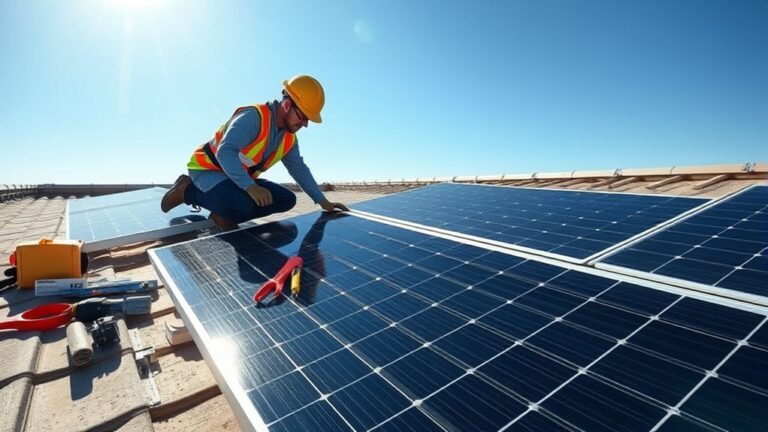
Oversee Solar Farm Construction and Installation
You’ll need to manage the construction timeline closely to keep the project on track. Coordinating installation teams effectively guarantees everything runs smoothly.
Don’t forget to enforce safety compliance to protect everyone on site. It’s all about making sure the work gets done right and safely.
Managing Construction Timeline
When managing the construction timeline for your solar farm, staying organized and proactive is essential. You’ll want to keep tasks on track and avoid costly delays by continuously monitoring progress and addressing issues immediately.
Here are four key steps to manage your timeline effectively:
- Set clear milestones – Define specific deadlines for each phase, from site prep to panel installation.
- Regularly update your schedule – Adjust timelines based on real-time progress and unforeseen challenges.
- Communicate frequently – Keep all stakeholders informed to ensure everyone’s aligned and can respond quickly.
- Prepare for contingencies – Build buffer time into your schedule for weather delays or supply issues.
It’s really about staying ahead of the game and being ready to pivot when needed. That way, your project stays smooth and on point.
Coordinating Installation Teams
Keeping your construction timeline on track depends heavily on how well you coordinate the installation teams. You’ll need to clearly assign tasks, set deadlines, and maintain open communication to avoid delays.
Regular check-ins help you identify and resolve issues quickly. Make sure each team understands their role and how it fits into the bigger picture to keep everyone aligned.
Here’s a simple way to organize your teams:
| Team | Responsibility |
|---|---|
| Electrical Crew | Wiring and inverter installation |
| Structural Team | Mounting solar panels |
| Project Managers | Scheduling and quality control |
Ensuring Safety Compliance
Although managing multiple teams can be challenging, guaranteeing safety compliance during solar farm construction is non-negotiable. You must prioritize safety protocols to protect workers and avoid costly delays or fines.
Start by reviewing all relevant local and federal regulations. Then, implement an all-encompassing safety plan tailored to your site’s risks.
Regularly train your teams on proper equipment use and emergency procedures. Finally, conduct frequent inspections to identify and address hazards promptly.
Here’s how to guarantee safety compliance:
- Understand and apply OSHA and local regulations.
- Develop and communicate a detailed safety plan.
- Provide ongoing safety training for all personnel.
- Perform regular site inspections and corrective actions.
Stay proactive—safety isn’t just a rule; it’s your responsibility.
Connect Your Solar Farm to the Power Grid
Before your solar farm can start generating revenue, you’ll need to connect it to the power grid. Begin by contacting your local utility company to understand their interconnection requirements and application process.
Submit all necessary documentation, including technical specifications and system design details. You’ll also need to install appropriate metering equipment to measure electricity production.
Work closely with your utility to schedule inspections and comply with grid safety standards. Once approved, your solar farm can be integrated into the grid, allowing you to sell excess power back to the utility.
This step is essential for turning your solar energy into income, so stay organized and proactive throughout the process. Doing this will help you avoid delays and guarantee a smooth connection to the power grid.
Monitor and Maintain Your Solar Farm for Long-Term Success
You’ll need to perform regular inspections to keep your solar farm running efficiently. Cleaning the panels and handling routine upkeep will prevent energy loss.
When issues pop up, troubleshooting quickly will help maintain consistent performance. It’s all about staying on top of things to keep everything working smoothly.
Regular Performance Inspections
To keep your solar farm operating effectively, you need to perform regular inspections that identify potential issues before they escalate. These inspections help you catch problems early, guaranteeing consistent energy output and avoiding costly repairs.
Focus on these key areas during your checks:
- Panel Integrity – Look for cracks, discoloration, or damage that might reduce efficiency.
- Electrical Connections – Ensure all wiring and connections are secure and free from corrosion.
- Inverter Performance – Verify inverters are operating within ideal parameters without error codes.
- Shading and Obstructions – Check for new obstacles like growing vegetation or debris that could block sunlight.
Regular checks like these make a big difference in keeping everything running smoothly. It’s all about spotting small issues before they become big headaches!
Cleaning and Upkeep
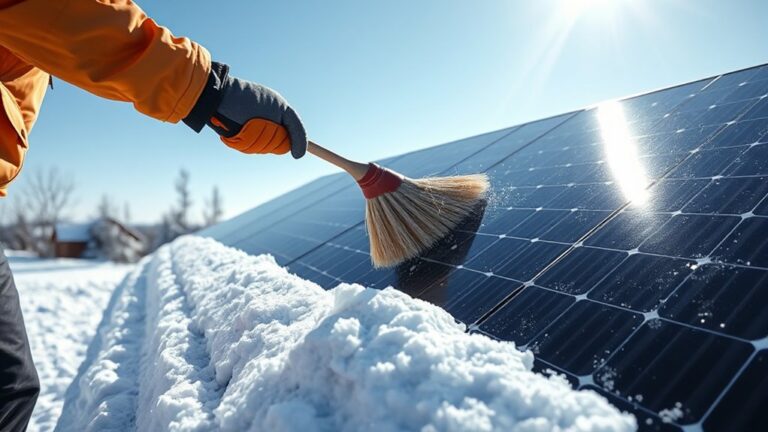
Although regular inspections catch many issues, keeping your solar panels clean and well-maintained is just as crucial for maximizing energy production. Dirt, dust, bird droppings, and debris can considerably reduce efficiency, so schedule routine cleanings based on your location’s conditions.
Use soft brushes or low-pressure water to avoid damaging the panels. Besides cleaning, check mounting structures and wiring for signs of wear or corrosion.
Keep vegetation trimmed to prevent shading and ensure proper airflow. Also, monitor inverter performance and battery storage regularly to maintain ideal operation.
Don’t forget to document maintenance activities and energy output to track trends and address potential problems early. By staying proactive with cleaning and upkeep, you’ll extend your solar farm’s lifespan and keep it operating at peak performance for years to come.
Troubleshooting Common Issues
When solar panels or system components don’t perform as expected, quickly identifying and resolving issues prevents costly downtime and energy loss. You’ll want to monitor your solar farm regularly using performance data and visual inspections.
If something seems off, follow these steps to troubleshoot:
- Check for shading or debris: Even small obstructions can markedly reduce output.
- Inspect wiring and connections: Loose or damaged cables cause power drops or failures.
- Test inverters: Faulty inverters can disrupt the entire system’s performance.
- Review system software: Firmware updates or error logs may reveal hidden problems.
Frequently Asked Questions
What Are the Environmental Impacts of Solar Farms?
You reduce carbon emissions and fossil fuel use with solar farms, but you’ll also impact land habitats and local wildlife. It’s something to keep in mind when planning.
You’ll want to manage water use and waste from panels to minimize environmental harm effectively. Taking these steps helps make solar energy more sustainable overall.
How Do Solar Farms Affect Local Wildlife?
You’d think solar farms turn wildlife into sunbathers, but they actually disrupt habitats and migration routes.
Still, with careful planning, you can protect local species while harvesting sunshine—nature and tech can coexist, surprisingly well.
Can Solar Farms Be Relocated After Installation?
You can relocate solar farms, but it’s costly and complex. You’ll need to dismantle panels, transport equipment, and reinstall everything carefully.
Honestly, it’s usually easier to plan the location well upfront rather than move later. Moving a solar farm isn’t something to take lightly!
What Incentives Are Available for Solar Farm Owners?
You can take advantage of tax credits, grants, and rebates offered by federal and state programs. Many also provide performance-based incentives and accelerated depreciation, helping you reduce upfront costs and improve your solar farm’s profitability.
These incentives make it easier to get started and can really boost your returns over time. It’s definitely worth exploring what’s available in your area to maximize your benefits.
How Long Does a Solar Farm Typically Last?
Think of your solar farm as a reliable old friend—it typically lasts 25 to 30 years.
With proper maintenance and occasional upgrades, you’ll keep those panels shining brightly.
They’ll be powering your investment well into the future.
Conclusion
Starting a solar farm might seem intimidating, but by following these essential steps, you’ll turn your vision into reality. Like planting a seed that grows into a strong tree, each decision you make now builds the foundation for a sustainable energy future.
Stay focused, stay informed, and keep your team close. With dedication and care, your solar farm will shine bright, powering communities and fueling clean energy for years to come.
By taking these steps, you’re not just creating a solar farm—you’re investing in renewable energy that benefits the environment and your community. Remember, success comes from careful planning, smart choices, and consistent effort. So, get ready to harness the power of the sun and make a lasting impact with your solar energy project.