How Do Solar Panels Work Through Windows?
You can generate solar power through windows using special photovoltaic technology that converts filtered sunlight into electricity while still letting natural light in. This means you get the benefits of solar energy without needing traditional panels on your roof.
Unlike regular solar panels that require direct sunlight, these solar cells work efficiently behind glass, making them perfect for windows.
That said, the energy output does drop slightly because some light is lost through the glass. But don’t worry, different types of glass and innovative solar materials are designed to optimize performance and boost efficiency.
If you’re curious about how these systems work and the benefits they offer, keep exploring the exciting possibilities of solar energy through windows!
Key Takeaways
- Solar panels behind windows convert sunlight passing through glass into electricity by exciting electrons in photovoltaic materials.
- The type of glass really matters here. Clear glass lets in the most light, but tinted or low-E glass can cut down how well the panels work.
- There are some cool new technologies like transparent and dye-sensitized solar cells. These help capture more energy through windows without messing with the view too much.
- Just so you know, energy output usually drops by about 20% to 40% because sunlight gets filtered or isn’t as strong.
- To get the best results, it’s smart to place panels in the right spots, keep them clean, and use glass with low tint. That way, you can squeeze out as much power as possible behind windows.
How Traditional Solar Panels Use Direct Sunlight
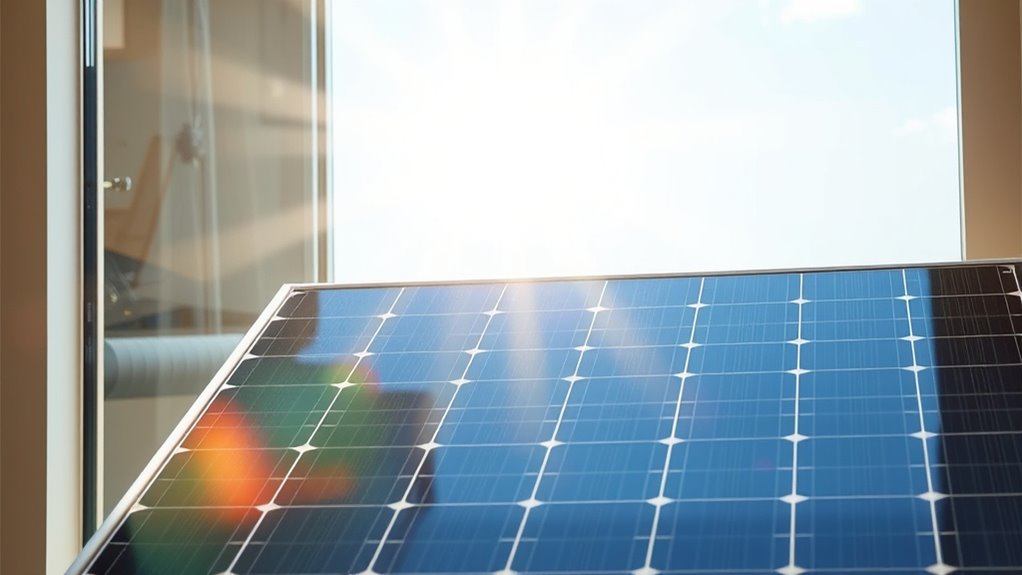
Although solar panels can capture sunlight in various conditions, traditional panels rely on direct sunlight to generate the most energy. When sunlight hits the solar cells, it excites electrons, creating an electric current.
You’ll find these panels work best when they receive unobstructed, direct rays from the sun. If clouds or shadows block the sun, the energy output drops considerably.
You should position your panels at an angle that maximizes exposure during peak sunlight hours, usually facing south in the northern hemisphere. While they can still produce some power on cloudy days, don’t expect the same efficiency.
Understanding this helps you optimize placement and manage expectations about how much energy you can generate with traditional solar panels. It’s pretty straightforward once you get the hang of it!
Can Solar Panels Generate Power Through Glass Windows?
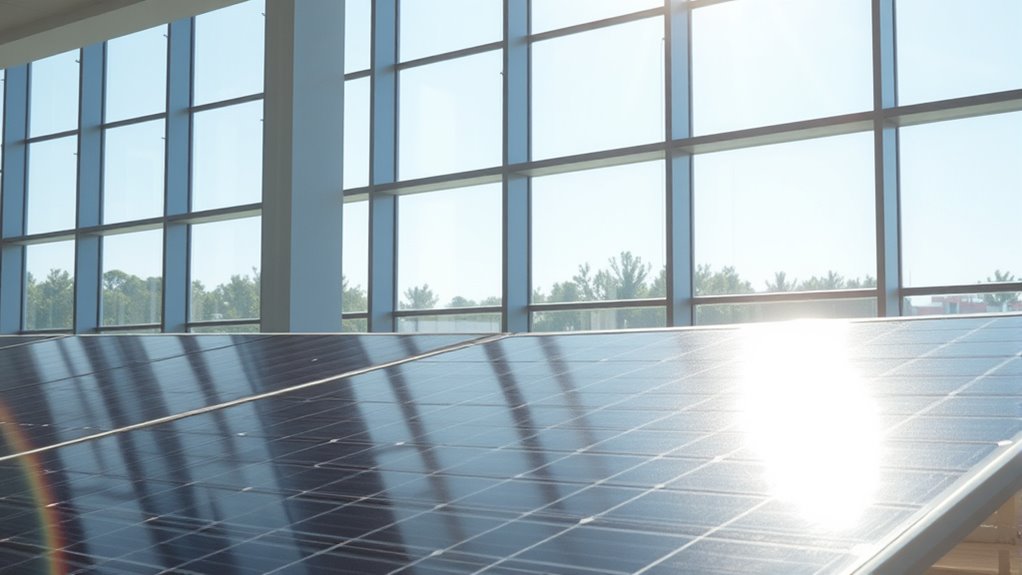
You might wonder if solar panels can generate power through glass windows. The type of glass and its transparency play a big role in how much sunlight actually reaches the panels.
Understanding these factors helps you see how efficient solar panels can be when placed behind different window types. It’s pretty interesting once you get into the details!
Glass Transparency Impact
Since glass can block or reduce sunlight, solar panels placed behind windows often produce less energy than those installed outdoors. The type and quality of glass directly affect how much light reaches the solar cells.
If you want your solar panels to work efficiently through a window, consider the transparency and coating of the glass. Some glass types filter out ultraviolet or infrared light, reducing energy capture.
Here’s what impacts glass transparency and solar performance:
- Tinted or reflective coatings can considerably reduce light transmission.
- Double or triple-pane windows may block more sunlight than single-pane glass.
- Dirt and smudges on glass further decrease the amount of light reaching the panels.
Choosing clear, untreated glass maximizes sunlight exposure and helps your solar panels perform better through windows. It’s a simple step that can really make a difference!
Solar Panel Efficiency
How well can solar panels generate power through glass windows? The efficiency takes a hit because glass reduces the sunlight reaching the solar cells. Standard windows reflect and absorb some light, so your panels won’t work as effectively as they would in direct sunlight.
You’ll typically see efficiency drop by 20% to 40%, depending on the glass type and thickness. While solar panels can still produce electricity, the reduced intensity means less energy overall. If you’re relying on window-mounted panels, expect lower power output compared to outdoor installations.
However, with advancements in technology and specially designed transparent solar cells, efficiency is improving. Still, glass always acts as a barrier, so keep realistic expectations about how much power your solar panels can generate through windows.
Types Of Window Glass
The type of window glass plays a significant role in determining how much sunlight reaches your solar panels and, consequently, how much power they generate. Not all glass transmits sunlight equally, so understanding the differences helps you make better decisions about panel placement and efficiency.
Here are three common types of window glass and how they affect solar energy transmission:
- Clear glass: Offers the highest light transmission, allowing more sunlight to reach your solar panels and maximizing power output.
- Tinted glass: Reduces glare and heat but also cuts down on sunlight, lowering the energy your panels can generate.
- Low-E glass: Coated to reflect infrared and UV rays, improving insulation but limiting the visible light that solar panels need.
Choosing the right glass type is essential for optimizing solar energy through windows. It’s worth considering what fits best with your energy goals and the setup you have.
Types of Solar Technologies That Work Behind Windows
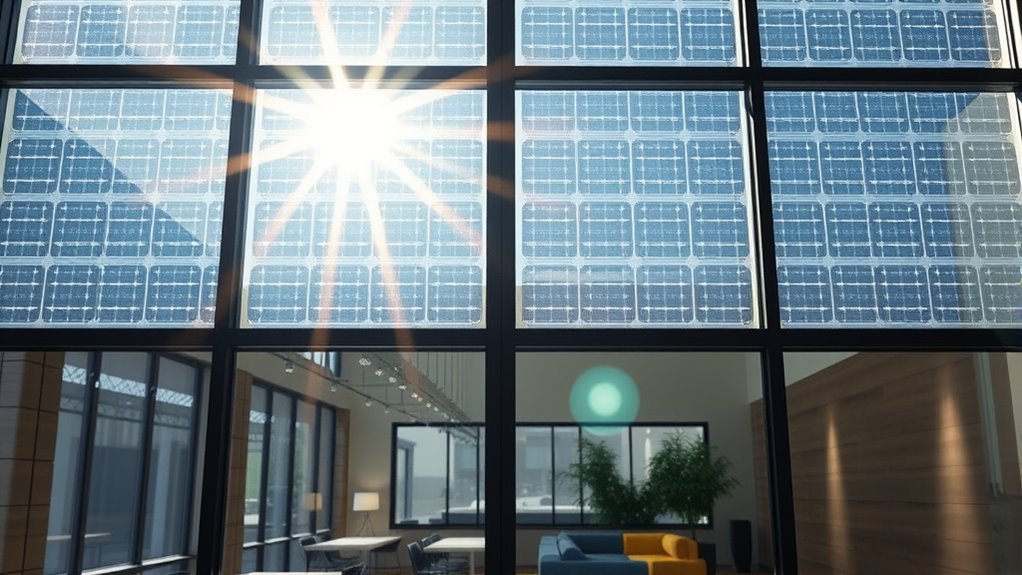
Although traditional solar panels struggle to capture energy through glass, several innovative solar technologies have been designed specifically to work behind windows. These technologies adapt to the unique light conditions passing through glass, allowing you to generate power without bulky panels.
| Technology Type | Description | Best Use Case |
|---|---|---|
| Transparent Solar Cells | Converts light while allowing visibility | Office windows, skylights |
| Dye-Sensitized Solar Cells (DSSC) | Uses organic dyes to absorb light | Decorative glass, low-light areas |
| Perovskite Solar Cells | Thin, flexible, efficient layers | Smart windows, building-integrated PV |
| Organic Photovoltaics | Lightweight, flexible solar films | Portable devices, curved glass |
| Luminescent Solar Concentrators | Redirects light to panel edges | Large glass facades |
You can choose the right technology depending on your window type and energy needs. It’s pretty cool how these options let you blend energy generation with everyday design. So, whether you want to power your office or add some smart tech to your building, there’s a solution that fits.
How Solar Panels Behind Windows Turn Light Into Power
When sunlight passes through a window, specialized solar panels capture and convert it into electricity by harnessing the energy carried by photons. These panels use photovoltaic materials that react to the light, exciting electrons and creating an electric current.
Even though the light intensity is reduced after passing through glass, the panels are designed to work efficiently with this filtered light. Pretty clever, right?
Here’s how they turn light into power:
- Photon absorption: Solar cells absorb photons, freeing electrons.
- Electron movement: Freed electrons flow through the cell, generating current.
- Energy conversion: The current is converted into usable electricity for your devices.
Pros and Cons of Installing Solar Panels Behind Windows
You’ll want to weigh both the energy efficiency challenges and the design benefits before installing solar panels behind windows.
While they can blend seamlessly with your space, installation and maintenance might get tricky.
Let’s explore what this means for your setup.
Energy Efficiency Challenges
How effectively can solar panels generate energy when placed behind windows? The main challenge lies in reduced sunlight exposure. Glass filters and reflects some light, so panels don’t get the full intensity they need.
This decreases their overall energy output. You also have to think about the type of window glass. Tinted or double-pane windows, for example, further limit sunlight penetration.
Here are key energy efficiency challenges to keep in mind:
- Light attenuation: Windows block or reflect a significant portion of sunlight, lowering panel efficiency.
- Heat buildup: Enclosed spaces behind glass can cause panels to overheat, reducing performance.
- Angle and positioning: Window orientation often limits the ideal angle for solar energy absorption.
Understanding these factors helps you decide if behind-the-window solar panels meet your energy goals.
Aesthetic and Design Benefits
Although installing solar panels behind windows may reduce their efficiency, this setup offers unique aesthetic and design advantages that appeal to many homeowners and architects. You can maintain your building’s sleek exterior without bulky panels cluttering the facade.
Solar panels behind glass blend seamlessly with windows, preserving natural light and views while generating energy. This integration supports modern, minimalist design trends and keeps your property visually appealing.
Plus, you can customize panel placement to complement architectural features, enhancing curb appeal. However, you should weigh these benefits against the slight drop in energy output.
If visual harmony matters to you and you want a subtle solar solution, placing panels behind windows can be a smart choice that balances form and function effectively.
Installation and Maintenance Issues
While placing solar panels behind windows enhances your home’s look, it also brings specific installation and maintenance challenges you should consider. Installing panels behind glass requires careful assessment to guarantee they receive enough sunlight, which might limit placement options.
Maintenance can be tricky since you’ll need access to both the interior and exterior sides of the window for cleaning and repairs. Plus, condensation or dirt trapped between the window and panel can reduce efficiency and cause damage over time.
Here are key points to keep in mind:
- Limited sunlight exposure may reduce energy output.
- Accessing panels for maintenance could be inconvenient.
- Potential moisture buildup between glass and panels can affect durability.
Tips for Installing Solar Panels Behind Windows
If you want to install solar panels behind windows, you’ll need to take into account factors like glass type, angle, and sunlight exposure to maximize efficiency. Choose windows with low tint and minimal coatings that block UV light.
Position panels where sunlight hits directly for most of the day, and consider adjustable mounts to optimize the angle. Regularly clean the glass to prevent dirt buildup which reduces performance.
Here’s a quick guide:
| Factor | Recommendation | Reason |
|---|---|---|
| Glass Type | Clear or low-iron glass | Maximizes light transmission |
| Angle | Adjustable or fixed at 30° | Optimizes solar absorption |
| Sunlight Exposure | South-facing windows | Receives the most sunlight |
| Maintenance | Clean glass regularly | Prevents efficiency loss |
Frequently Asked Questions
How Long Do Solar Panels Behind Windows Typically Last?
You can expect solar panels behind windows to last about 20 to 25 years.
That said, their efficiency might decrease faster compared to outdoor panels. This happens because they get less sunlight and might experience heat buildup behind the glass.
Can Solar Panels Behind Windows Affect Indoor Temperature?
You might think solar panels behind windows turn your room into a sauna, but they actually have minimal impact on indoor temperature.
They absorb sunlight, yet most heat still passes through. So, your comfort stays pretty normal.
What Maintenance Do Solar Panels Behind Windows Require?
You’ll need to clean the solar panels regularly to remove dust and smudges. Also, check for any damage or loose connections to keep everything working smoothly.
And don’t forget to keep your windows clear. That way, you’ll maximize the sunlight reaching the panels behind them.
Are Solar Panels Behind Windows More Expensive Than Rooftop Panels?
Yes, solar panels behind windows usually cost more than rooftop panels because they require special transparent materials and installation techniques.
You’ll also face efficiency losses, which can increase overall expenses compared to traditional rooftop setups. So, while it might seem like a cool idea, it can end up being pricier and less efficient.
Can Tinted or Coated Windows Reduce Solar Panel Efficiency?
Yes, tinted or coated windows can reduce solar panel efficiency because they block or absorb some sunlight.
You’ll notice less energy reaching your panels, so their output drops compared to panels exposed to direct, unobstructed sunlight. It’s a bit like putting a filter between your panels and the sun. This filter cuts down the amount of light that actually gets through.
Conclusion
Think of sunlight as a river of energy flowing through your window, and solar panels as a skilled fisherman casting nets to catch that power. While traditional panels thrive in open sunlight, innovative solar technologies can quietly harvest energy behind your glass, turning light into electricity without disrupting your view.
By embracing these solutions, you’re not just capturing sunlight—you’re inviting a sustainable future right into your home, one window at a time. Using solar panels through windows lets you save energy without sacrificing natural light or aesthetics. It’s a smart way to make your home greener and reduce your electricity bills, all while keeping your windows bright and beautiful.
So, how do solar panels work through windows? They use advanced materials that absorb and convert sunlight efficiently, even when behind glass. This means you can enjoy clean, renewable energy indoors, contributing to a more eco-friendly lifestyle with minimal effort.