How Does Solar Energy Work at Night?
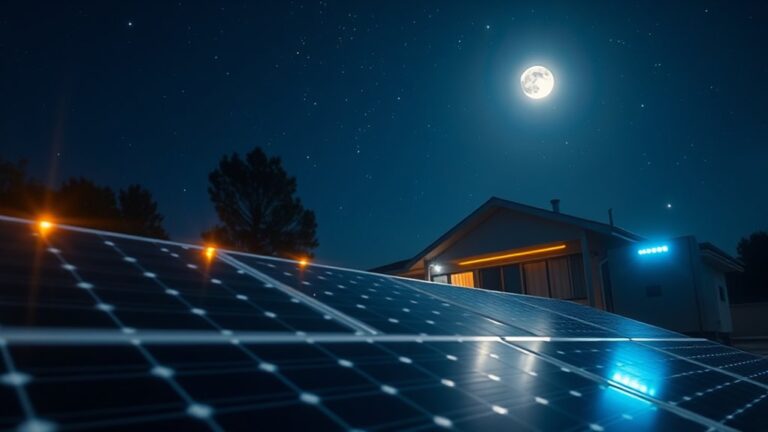
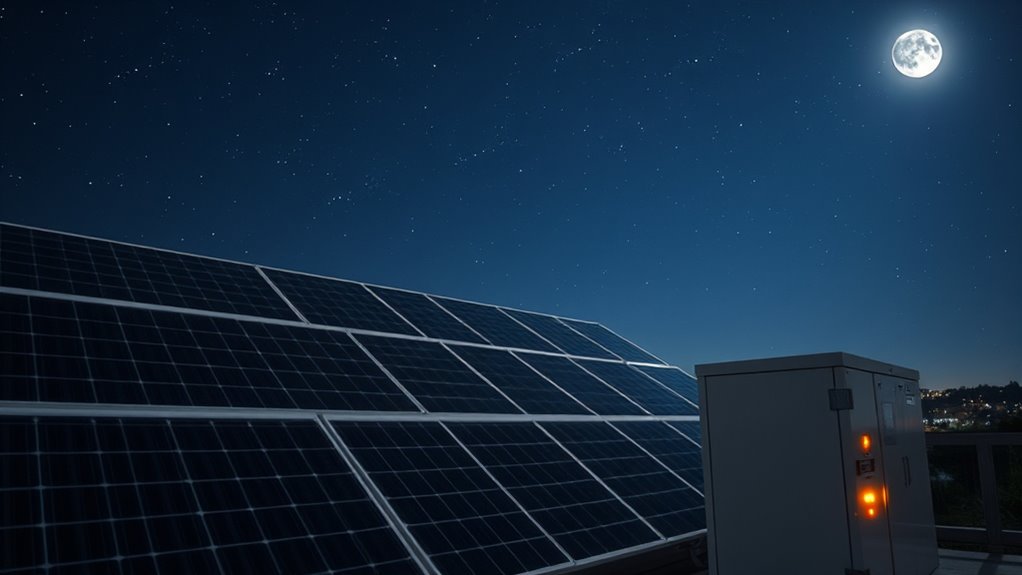
You might wonder how solar energy works at night when there’s no sunlight. After all, solar panels need sunlight to excite electrons and generate electricity, so they can’t produce power once the sun goes down. But don’t worry—solar energy isn’t just for daytime use.
Even at night, you can still benefit from solar power by using batteries that store excess energy collected during the day. These batteries save up electricity so you can tap into it when the sun isn’t shining.
Another option is thermal systems, which store heat captured by the sun to use later on.
These solutions make it possible to keep your home powered continuously, no matter the time. Exploring how these technologies work can show you even smarter ways to enjoy round-the-clock solar energy. Cool, right?
Key Takeaways
- Solar panels do not generate electricity at night because there’s no sunlight or photon energy.
- Photovoltaic cells need sunlight to excite electrons and create an electrical current.
- But don’t worry, energy storage systems like batteries come to the rescue.
- They store extra solar power made during the day so you can use it at night.
- Lithium-ion batteries are great at storing and releasing solar energy when the sun isn’t shining.
- Another cool option is thermal storage, which captures and holds heat from the sun.
- This heat can then provide power or warmth even after dark.
How Solar Energy Works at Night Despite No Sunlight
Although solar panels don’t generate electricity without sunlight, you can still use solar energy at night by relying on energy storage systems like batteries. When your panels soak up sunlight during the day, they convert it into electricity, which your battery stores for later use.
At night, instead of drawing power from the grid, your home taps into this stored energy. This means you’re not left in the dark just because the sun’s gone down.
Modern batteries hold enough charge to power lights, appliances, and even your heating or cooling system overnight. With this setup, you maximize your solar investment and keep your energy usage sustainable around the clock.
Why Solar Panels Don’t Produce Power After Dark
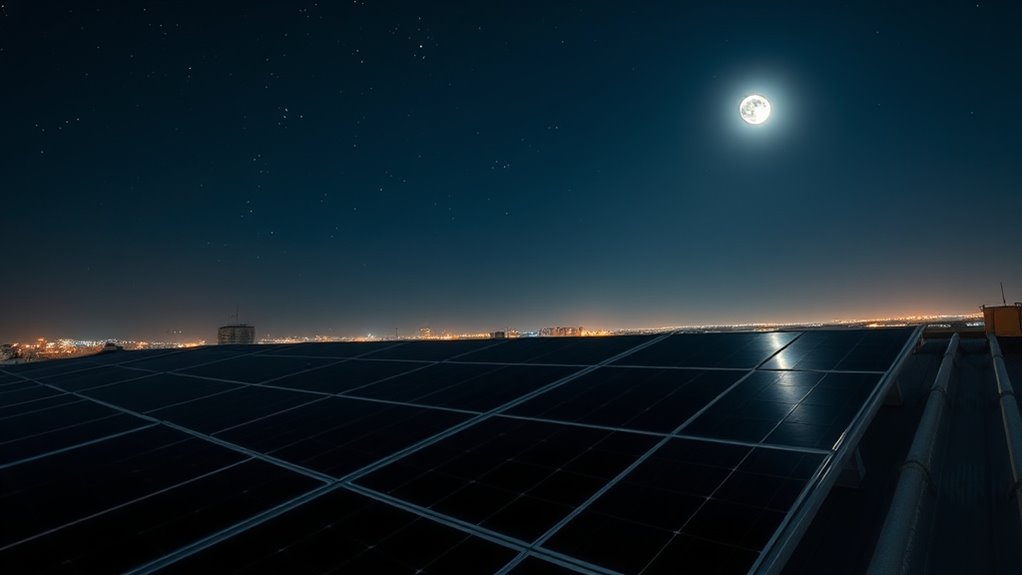
You rely on solar panels to capture sunlight and turn it into electricity, but once the sun sets, they can’t generate power. That’s because photovoltaic cells need sunlight to create an electric current.
Solar Panels Need Sunlight
Since solar panels generate electricity by converting sunlight into energy, they don’t produce power once the sun goes down. You need sunlight for the panels to work because:
- Solar panels rely on photons from sunlight to excite electrons. Without sunlight, there are no photons to generate an electric current.
- Panels can’t store energy; they only convert it as it arrives. So, when the sun sets, they simply stop working.
- Also, ambient light at night isn’t strong enough to activate the panels. That’s why you won’t get power from them in the dark.
Photovoltaic Cell Functionality
Understanding why solar panels stop producing power after dark requires a look inside the photovoltaic cells themselves. These cells convert sunlight directly into electricity by exciting electrons when light hits the semiconductor material, usually silicon.
When photons from sunlight strike the cell, they energize electrons, creating an electric current. Without sunlight, there aren’t enough photons to generate this flow of electrons, so the cells simply don’t produce electricity at night.
Since photovoltaic cells rely entirely on light energy to function, they can’t generate power in darkness or low-light conditions. This is why, no matter how efficient your solar panels are, they’ll stop working once the sun sets and the energy source they depend on disappears.
Energy Storage Solutions
How can you keep the lights on when the sun goes down? Since solar panels don’t produce energy at night, you need reliable energy storage solutions to bridge the gap.
These systems store excess power generated during the day, so you can use it after sunset. Here are four common options:
- Lithium-ion batteries – Popular for home solar setups due to high efficiency and long lifespan.
- Lead-acid batteries – More affordable but bulkier and shorter-lived.
- Thermal storage – Stores heat generated by solar energy to be used later for heating or electricity.
- Pumped hydro storage – Uses excess electricity to pump water uphill, releasing it to generate power when needed.
Picking the right storage solution means your solar energy will work round the clock. It’s all about making sure you’ve got power whenever you need it.
How Solar Batteries Store Energy for Nighttime Use
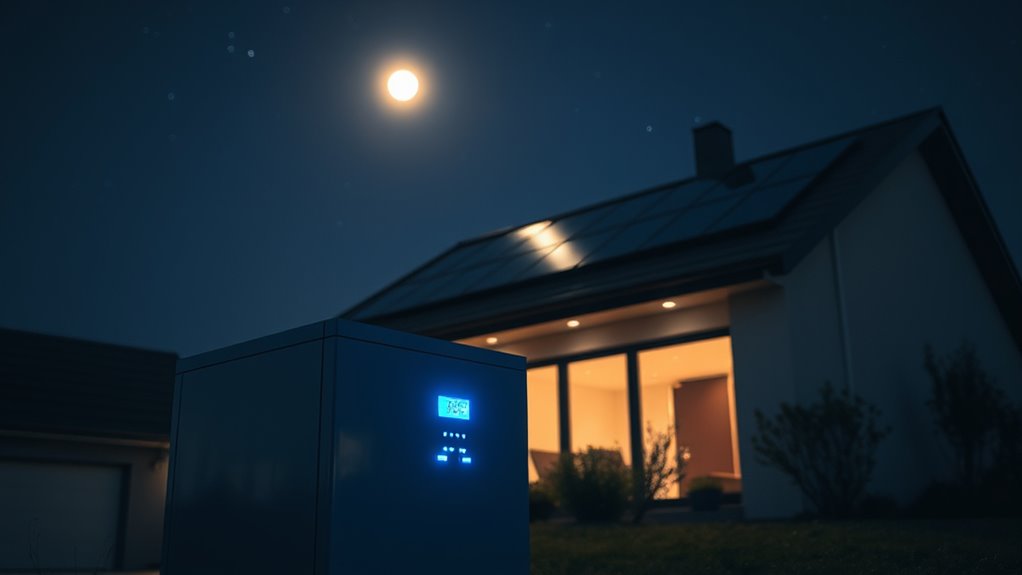
While solar panels capture sunlight during the day, solar batteries store that energy so you can use it when the sun goes down. These batteries work by converting the electrical energy your panels generate into chemical energy, which they hold until needed.
When night falls or clouds block sunlight, the battery releases this stored energy, powering your home seamlessly. Modern solar batteries, like lithium-ion types, offer high efficiency and long life, ensuring your energy lasts through the night.
You’ll typically find them paired with an inverter that manages the flow between your panels, battery, and home appliances. By storing excess power during peak sunlight, these batteries reduce your reliance on the grid, saving you money and providing backup during outages.
How Solar Thermal Storage Powers Homes After Dark
Solar batteries store electrical energy for nighttime use, but there’s another cool way to keep your home powered after dark—it’s all about capturing and storing heat. Solar thermal storage uses sunlight to heat up stuff like water, molten salt, or specially designed materials during the day.
Here’s how it powers your home after sunset:
- Solar collectors soak up sunlight and turn it into heat.
- That heat moves into a storage medium, which keeps the energy locked in really well.
- When the sun goes down, the stored heat slowly releases.
- This heat then runs a system—like radiant floor heating or steam turbines—to warm your home or even generate electricity.
Pretty neat, right? It’s a smart way to keep things cozy and powered up when it’s dark outside.
How Grid Integration and Smart Systems Enable 24/7 Solar Power
Even when the sun isn’t shining, you can still tap into clean energy thanks to grid integration and smart systems. These technologies connect your solar panels to a larger power grid, allowing you to draw electricity generated by solar farms elsewhere when your panels aren’t producing energy at night.
Smart systems also play a key role by managing energy flow efficiently—they monitor demand, predict usage patterns, and optimize when to store or release energy. This means your home or business can rely on solar power around the clock without interruptions.
Future Innovations Making Solar Energy Reliable Day and Night
As technology advances, you’ll see new solutions that make harnessing solar energy around the clock more practical and efficient. Future innovations focus on overcoming solar energy’s nighttime limitations by improving energy storage and capture methods.
Here are four promising developments:
- Advanced Battery Storage – Enhanced lithium-ion and solid-state batteries store excess energy longer and release it efficiently at night.
- Solar Paint and Windows – These materials capture solar power even in low-light conditions, extending energy generation beyond daylight.
- Artificial Photosynthesis – This technology mimics plants to convert sunlight into fuel, providing a stable energy source after sunset.
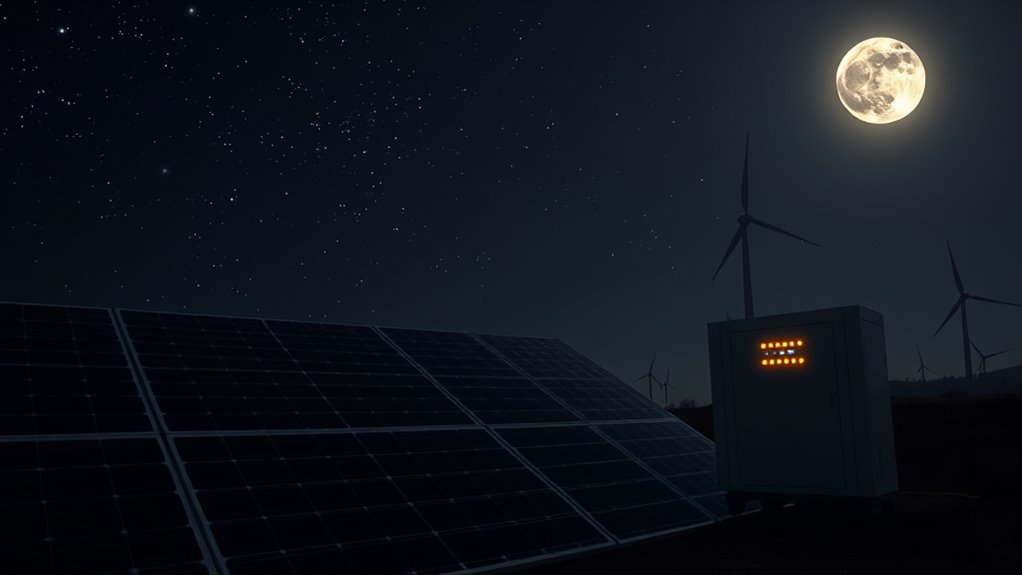
- Hybrid Solar Systems – Combining solar with wind or thermal power ensures continuous energy supply regardless of sunlight availability.
These breakthroughs will help you rely on solar energy anytime. So, it really becomes a truly 24/7 power source.
Frequently Asked Questions
How Much Do Solar Batteries Typically Cost?
Solar batteries typically cost between $5,000 and $7,000, depending on capacity and brand. You’ll find prices vary, but investing in a quality battery helps you store energy efficiently for use when the sun isn’t shining.
It’s worth thinking about how much energy you’ll need to store and how long you want your battery to last. That way, you can pick the right one without paying for more than you actually need.
Can Solar Panels Work During Cloudy Weather?
Think of solar panels as sun-hungry plants—they still soak up light even when clouds hide the sun. You’ll get less energy on cloudy days, but your panels will keep working and generating power for you.
What Maintenance Do Solar Energy Systems Require?
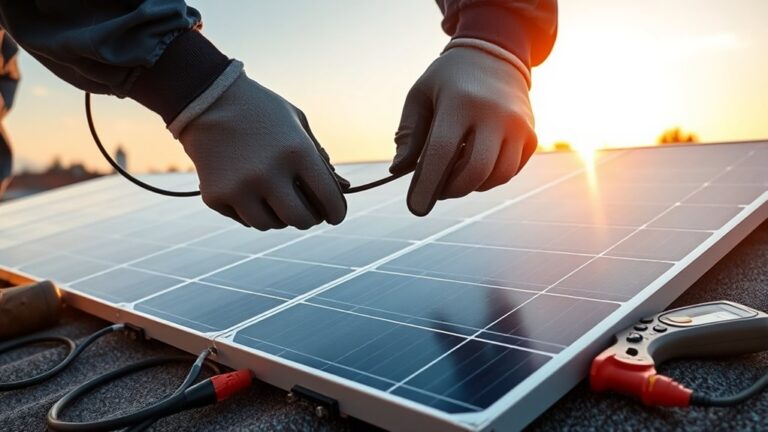
You’ll need to clean your panels regularly and check for debris or shading. It’s also important to inspect wiring for any damage.
Don’t forget to monitor your system’s performance often. Scheduling professional inspections every few years can really help keep your solar energy system efficient and long-lasting.
Are Solar Panels Recyclable?
Yes, you can recycle about 90% of a solar panel’s materials!
When you recycle your panels, you help reduce waste and recover valuable components like glass, silicon, and metals for new solar products.
It’s a great way to give these materials a second life and keep them out of landfills. Plus, recycling supports a more sustainable energy future!
How Long Do Solar Panels Last on Average?
You can expect solar panels to last about 25 to 30 years on average. They gradually lose efficiency over time, but with proper care, they’ll keep generating clean energy well beyond their warranty period.
It’s pretty impressive, right? Even after a couple of decades, they’re still doing their job, just a bit less efficiently. So, taking care of them really pays off in the long run!
Conclusion
Even though solar panels don’t generate power at night, you can still enjoy solar energy after dark thanks to storage solutions like batteries and thermal systems. These technologies store the sun’s energy during the day for use when it’s dark outside.
In fact, solar batteries can retain up to 90% of the energy they store, making nighttime use efficient and reliable. Plus, smart grids play a big role by balancing supply and demand. This ensures you get consistent power 24/7 without interruptions.
With ongoing innovations, solar energy is becoming a dependable option anytime you need it. Whether it’s through better battery storage or smarter grid systems, using solar power day and night is more achievable than ever. So, even when the sun isn’t shining, solar energy solutions keep your home powered sustainably and reliably.