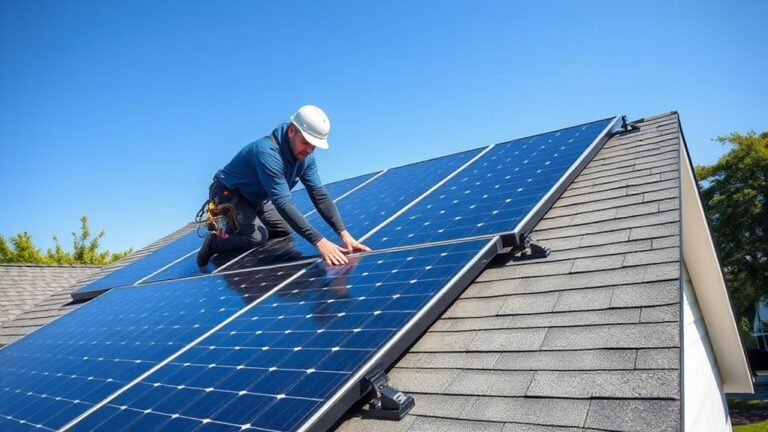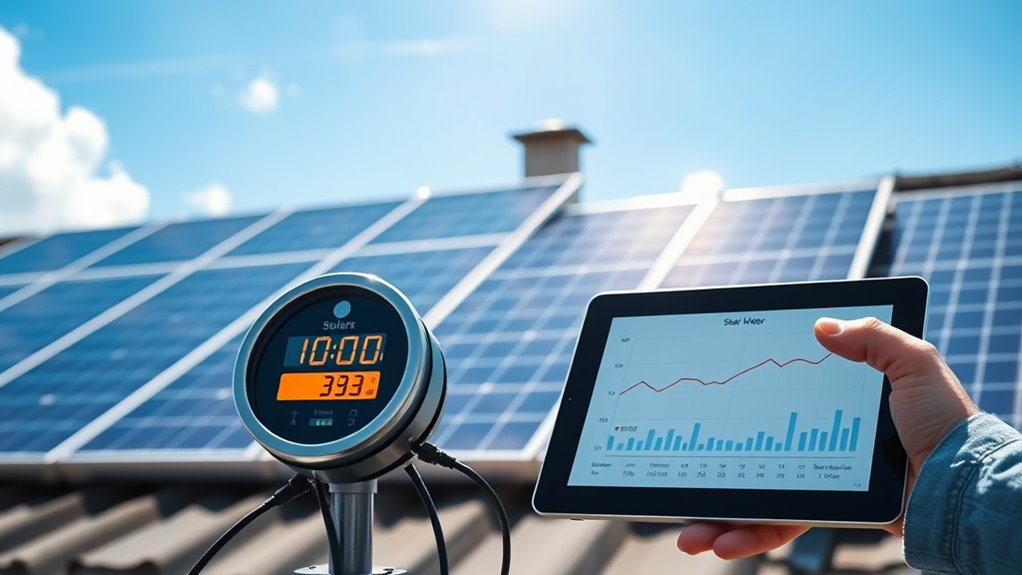
How Many Watts to Run a House on Solar – Step-by-Step Guide
To figure out how many watts you need to run your house on solar, start by calculating your daily electricity use from your utility bills and appliance wattages. This gives you a clear idea of your energy needs.
Then, divide that number by your location’s average peak sun hours to find the right system size.
Don’t forget to add about 20% extra to cover efficiency losses. This helps ensure your solar setup meets your needs even on less sunny days.
Next, choose solar panels that match this wattage to get the best performance.
If you want extra reliability, consider adding a battery backup. This way, you’ll have power even when the sun isn’t shining.
Keep exploring to uncover key tips for choosing and maintaining your ideal solar setup. It’s easier than you think, and it can save you money in the long run!
Key Takeaways
- Calculate your home’s average daily electricity use in watt-hours by checking your monthly kWh bills. You can also add up the wattage of your appliances multiplied by their operating hours.
- Next, divide the daily watt-hours by the average peak sun hours in your area. This will give you an estimate of the solar system wattage you need.
- Then, multiply that system wattage by 1.2. This extra 20% covers energy losses and efficiency drops that happen in real life.
- To figure out how many solar panels you need, divide the total wattage by the watt rating of one panel. Don’t forget to add a 10-20% buffer to be safe.
- Lastly, think about battery storage. Base this on your overall energy use, your peak power needs, and how much backup power you want. It’s all about making sure you have enough energy when you need it most.
Why Knowing Your Home’s Solar Watt Needs Matters

Before you invest in solar panels, you need to understand how many watts your home requires. Knowing this helps you choose the right system size, so you don’t overspend on unnecessary capacity or end up with insufficient power.
It guarantees your solar setup meets your energy needs efficiently, avoiding frequent outages or reliance on the grid. When you know your watt requirements, you can accurately calculate the number of panels and battery storage needed, optimizing both cost and performance.
This knowledge also guides maintenance planning and future expansion if your energy use changes. Ultimately, understanding your home’s watt needs helps you make informed decisions, maximize savings, and enjoy a reliable, eco-friendly energy source tailored specifically to your household.
What Affects How Many Solar Watts Your Home Requires
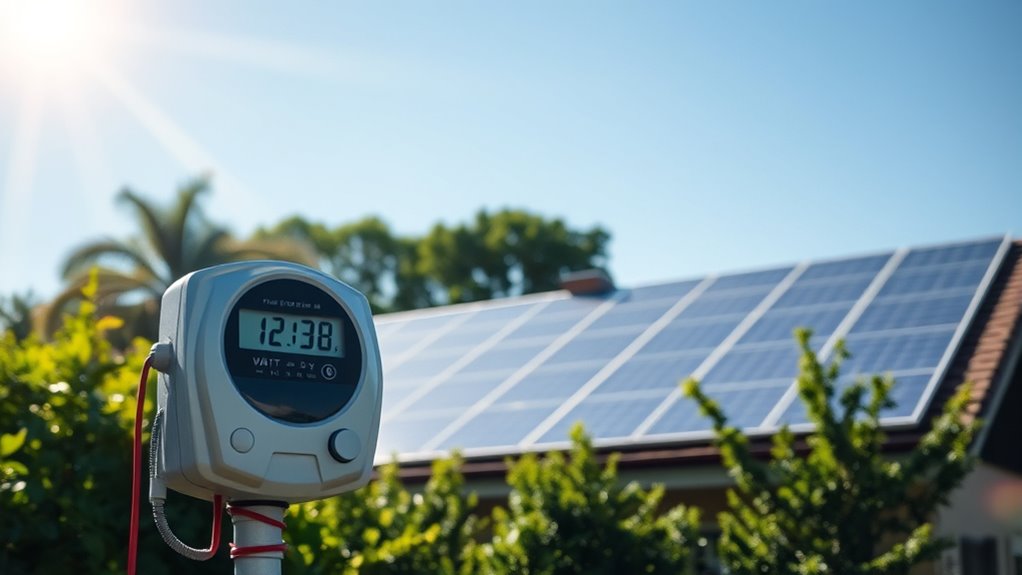
Understanding your home’s watt needs sets the stage for figuring out what factors influence those requirements. Several elements affect how many solar watts your home requires.
First, the size of your household and the number of electrical devices you use play a big role—more devices mean higher wattage. Next, the climate and sunlight availability in your location impact how much solar power you can generate daily.
Your home’s energy efficiency also matters; better insulation and energy-saving appliances reduce your watt needs. Plus, your lifestyle habits, like how often you use heating, cooling, or high-energy appliances, change your consumption.
Finally, future plans such as adding electric vehicles or expanding your home’s electrical capacity can increase your solar watt requirements. So, it’s good to think ahead when planning your system.
How to Calculate Your Daily Electricity Use in Watts

To accurately size your solar system, you need to calculate how many watts your household uses daily. Start by gathering your electricity bills to find your monthly kWh usage. Then, break that down into daily consumption by dividing by 30.
Next, list all your major appliances and their wattage ratings. Estimate how many hours each runs per day to get their daily watt-hour use. Finally, add up all these values for a total daily wattage.
Here’s how to calculate your daily electricity use in watts:
- Review your monthly kWh from your electricity bill
- Convert monthly kWh to daily kWh (divide by 30)
- Identify wattage of each appliance
- Estimate daily operating hours per appliance
- Multiply wattage by hours and sum totals
This gives you a clear daily wattage baseline. Pretty straightforward, right? Just take it step by step and you’ll have the info you need in no time.
How to Convert Your Energy Use Into Solar System Size
Now that you know your daily electricity use in watts, you can figure out the size of the solar system needed to power your home. Start by dividing your daily watt-hours by the average peak sun hours in your location—this tells you how many watts your system must generate each hour of sunlight.
For example, if you use 12,000 watt-hours daily and your area gets 5 peak sun hours, divide 12,000 by 5, which equals 2,400 watts. This means you need a 2.4 kW solar system.
Next, factor in system losses, usually around 20%, caused by shading, wiring, and inverter efficiency. Multiply your initial wattage by 1.2 to compensate.
In this example, 2,400 × 1.2 equals 2,880 watts, so a 2.9 kW system is ideal for your needs. Easy, right?
How to Choose Solar Panels That Match Your Wattage Needs
To choose the right solar panels, start by calculating your daily energy usage in watt-hours. Then, find panels with output capacities that match or exceed this amount to guarantee your system meets your needs.
This way, you’ll get a solar setup that powers your home efficiently. It’s all about making sure your panels can keep up with what you use.
Calculating Daily Energy Usage
How do you figure out the right solar panel size for your home? Start by calculating your daily energy usage. This figure helps you understand how much power your solar system needs to generate each day.
Here’s how you can do it: Gather your electricity bills for the past year. Then, note the kilowatt-hours (kWh) used each month.
Next, calculate the average daily kWh by dividing monthly usage by 30. Don’t forget to account for seasonal variations in energy use.
Also, consider any plans to add or remove major appliances. This way, you’ll get a more accurate estimate for your solar needs.
Matching Panel Output Capacity
Once you know your daily energy needs, you can select solar panels that provide the right output capacity to meet those demands. Start by checking each panel’s watt rating, which usually ranges from 250 to 400 watts.
Divide your total daily wattage requirement by the panel’s watt rating to determine how many panels you need. For example, if you need 3,000 watts daily and choose 300-watt panels, you’ll need about 10 panels.
Keep in mind, real-world factors like shading, panel orientation, and efficiency losses affect output, so it’s wise to add a 10-20% buffer. Also, consider your roof space and budget when selecting panel size and quantity.
Matching your panel output accurately guarantees your system meets your household energy needs without overspending. It’s all about finding the right balance!
Do You Need Battery Backup? Planning for Storage and Efficiency
Although solar panels generate power during the day, you’ll need a battery backup if you want to store excess energy for use at night or during outages. Batteries help you maximize your solar investment by ensuring continuous power and improving energy independence.
When planning your storage, consider these factors:
- Daily energy consumption and peak usage times
- Battery capacity and discharge rates
- Battery life expectancy and warranty
- Compatibility with your solar inverter system
- Budget constraints versus long-term savings
Choosing the right battery backup system boosts your home’s energy efficiency and resilience. It also reduces reliance on the grid, which can save money and lower your carbon footprint.
Think about your lifestyle and power needs carefully to select a battery system that fits your goals and keeps your home running smoothly around the clock.
Frequently Asked Questions
How Long Does It Take to Install a Solar Power System?
It usually takes one to three days to install a solar power system, depending on your roof size and complexity.
Your installer will handle wiring, mounting panels, and connecting to the grid efficiently.
It’s a pretty quick process when you think about all the benefits you’ll get afterward!
What Maintenance Is Required for Solar Panels?
Don’t let dust settle on your solar panels! You’ll need to clean them regularly, check for shading or damage, and monitor system performance.
With minimal upkeep, your panels will keep shining brightly and running smoothly. It’s easier than you might think!
Are There Government Incentives for Installing Solar Panels?
Yes, you can take advantage of government incentives like tax credits, rebates, and grants when installing solar panels. These programs help lower your upfront costs and make going solar more affordable and rewarding for you.
It’s a great way to save money and make the switch to clean energy easier. So, definitely check out what incentives you might qualify for before you start your solar project!
Can Solar Panels Increase My Home’s Resale Value?
Coincidentally, yes, solar panels can boost your home’s resale value. Buyers often want energy savings and eco-friendly features, so your solar investment not only cuts bills but also makes your property more attractive and valuable in the market.
People are becoming more aware of the benefits of renewable energy, and having solar panels already installed can be a big selling point. It’s like offering them a head start on saving money and helping the environment.
How Do Weather Conditions Affect Solar Panel Performance?
Weather conditions can reduce your solar panels’ efficiency; cloudy days, rain, and snow block sunlight, while extreme heat can lower performance.
You’ll get the best output on clear, sunny days with moderate temperatures. It’s pretty straightforward—when the sun’s shining bright but the temperature isn’t too hot, your panels work their best.
Conclusion
Now that you know how to calculate your home’s solar watt needs, you’re ready to make smart energy choices. Remember, “measure twice, cut once” applies here—accurate calculations save you money and hassle.
By understanding your daily electricity use and choosing the right panels and battery backup, you’ll power your home efficiently with solar energy. It’s all about finding that perfect balance between your energy consumption and the solar system you install.
Take control of your energy future by investing in solar power that fits your needs. Watching your savings grow while reducing your carbon footprint feels pretty great, right? With the right wattage and system setup, running your house on solar becomes not just possible but practical and rewarding.