How Can You Store Solar Energy Best?
You can store solar energy best by using efficient batteries like lithium-ion for long-lasting power or thermal storage to hold heat for later use. These are some of the most popular solar energy storage options available today.
They capture excess energy during the day and make it available when the sun isn’t shining.
This means your home stays powered even after sunset, reducing your reliance on the grid.
Choosing the right storage system depends on your needs and budget. It’s also important to maintain your system properly to get the most out of it.
Explore more to see which options fit your lifestyle and learn how to keep them running smoothly. That way, you can enjoy reliable, clean energy whenever you need it.
Key Takeaways
- Store excess solar energy in batteries like lithium-ion for an efficient, long-lasting electricity supply during non-sunny periods. These batteries help you keep the power flowing even when the sun isn’t shining.
- Use thermal storage to capture heat for later use. This method is perfect for large-scale plants and home heating applications.
- Choose battery types based on your needs. Lead-acid batteries are great if you want a low-cost option. Lithium-ion batteries offer high efficiency, while flow batteries are ideal for scalability.
- Make sure to perform regular maintenance and monitor your battery health. Updating your system’s firmware also helps keep everything running smoothly.
- Schedule professional inspections at least once a year. This way, you can catch any issues early and make timely repairs or upgrades.
How Does Solar Energy Storage Work and Why It Matters
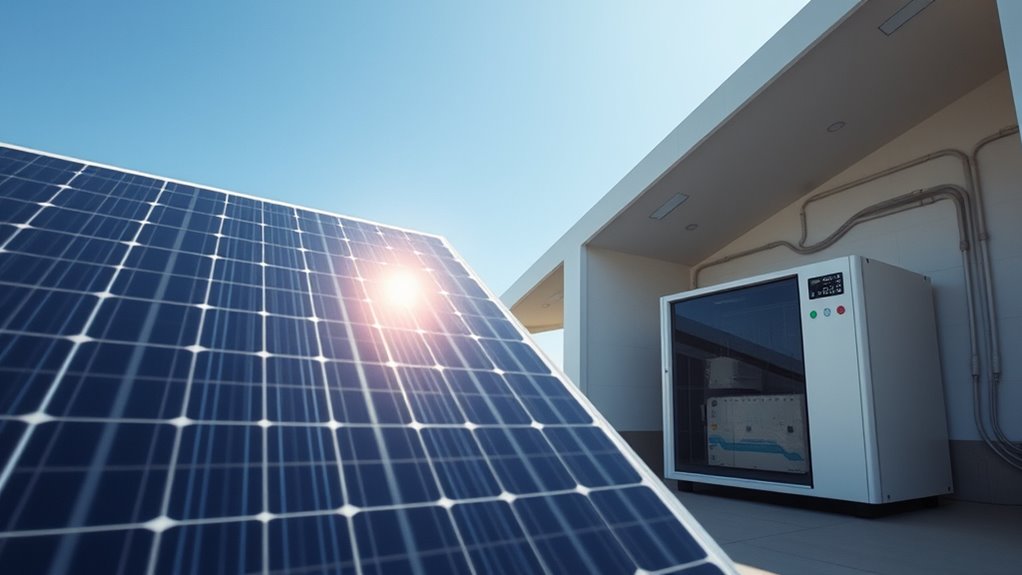
Although solar panels generate electricity during daylight hours, storing that energy guarantees you can use it anytime you need. When your panels produce more power than you consume, the excess energy doesn’t go to waste—it gets saved for later.
This process involves capturing electricity generated by the panels and keeping it in a storage system, usually a battery. When the sun sets or clouds block sunlight, your stored energy kicks in, providing a steady power supply.
Without storage, you’d rely on the grid or lose that energy entirely. By storing solar energy, you increase your energy independence, reduce utility bills, and maintain a reliable power source even during outages.
Understanding how storage works helps you maximize your solar investment’s benefits. It’s all about making sure you get the most out of the energy your panels create.
What Types of Solar Energy Storage Are Available?
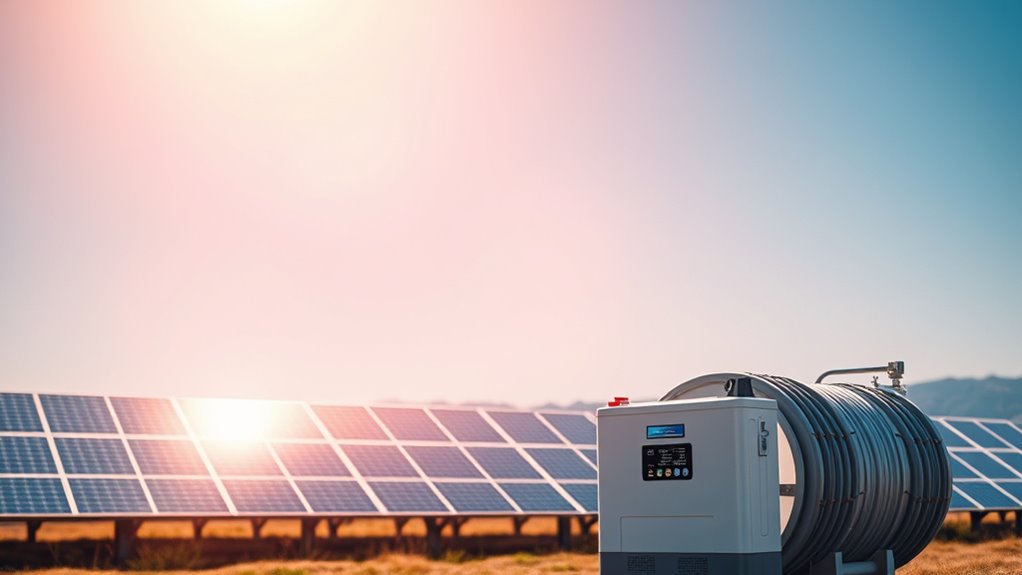
You’ve got a couple of main ways to store solar energy: batteries and thermal storage. Batteries hold electricity for later use, while thermal methods store heat generated by the sun.
Let’s explore how each option works and what might suit your needs best.
Battery Storage Options
How do you choose the right battery for storing your solar energy? You’ll want to evaluate factors like capacity, lifespan, cost, and maintenance needs.
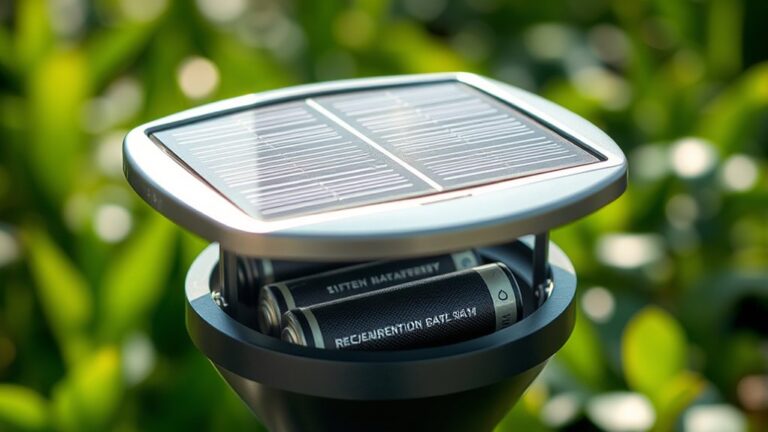
Lithium-ion batteries are popular because they’re efficient, compact, and have a long life. You might also look at lead-acid batteries; they’re cheaper upfront but bulkier and require more upkeep.
Another option is flow batteries, which offer scalability and durability but come with higher initial costs. Think about your energy usage too—do you need backup power during outages or just day-to-day storage?
Thermal Storage Methods
Beyond batteries, solar energy can also be stored using thermal methods, which capture and hold heat for later use. You can use materials like water, molten salts, or specialized bricks to absorb and retain this heat.
When sunlight is abundant, solar collectors heat these materials, storing energy as thermal mass. Later, when you need power, the stored heat can generate steam to drive turbines or provide direct heating. It’s great for both electricity and hot water.
Thermal storage is especially effective for large-scale solar plants but can also support home heating systems. By choosing thermal storage, you’re tapping into a reliable, cost-effective way to balance energy supply and demand.
This approach reduces reliance on chemical batteries and maximizes your solar investment’s efficiency. Pretty smart, right?
What Emerging Technologies Are Changing Solar Storage?
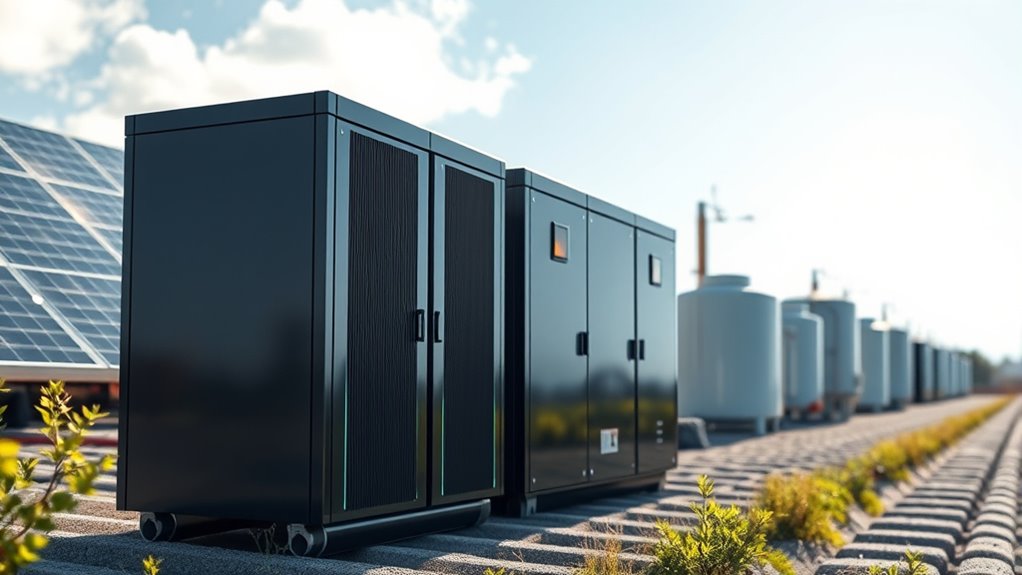
As solar energy becomes more widespread, new storage technologies are transforming how you capture and use power. Innovations like solid-state batteries offer higher energy density and longer lifespans, letting you store more energy safely.
Flow batteries, which use liquid electrolytes, provide scalable solutions ideal for larger storage needs, giving you flexibility. Plus, advances in hydrogen storage let you convert excess solar power into hydrogen fuel. You can store this fuel and use it later for electricity or transportation.
Beyond batteries, cutting-edge supercapacitors enable rapid charging and discharging, perfect for managing power spikes. These emerging technologies aim to make solar energy storage more efficient, affordable, and adaptable. They help you maximize your solar investment and keep your energy supply steady, even when the sun isn’t shining.
What Are the Most Common Solar Battery Options?
Although many new technologies are emerging, the most common solar battery options you’ll encounter today include lead-acid, lithium-ion, and flow batteries. Each type offers unique benefits and suits different needs, so understanding them helps you make smarter choices.
- Lead-acid batteries: Affordable and reliable, they’ve powered solar for decades but tend to be bulky and require maintenance.
- Lithium-ion batteries: Popular for their high energy density, long lifespan, and low maintenance. They’re perfect if you want efficiency and space-saving.
- Flow batteries: Ideal for large-scale storage with excellent scalability and long cycle life. Though, they come with higher upfront costs.
Knowing these options lets you match your solar storage to your lifestyle and budget confidently.
How to Choose the Best Solar Storage System for You
To pick the best solar storage system, start by evaluating your energy needs to know how much power you’ll use and store.
Next, compare different storage technologies to find the one that fits your lifestyle and efficiency goals.
Finally, consider your budget and available space to guarantee your choice is practical and affordable.
Assess Your Energy Needs
When choosing the best solar storage system for you, start by analyzing how much energy you use daily and during peak times. Understanding your energy consumption helps you pick a system that won’t leave you in the dark or waste your hard-earned money.
Track your usage patterns and consider how many devices and appliances you rely on, especially during evenings. Do you want backup power during outages, or are you mainly looking to reduce your grid dependence?
Also, think about seasonal variations in your energy needs, like higher demand in summer or winter. This way, you can make sure your system matches your lifestyle all year round.
Compare Storage Technologies
Since your energy needs vary, choosing the right solar storage technology is essential for maximizing efficiency and cost-effectiveness. You’ll likely encounter options like lithium-ion batteries, lead-acid batteries, and flow batteries.
Lithium-ion batteries offer high energy density and longer lifespan, making them ideal for frequent use. Lead-acid batteries are more affordable upfront but have shorter life and lower efficiency.
Flow batteries provide scalability and long cycle life but come with higher initial costs and complexity. Pumped hydro and thermal storage are alternatives but suit larger-scale applications better.
Understanding how each technology matches your daily usage, discharge rates, and maintenance preferences helps you pick a system that aligns with your lifestyle and solar setup. This way, you ensure you get the most from your solar energy.
Consider Budget And Space
Choosing the best solar storage system comes down to balancing your budget and available space. You want a solution that fits your financial plan without compromising your home’s layout or aesthetic.
Before deciding, consider these key points:
- Affordability: Can you invest upfront, or do you need a cost-effective option with longer payback?
- Space constraints: Do you have room indoors, outdoors, or in a garage for the system installation?
- Scalability: Will your energy needs grow, requiring expandable storage?
How to Maintain and Maximize Your Solar Storage System
To keep your solar storage system running efficiently, you need to perform regular maintenance and monitor its performance closely. Check battery health often by inspecting connections and cleaning terminals to prevent corrosion.
Regular maintenance and close monitoring are key to keeping your solar storage system efficient and reliable.
Use monitoring apps or systems to track energy input and output, so you can spot issues early. Avoid deep discharges to extend battery life—aim to recharge before levels drop too low.
Keep your batteries in a cool, dry place to reduce wear and improve efficiency. Also, make sure to update your system’s firmware when available to benefit from performance improvements.
Ultimately, schedule professional inspections annually to catch potential problems you might miss. By staying proactive, you’ll maximize your solar storage system’s lifespan and get the most out of your clean energy investment.
Frequently Asked Questions
Can Solar Energy Storage Be Used During Power Outages?
Yes, you can use solar energy storage during power outages. Your battery system stores excess energy.
What Is the Environmental Impact of Solar Batteries?
Think of solar batteries as tiny Prometheuses, stealing sunlight’s fire for your use. They reduce emissions but mining and disposal impact Earth.
You can lessen harm by recycling and choosing eco-friendly battery options. It’s all about making smarter choices to protect the planet while enjoying clean energy.
How Long Do Solar Batteries Typically Last?
You can expect solar batteries to last around 5 to 15 years, depending on the type and usage.
Lithium-ion batteries tend to last longer, which is great if you want something more durable.
On the other hand, lead-acid batteries usually have a shorter lifespan and need more maintenance.
Are There Government Incentives for Installing Solar Storage?
Like finding treasure in your backyard, you’ll find government incentives for solar storage, including tax credits and rebates. These perks can slash your costs, making it easier and cheaper for you to invest in solar batteries.
It’s pretty great how these incentives work, right? They really help take the financial edge off going solar with storage.
Can Solar Storage Systems Be Expanded Later?
Yes, you can expand solar storage systems later. Most setups are modular, letting you add more batteries as your energy needs grow.
Just make sure your inverter and system support expansion before purchasing. It’s always a good idea to check these details so you don’t run into issues down the road.
Conclusion
Imagine capturing the sun’s golden rays and storing them like treasure for when you need them most. By understanding your options and choosing the right solar storage system, you can keep your energy flowing smoothly, day and night.
With a little care and maintenance, your solar setup will serve you like a loyal companion, turning sunlight into reliable power. This helps you embrace a brighter, greener future with energy that’s always ready when you are.
When it comes to the best way to store solar energy, choosing efficient batteries and smart systems is key. Proper storage means you can enjoy the benefits of solar power even after the sun goes down. So, invest wisely, maintain your system well, and let your solar energy storage work hard to power your home sustainably and efficiently.