How Can You Use Regular Batteries in Solar Lights?
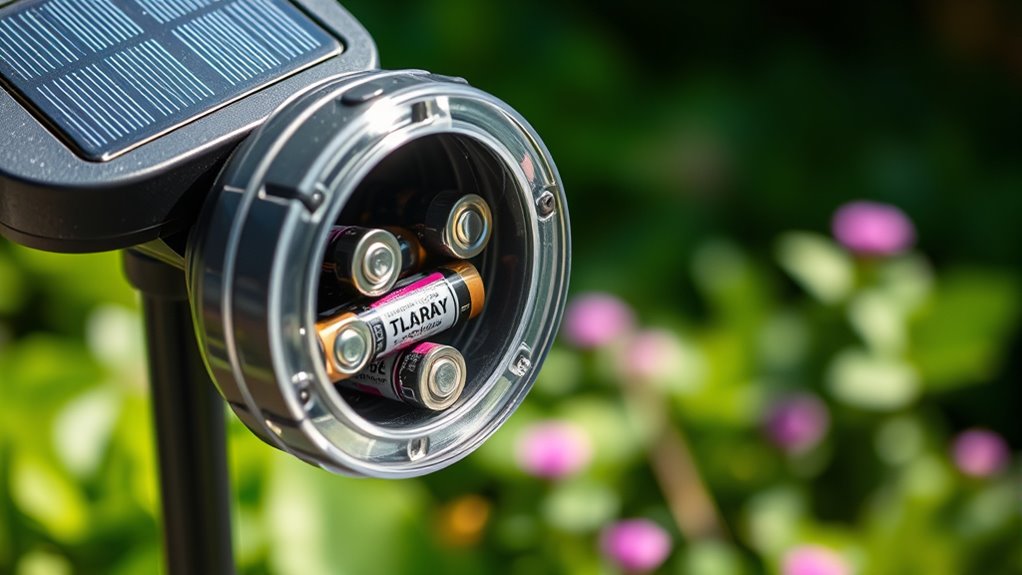
You can use regular batteries in solar lights by choosing ones that match the size and voltage required, then installing them with correct polarity to avoid damage. It’s important to pick the right kind so your solar light works properly.
Remember not to mix old and new batteries or different brands, as this lowers performance. Keeping your batteries stored in a cool, dry place also helps extend their life.
While regular batteries can work, they might not last as long or perform as well as rechargeables. So, if you want your solar lights to shine bright for longer, consider rechargeable options.
Learn how to get the best results and avoid common pitfalls when using regular batteries in your solar lights. That way, you’ll enjoy reliable lighting without any hassle!
Key Takeaways
- Ensure the batteries match the solar light’s size, voltage, and polarity specifications before installation. This helps avoid any compatibility issues.
- Use high-quality alkaline batteries to improve power retention and light performance. They tend to last longer and keep your lights brighter.
- Avoid mixing old and new batteries or different brands to prevent inconsistent voltage and damage. It can really mess up your solar light’s functionality.
- Remove batteries during long non-use periods and store them in a cool, dry place. This keeps them from draining or corroding.
- Replace batteries regularly to maintain optimal runtime and prevent dimming or malfunction. Fresh batteries make a noticeable difference!
How Solar Lights Use Batteries: And Why It Matters
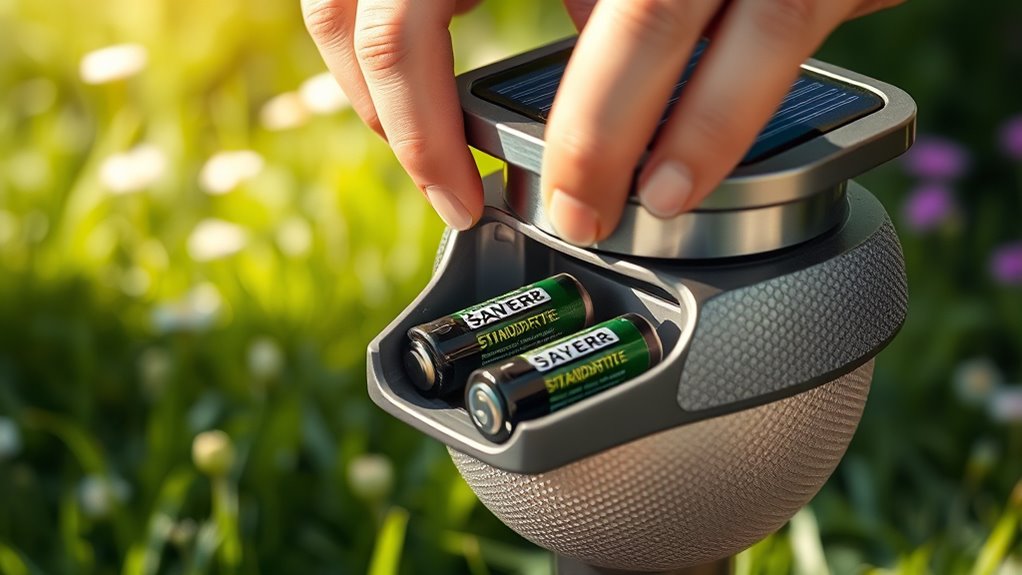
Although solar lights primarily rely on solar energy, they still depend on batteries to store power for nighttime use. You need to understand that these batteries act as the energy reservoir, holding the charge collected during the day so the light can shine when it’s dark.
Without a reliable battery, the solar light won’t function properly after sunset. The type and quality of the battery directly affect how long and how well your solar light performs.
When you choose or maintain solar lights, paying attention to the battery’s capacity and recharge cycles matters a lot. This knowledge helps you make informed decisions about battery care and replacement, ensuring your solar lights stay bright and efficient throughout the night.
Can You Replace Rechargeable Batteries in Solar Lights With Regular Ones?
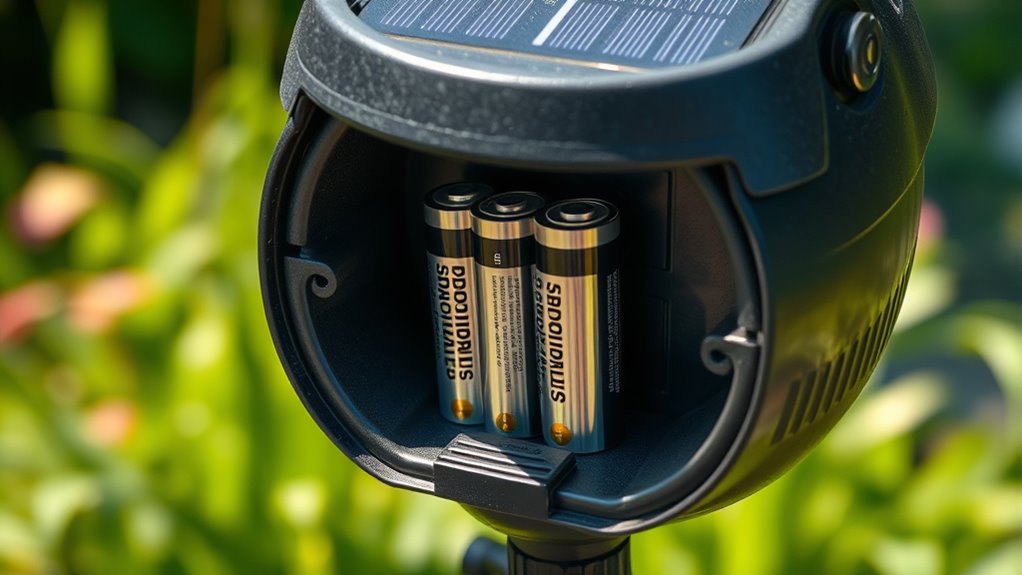
You might wonder if you can swap rechargeable batteries in your solar lights with regular ones. Before you do, consider that compatibility issues could prevent the lights from working properly.
Using the wrong batteries can also reduce your solar light’s performance and lifespan. So, it’s usually best to stick with the rechargeable type recommended by the manufacturer.
Battery Compatibility Issues
Since solar lights are designed specifically for rechargeable batteries, swapping in regular alkaline ones can lead to performance problems. You’ll find that alkaline batteries have a different voltage profile and discharge rate than rechargeable NiMH or NiCd cells.
This mismatch can cause your solar light’s circuitry to malfunction or fail to charge the batteries properly. Also, alkaline batteries aren’t built to withstand constant charging cycles, so they may leak or get damaged inside the solar light.
The battery compartment might also be sized for specific rechargeable batteries. So, regular ones may not fit snugly, causing poor connections.
Before you replace rechargeable batteries with regular ones, check your solar light’s manual and battery specifications. This way, you can avoid damaging your device or reducing its lifespan.
Impact on Solar Light Performance
When you replace rechargeable batteries with regular ones in solar lights, expect a noticeable drop in performance. Regular batteries don’t hold charge like rechargeable ones, so your solar light won’t stay lit as long after sunset.
You’ll likely see dimmer light output because regular batteries can’t supply consistent voltage over time. Plus, since solar lights are designed to recharge batteries daily, non-rechargeables won’t benefit from this feature, leading to wasted energy.
You’ll also need to replace regular batteries more often, which adds cost and effort. Overall, using regular batteries undermines the efficiency and longevity of your solar lights.
Which Regular Batteries Work Best for Solar Lights
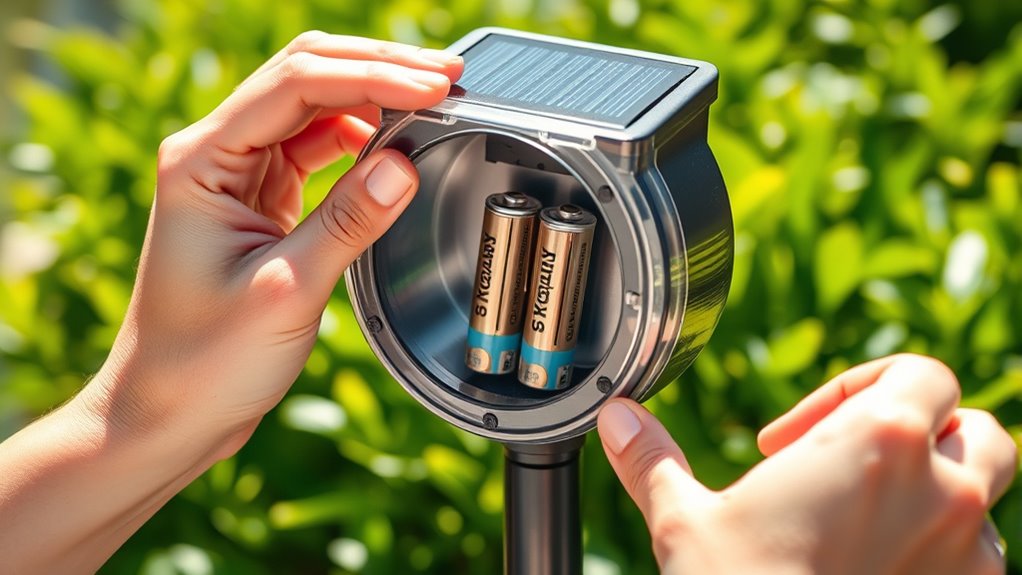
When choosing regular batteries for your solar lights, it’s important to compare different types based on performance and longevity. You’ll want batteries that provide steady power without draining too quickly.
Let’s look at which options hold up best under regular use. It’s all about finding batteries that keep your lights shining bright for longer.
Battery Types Comparison
Choosing the right regular batteries for your solar lights can profoundly impact their performance and lifespan. You’ll want to understand the differences between alkaline, lithium, NiMH rechargeable, NiCd rechargeable, and zinc-carbon batteries. Each type has unique characteristics that affect your solar lights differently.
- Alkaline: Affordable and widely available but not rechargeable. They’re a solid choice if you want something simple and cheap.
- Lithium: These have a longer shelf life and perform better in extreme temperatures. Great if you need reliability no matter the weather.
- NiMH Rechargeable: Eco-friendly and reusable with decent capacity. Plus, they save you money in the long run since you can recharge them many times.
- NiCd Rechargeable: Durable but prone to memory effect, which means their capacity can reduce over time. They’re tough, but you’ll want to manage how you charge them.
- Zinc-Carbon: The cheapest option, but they have low capacity and a short lifespan. Good for very light use or if you’re on a tight budget.
Performance and Longevity
Because battery performance directly affects your solar lights’ brightness and runtime, selecting the right type is essential. Alkaline batteries are common and affordable but tend to drain quickly under constant use, reducing your lights’ operating time.
Rechargeable NiMH batteries offer better longevity and maintain steady voltage, which keeps your lights brighter for longer periods. However, they have a slightly higher upfront cost.
If you want the best balance between performance and lifespan, NiMH rechargeable batteries are your best bet. Avoid zinc-carbon batteries, as they underperform and need frequent replacement.
How to Safely Install Regular Batteries in Solar Lights
Although solar lights are designed for rechargeable batteries, you can safely install regular batteries by following a few key steps. First, make sure the batteries you choose match the size and voltage requirements stated in your solar light’s manual.
Next, remove the solar light’s cover carefully to access the battery compartment. Then, insert the batteries with the correct polarity, matching the positive and negative ends as marked.
Avoid mixing old and new batteries or different brands to prevent leakage or damage. Finally, securely close the battery compartment to protect the batteries from moisture and dirt.
- Check battery size and voltage compatibility
- Open the battery compartment gently
- Align battery polarity correctly
- Use batteries of the same brand and age
- Seal the compartment tightly to prevent exposure
Pros and Cons of Using Regular Batteries Instead of Rechargeables
While regular batteries can power your solar lights effectively, they come with distinct advantages and drawbacks compared to rechargeables. On the plus side, regular batteries are usually cheaper upfront and widely available, so you can easily replace them when needed without special chargers.
They also tend to have a longer shelf life when unused, which means you can keep spares on hand without worrying about them losing charge. However, regular batteries aren’t designed for repeated use, so they’ll add to waste and cost over time as you replace them frequently.
Additionally, they may not perform as efficiently in solar lights, leading to shorter run times. Choosing between regular and rechargeable batteries depends on your priorities for cost, convenience, and environmental impact.
Practical Tips to Maximize Regular Battery Life in Solar Lights
If you decide to use regular batteries in your solar lights, you can take specific steps to extend their lifespan and get the best performance. Proper care and usage make a big difference in how long your batteries last and how well your lights work.
Here are practical tips to help you maximize regular battery life:
- Choose high-quality alkaline batteries for longer-lasting power. They tend to hold their charge better, so your lights stay bright longer.
- Remove batteries during extended periods of no use to prevent leakage. This little step can save you from a lot of hassle later on.
- Keep solar panels clean so batteries recharge efficiently. Dust and dirt can really cut down on how well your panels soak up the sun.
- Replace batteries before they completely drain to avoid damage. Letting them die out fully can shorten their overall lifespan.
- Store spare batteries in a cool, dry place to maintain charge. Heat and moisture are the enemies of battery health, so keep them safe.
Frequently Asked Questions
Can Regular Batteries Affect the Solar Light’s Warranty?
Yes, using regular batteries can void your solar light’s warranty because manufacturers expect specific rechargeable batteries.
You should check the warranty terms carefully. Improper battery use often leads to denied claims or reduced coverage.
How Do Temperature Changes Impact Regular Battery Performance in Solar Lights?
Temperature changes affect regular battery performance by reducing their capacity and runtime, especially in cold weather.
You’ll notice your solar lights dim or turn off sooner when temperatures drop considerably. It’s a common issue with most batteries. Cold just makes them work less efficiently.
Can I Use Alkaline Batteries in All Types of Solar Lights?
You can use alkaline batteries in many solar lights, but not all. Check your light’s specifications since alkaline batteries might not recharge properly or could damage rechargeable-only systems.
Always follow the manufacturer’s recommendations for best results. It’s a good idea to double-check before swapping batteries to keep your solar lights working great.
What Environmental Concerns Arise From Using Regular Batteries in Solar Lights?
You might not realize it, but using regular batteries in solar lights can leak harmful chemicals. This can pollute soil and water, which is pretty bad for the environment.
Plus, it increases landfill waste, and that’s something we all want to avoid. Choosing rechargeable options helps you protect the environment. It also reduces the toxic impact, making a positive difference overall.
How Often Should I Check and Replace Regular Batteries in Solar Lights?
You should check your solar light’s regular batteries every 1-2 months and replace them every 3-6 months, depending on usage.
This keeps your lights bright and prevents leakage or damage from old batteries.
It’s a simple routine that really helps your solar lights last longer and work better. Just a little bit of regular care goes a long way!
Conclusion
You might be surprised to learn that up to 90% of solar light failures come from battery issues. While regular batteries can work in solar lights, they’re not designed for constant recharging like rechargeables are.
If you decide to use regular batteries, handle installation carefully and expect shorter battery life. It’s important to know that regular batteries won’t last as long and may need frequent replacements.
By understanding these facts, you can make smarter choices that keep your solar lights shining brightly longer. Using the right batteries is key to saving effort and money on maintenance. So, if you want your solar lights to perform well, consider investing in rechargeable batteries designed specifically for solar lights. This way, you get longer battery life, fewer replacements, and better overall performance from your solar lighting system.