How Much Does It Cost to Maintain a Solar Panel?
You’ll typically spend between $150 and $300 every few years on solar panel maintenance, covering inspections and minor repairs that keep your system efficient. Keeping your solar panels in good shape is key to getting the most out of your investment.
Routine cleaning plays a big role in this. Cleaning usually costs about $100 to $250 per session, but if you want to save some cash, you can do it yourself.
Inverters, which are essential for converting solar energy, may need replacement after 10–15 years. This can cost anywhere from $1,000 to $3,000.
Monitoring systems generally add little to your overall expenses but are great for spotting issues early on.
Stick around to find out how you can lower these costs over time and keep your solar setup running smoothly.
Key Takeaways
- Routine inspections and minor repairs typically cost between $150 and $300 every few years. It’s a good idea to stay on top of these to keep your system running smoothly.
- Professional solar panel cleaning costs range from $100 to $250 per session, usually once or twice a year. Clean panels mean better performance, so it’s worth the investment.
- Inverter replacement costs vary from $1,000 to $3,000 and are needed every 10–15 years. This part is crucial since it converts the solar energy into usable electricity.
- Monitoring system fees are generally low, with basic monitoring often free and premium features charging monthly fees. Keeping an eye on your system helps catch issues early.
- Proactive maintenance, including cleaning and early repairs, prevents costly future damage and preserves system efficiency. Think of it as giving your solar panels a little TLC to make them last longer.
What Are Typical Solar Panel Maintenance Costs?
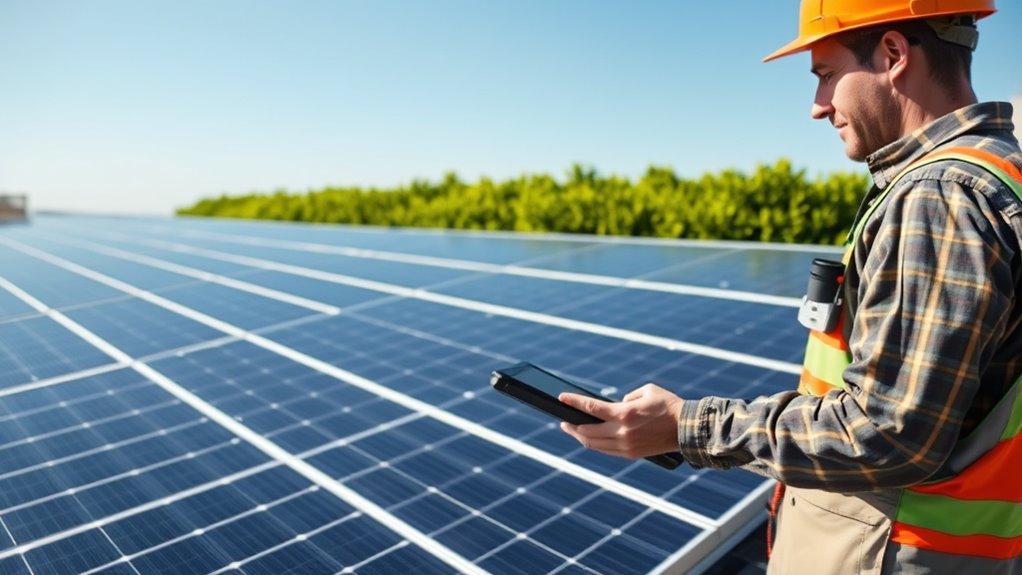
Although solar panels require minimal upkeep, you should expect some maintenance costs over time to keep them operating efficiently. Typically, these costs are quite low compared to other home systems.
You might spend around $150 to $300 every few years on inspections or minor repairs, such as fixing loose wiring or replacing worn-out parts. Inverter replacement is a more significant expense, usually occurring after 10-15 years, costing between $1,000 and $2,500.
Additionally, if your system has monitoring software, occasional updates or subscriptions may incur small fees. Overall, your typical maintenance costs will be modest, especially considering the energy savings you’ll enjoy.
Staying proactive with minor fixes helps you avoid costly repairs down the line and guarantees your solar panels last for decades.
How Much Does Routine Solar Panel Cleaning Cost?
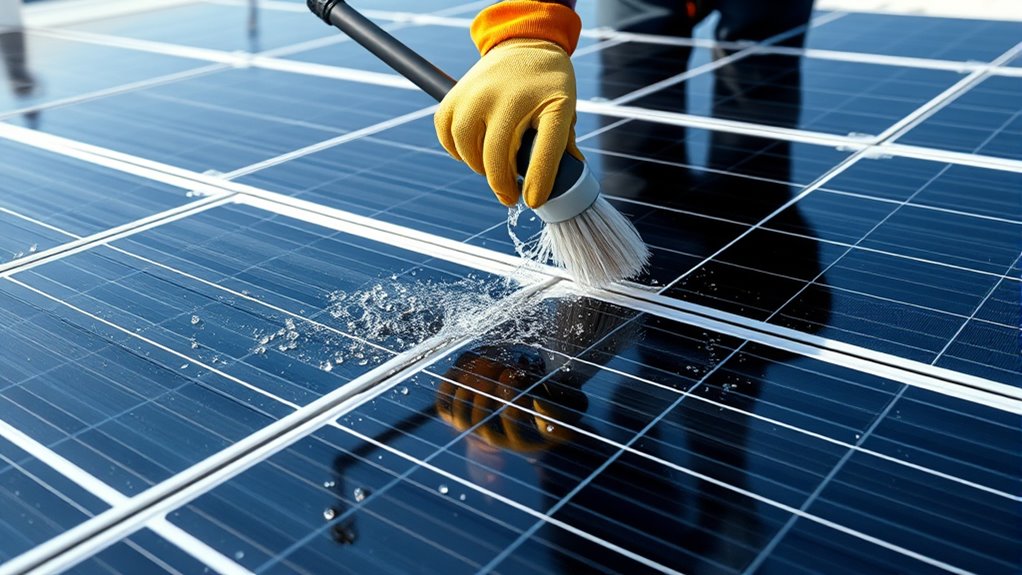
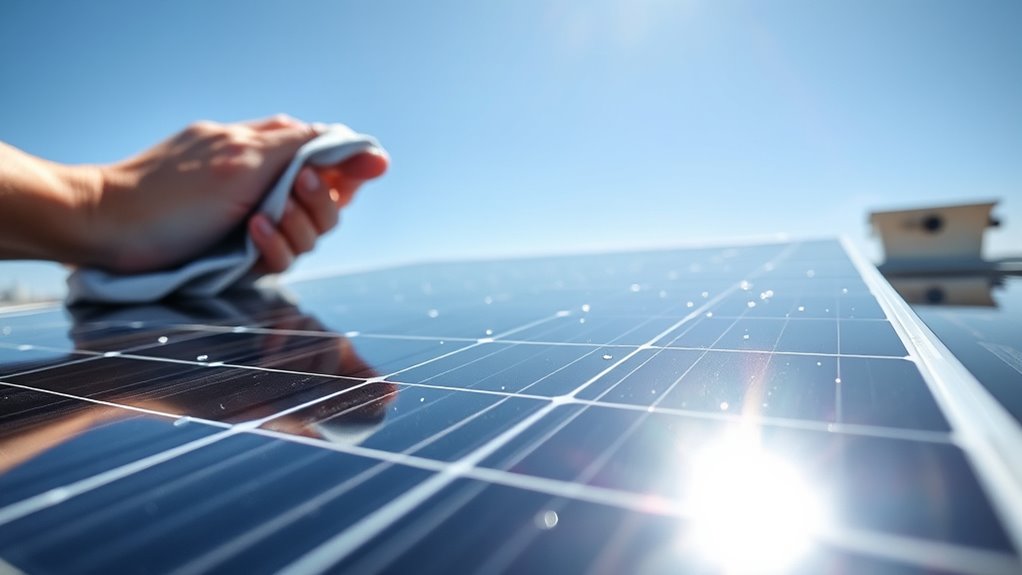
Since dirt, dust, and debris can reduce your solar panels’ efficiency, routine cleaning plays a crucial role in maintaining their performance. On average, professional solar panel cleaning costs between $100 and $250 per session, depending on factors like panel size and location.
You can also choose DIY cleaning to save money, but you have to be careful to avoid damage. It’s not as simple as just spraying water—using the right tools and techniques matters a lot.
Consider these points when budgeting for cleaning:
- Frequency: Typically once or twice a year
- Equipment: Soft brushes, squeegees, and mild detergents
- Accessibility: Higher roofs may increase costs
- Water source: Using purified water reduces spotting
- Local rates: Prices vary by region and company
Regular cleaning ensures your panels work at peak efficiency. It’s a smart way to protect your investment and keep things running smoothly.
When and Why Might You Need Solar Panel Repairs?
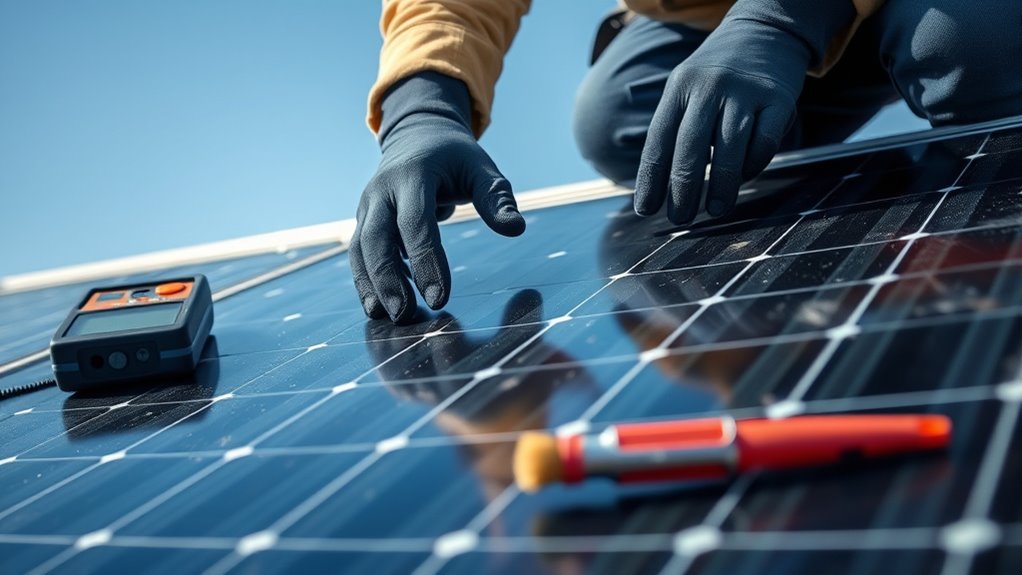
If your solar panels suddenly produce less energy or stop working altogether, it’s a sign that you might need repairs. Damage from storms, debris, or wildlife can crack panels or loosen connections, reducing efficiency.
Over time, wear and tear on wiring or mounting hardware may also cause problems. You might notice flickering power output or warning lights on your system’s monitoring app, signaling issues.
Also, if your panels are dirty but cleaning doesn’t improve performance, underlying electrical faults could be the cause. Addressing these problems promptly helps you avoid further damage and maintain ideal energy production.
Regular inspections can catch minor issues before they escalate, saving you money and hassle in the long run. Don’t ignore signs of trouble—repairing early keeps your system running smoothly.
How Much Does Inverter Maintenance and Replacement Cost?
While your solar panels often get the spotlight, the inverter plays a crucial role in converting sunlight into usable electricity, and maintaining it is essential for system efficiency.
Inverter maintenance costs are generally low, but replacement can be more expensive. Typical inverter replacement ranges from $1,000 to $3,000, depending on the type and size. Regular checks help catch issues early, extending inverter life.
Here’s what you should know about inverter maintenance and replacement costs:
- Routine inspections cost around $100 to $200 per visit
- Cleaning inverter fans and vents prevents overheating
- Warranty coverage may reduce replacement expenses
- String inverters usually cost less to replace than microinverters
- Replacing inverters every 10-15 years is common for maximum performance
Keeping your inverter in top shape saves you money and energy long-term. It’s definitely worth staying on top of!
Do Monitoring Systems Increase Solar Panel Maintenance Costs?
How much do monitoring systems add to your solar panel maintenance costs? Generally, these systems don’t significantly increase expenses. Most monitoring setups come integrated with your solar panels or inverter, so you won’t pay extra for installation.
Monthly fees for advanced platforms might apply, but basic monitoring is often free. The main benefit is catching issues early, which can actually save you money on repairs and downtime.
However, if you opt for premium features or professional monitoring services, expect some additional costs. Maintenance for the monitoring hardware itself is minimal, usually limited to occasional software updates or sensor checks.
How Can You Reduce Long-Term Solar Panel Maintenance Costs?
You can cut long-term maintenance costs by sticking to a regular cleaning routine and scheduling preventive system inspections. Keeping your panels free of dirt and catching issues early helps maintain efficiency.
Also, managing your energy use wisely reduces strain on the system, saving you money over time. It’s all about staying on top of things before they become bigger problems.
Regular Cleaning Routine
Since dust, dirt, and debris can considerably reduce your solar panels’ efficiency, establishing a regular cleaning routine is essential to cut long-term maintenance costs. Keeping your panels clean helps maintain peak energy production and prevents buildup that could lead to damage.
You don’t need expensive equipment—simple steps can make a big difference.
Here’s how to streamline your cleaning routine:
- Use a soft brush or sponge with mild soap and water
- Clean panels during early morning or late evening to avoid thermal shock
- Avoid abrasive materials or high-pressure water sprays
- Rinse thoroughly to prevent soap residue
- Schedule cleaning every 3 to 6 months, or more often in dusty areas
Preventive System Inspections
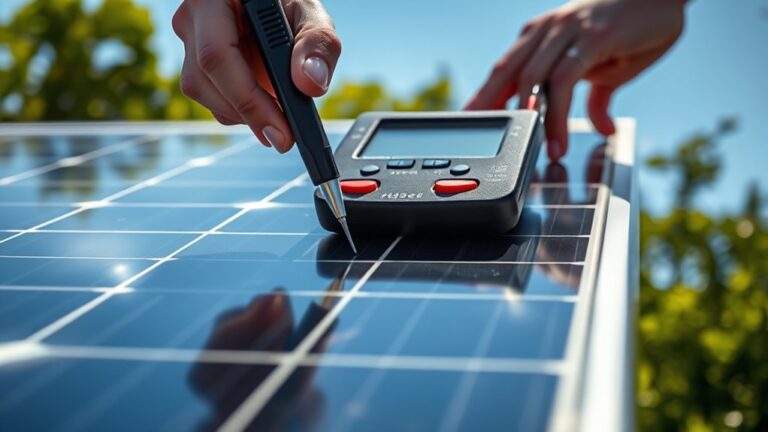
Regular preventive system inspections play a crucial role in reducing long-term maintenance costs for your solar panels. By scheduling routine check-ups, you catch small issues before they escalate into costly repairs.
Inspections help identify loose connections, corrosion, or inverter problems early, guaranteeing your system runs efficiently. You’ll also spot shading or debris buildup that might reduce energy output.
Hiring a professional for these inspections ensures a thorough assessment, including electrical components and mounting hardware. Staying proactive protects your investment and extends your system’s lifespan.
Don’t wait for a breakdown—regular inspections keep your solar panels performing at their best. Plus, they save you money by avoiding unexpected expenses down the road.
Efficient Energy Usage
How can you cut down on long-term solar panel maintenance costs? Effective energy usage plays a key role. By maximizing how you use the energy your panels generate, you reduce strain on the system and avoid unnecessary repairs or replacements.
Here are five ways to improve your energy efficiency and save on maintenance:
- Monitor your energy consumption regularly to spot inefficiencies early. It’s a simple habit that can make a big difference.
- Use energy-efficient appliances that require less power. They help you get more done with less energy.
- Shift high-energy tasks to peak sunlight hours for ideal panel use. That way, you’re making the most of the energy when your panels produce the most.
- Keep panels clean and free from debris to maintain output. A little upkeep goes a long way.
- Install a smart energy management system to optimize power distribution. It’s like giving your solar setup a brain to work smarter, not harder.
Frequently Asked Questions
How Do Weather Conditions Affect Solar Panel Lifespan?
You’ll find that extreme weather like hail, heavy snow, or high winds can damage your solar panels, shortening their lifespan.
Regular sun exposure also gradually degrades them, so you’ll want to inspect and clean them to keep efficiency high.
Are There Tax Incentives for Solar Panel Maintenance?
You’re in luck—there are tax incentives that sweeten the deal for solar panel maintenance. While not every state offers them, you can often snag credits or deductions, making upkeep easier on your wallet.
It’s definitely worth checking what your state provides. These incentives can really help lower the cost and keep your panels in top shape.
Can Pets Damage Solar Panels?
Yes, your pets can damage solar panels if they scratch or chew on wiring or glass.
It’s a good idea to keep pets away from the installation area. You might also want to consider some protective measures to prevent any accidental harm to your panels.
What Is the Warranty Coverage for Solar Panel Maintenance?
You’ll usually get a 10-25 year warranty covering defects and performance drops. Maintenance warranties might be separate, so check your contract carefully.
They don’t cover damage from pets or accidents, so you’re responsible there. Just something to keep in mind when you’re looking over your warranty details!
How Often Should Solar Panel Wiring Be Inspected?
Think of your solar panel wiring like the veins of a tree—inspect it at least once a year to catch any wear or damage early.
Regular checks keep your energy flowing strong and steady, just like nature intends. It’s a simple step that can save you from bigger problems down the road.
Conclusion
Maintaining your solar panels doesn’t have to drain your treasure chest like a medieval knight’s ransom. With routine cleaning, occasional repairs, and monitoring, you can keep your system running smoothly without breaking the bank.
Inverter upkeep is important, but planning ahead helps you dodge surprise costs. By staying proactive and informed, you’ll enjoy clean, efficient energy for years—saving money and the planet, one sunny day at a time.
Solar panel maintenance costs are generally low, especially compared to the long-term savings on your energy bills. Regular inspections and simple upkeep go a long way in preventing expensive repairs. So, keeping your solar panels in top shape is not only good for your wallet but also supports sustainable living.
Remember, a little effort now means your solar system will deliver reliable, cost-effective energy for many years. It’s a smart investment in both your home and the environment.