How Do You Use a Regular Battery in a Solar Light?
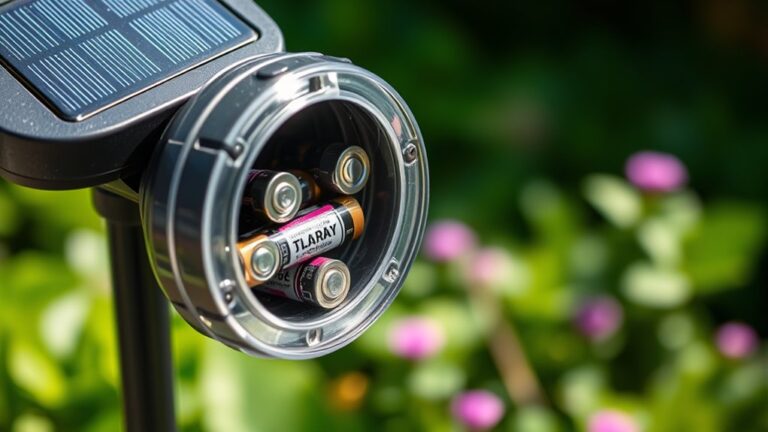
You can use regular batteries in your solar light temporarily by choosing the right type, typically alkaline AA or AAA, and avoiding rechargeable or lithium unless the device supports them. Using regular batteries is a handy solution when your solar light’s rechargeable battery is drained or not working properly.
Just remember, this is more of a short-term fix rather than a permanent replacement.
Make sure to insert batteries with correct polarity and secure the compartment tightly. Also, place the solar panel where it gets plenty of sunlight to keep your light working efficiently.
Keep an eye out for corrosion or reduced performance, which can happen if the batteries leak or are not the right type.
When you can, switch back to solar power to protect your light’s lifespan and save energy. Learning how to maximize your light’s efficiency and avoid common issues will help your solar light last longer and shine brighter.
Key Takeaways
- Check the solar light’s battery compartment and manual to confirm if regular batteries are supported for temporary use. It’s important to know this before you start.
- Use the correct battery size (AA or AAA) and make sure the polarity matches the markings inside the compartment. This helps avoid any connection problems.
- Insert fresh alkaline batteries fully and securely. Try not to mix old and new batteries or different brands, as that can cause issues.
- Close the battery compartment tightly to keep moisture and debris out. This protects the internal components from damage.
- Remember, regular batteries should only be used for short-term replacement. Switch back to rechargeable solar batteries as soon as you can to avoid damage and keep your light performing well.
Can Your Solar Light Use a Regular Battery?
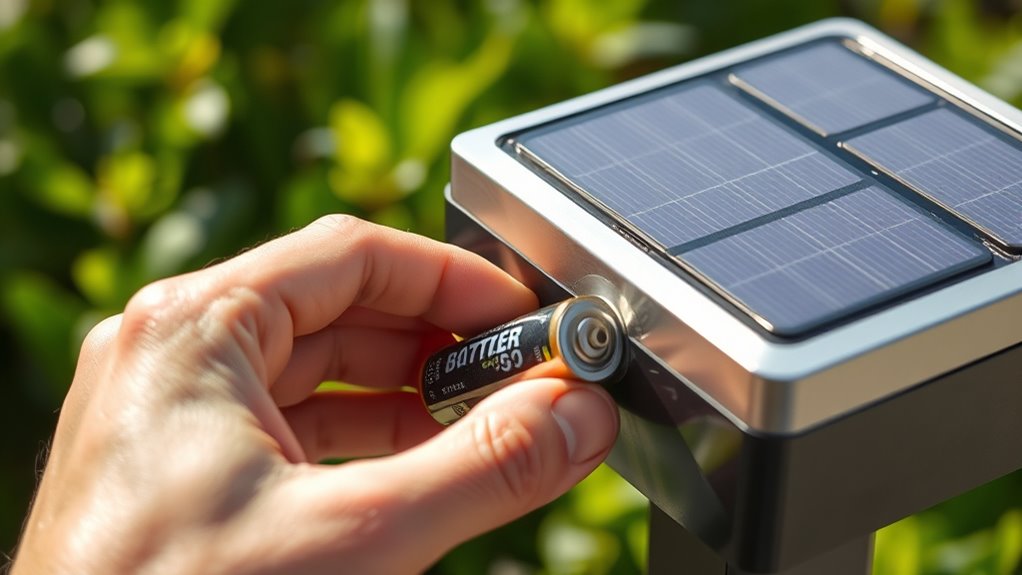
Can you use a regular battery in your solar light? The answer depends on the light’s design. Most solar lights rely on rechargeable batteries to store energy collected during the day.
If your solar light uses rechargeable batteries, like NiMH or NiCd, you can’t just swap in regular alkaline batteries because they won’t recharge properly and might damage the light. However, some solar lights have compartments that fit standard batteries, allowing you to replace dead rechargeable cells temporarily.
Before trying a regular battery, check the battery compartment and manufacturer’s instructions. Using the wrong type can lead to poor performance or even damage. So, you need to verify your solar light supports regular batteries before making any changes.
Which Regular Batteries Work Best in Solar Lights
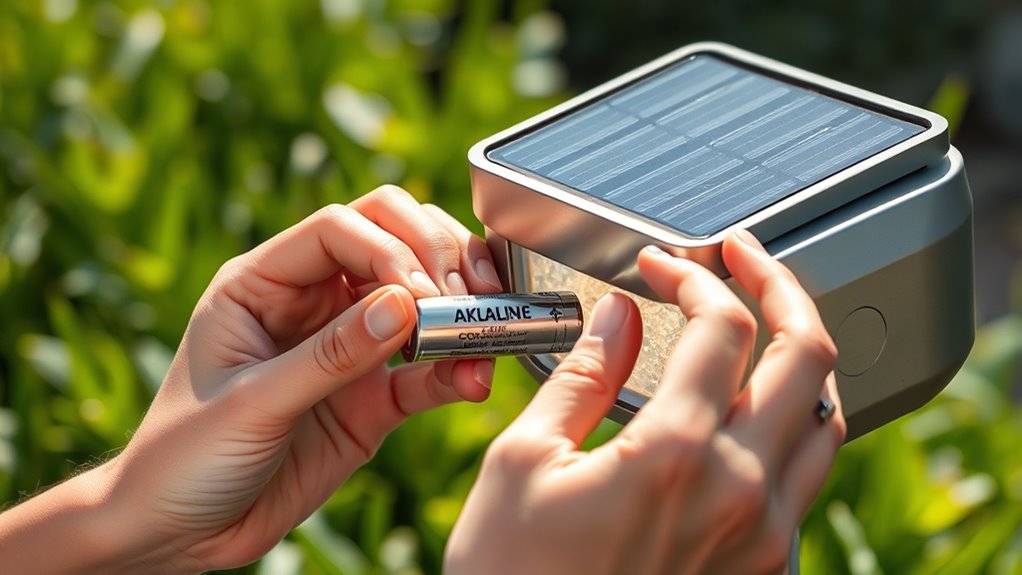
If your solar light can accommodate regular batteries, choosing the right type makes a big difference in performance and longevity. Alkaline batteries are the most common and affordable option, offering decent runtime for typical solar lights.
However, they don’t recharge, so you’ll need to replace them once drained. Rechargeable NiMH (Nickel-Metal Hydride) batteries are a smarter choice if your solar light supports recharging; they save money over time and reduce waste.
Look for AA or AAA sizes, matching your solar light’s requirements. Avoid using lithium or high-drain batteries unless specified, as they may not be compatible.
Always check your solar light’s manual for recommended battery types to guarantee proper function and avoid damage. Picking the right battery keeps your solar light shining bright longer.
How to Install a Regular Battery in Your Solar Light
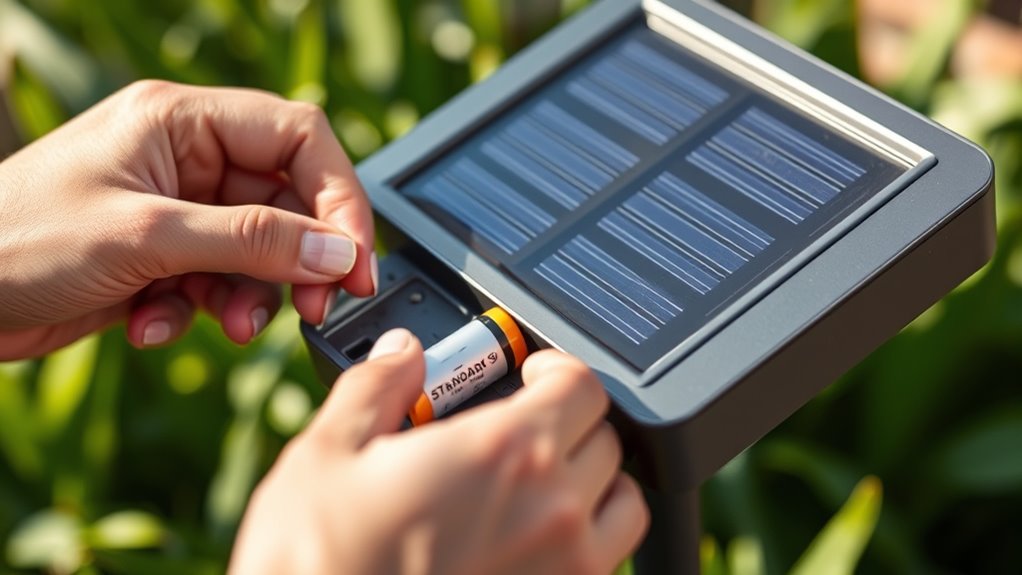
Before you install a regular battery, make sure it matches your solar light’s compatibility requirements. It’s important to check this first.
Also, pay close attention to the positive and negative terminals when inserting the battery. Getting this right helps avoid any problems.
Following these steps will help your solar light work smoothly without any issues. It’s a simple process once you know what to do!
Battery Compatibility Check
Although solar lights are designed to work with rechargeable batteries, you can install a regular battery as long as it matches the size and voltage requirements.
Before swapping batteries, check your solar light’s specifications to avoid damage or poor performance. Using the wrong battery can lead to leaks or reduced lifespan.
Here’s a quick compatibility guide to help you choose the right regular battery:
| Specification | What to Look For |
|---|---|
| Battery Size | Match the original size (AA, AAA, etc.) |
| Voltage | Same voltage as rechargeable battery (usually 1.2V or 1.5V) |
| Battery Type | Alkaline or Zinc-Carbon as alternatives |
Make sure you confirm these details on your solar light or its manual before installing a regular battery. It’s always better to be safe than sorry!
Proper Insertion Steps
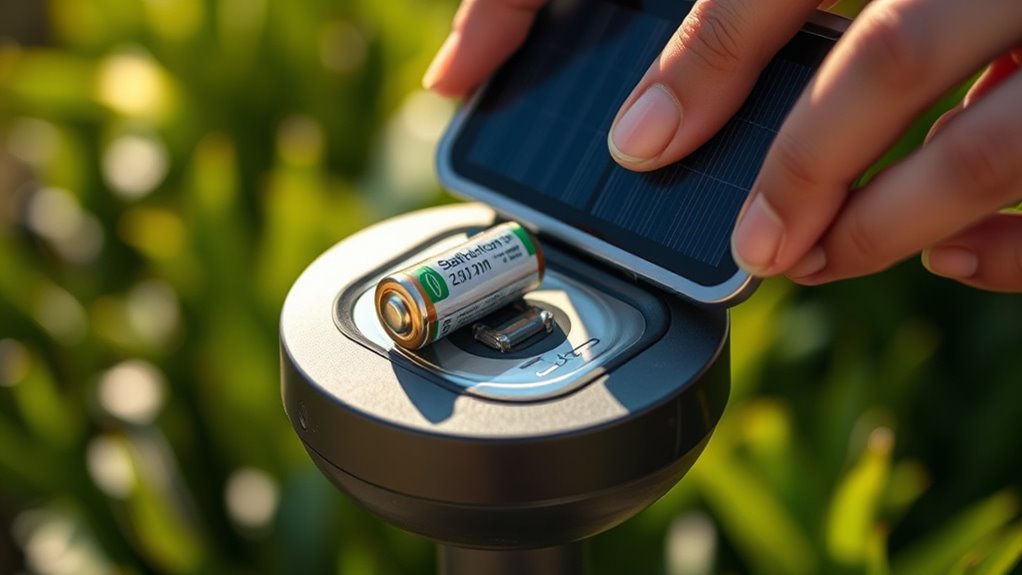
When you’re ready to install a regular battery in your solar light, start by opening the battery compartment carefully. You want to avoid damaging any components inside.
Next, check the polarity markings inside the compartment. Make sure to insert the battery with the positive (+) and negative (–) ends aligned correctly according to these markings.
Push the battery gently into place until it fits securely. Don’t force it, just a gentle push until it sits flat and makes good contact with the terminals.
After inserting the battery, close the compartment firmly. This helps protect the internals from moisture and dirt.
Finally, test the light by exposing the solar panel to sunlight or turning it on manually, if possible. Following these steps will help ensure reliable operation and extend your solar light’s lifespan.
Tips to Maximize Battery Life and Light Performance
To get the most out of your battery and solar light, make sure you install the battery correctly every time. Keep your solar panel in a spot where it can soak up plenty of sunlight for peak charging.
Also, perform routine maintenance like cleaning the panel and checking connections to keep everything running smoothly. It really helps to stay on top of these little tasks!
Proper Battery Installation
Since proper battery installation directly impacts both the lifespan of your battery and the brightness of your solar light, you’ll want to guarantee the batteries fit snugly and align with the correct polarity.
Start by checking the positive (+) and negative (–) terminals inside the battery compartment and match them to the battery ends. Insert batteries firmly without forcing them, making sure they’re fully seated to avoid poor connections.
If your solar light uses multiple batteries, install them in the correct sequence, as indicated, to maintain proper voltage. Also, avoid mixing old and new batteries or different brands, since this can cause uneven power supply and reduce performance.
Finally, close the compartment securely to protect the batteries from moisture and debris. This helps prevent corrosion and keeps your battery life longer.
Optimal Charging Conditions
Ensuring your batteries are installed correctly sets the stage for effective charging and ideal performance. To maximize battery life, place your solar light in a location that receives full sunlight for at least 6-8 hours daily.
Avoid shaded areas, as limited sunlight reduces charging efficiency and shortens battery lifespan. Keep the solar panel clean—dust and debris block sunlight, hindering power absorption.
Also, avoid exposing the light to extreme temperatures; excessive heat or cold can degrade battery capacity. When possible, turn off the solar light during extended cloudy periods or at night to conserve energy.
Following these tips guarantees your regular battery charges at its best, providing consistent brightness and prolonging both battery and solar light performance.
Routine Maintenance Tips
How often should you check your solar light and its battery? Ideally, inspect them every few weeks to guarantee everything works smoothly.
Clean the solar panel regularly to remove dust, dirt, and debris. These things can block sunlight and reduce charging efficiency.
Replace the regular battery once it no longer holds a charge well. This usually happens after several months of use. And remember, avoid mixing old and new batteries because that can cause leakage or damage.
Store spare batteries in a cool, dry place to keep them lasting longer. Finally, during long periods without sunlight, like in winter, it’s best to remove the battery to prevent corrosion.
Following these simple steps will help you get the best performance from your solar light and make your battery last longer.
Common Problems With Regular Batteries and How to Fix Them
Although regular batteries can power solar lights, you might run into issues like reduced brightness, shorter run times, or corrosion. If your light dims quickly, check if the batteries are old or low-quality—they might need replacing.
For shorter run times, verify the batteries match the solar light’s voltage and capacity requirements. Using mismatched batteries can drain power faster and cause frustration.
Corrosion on battery contacts can prevent proper connections, so clean terminals with a cotton swab and a bit of vinegar or baking soda solution. Also, avoid mixing old and new batteries, as this can cause leakage or uneven power.
It’s a good idea to regularly inspect your batteries and replace them as needed. That way, you keep your solar light functioning smoothly with regular batteries.
When to Switch Back to Solar Power Only?
If you notice your regular batteries are wearing out quickly or causing issues like corrosion, it might be time to switch back to relying solely on solar power. Solar lights are designed to work best with their built-in charging system, so using regular batteries long-term can cause problems.
When regular batteries wear out fast or corrode, it’s smarter to trust your solar light’s built-in charging system.
You should consider switching back when:
- Batteries drain faster than expected, disrupting your light’s reliability.
- Corrosion appears on battery contacts, risking damage to the light.
- You find yourself replacing batteries too frequently, increasing costs and waste.
- Your solar light performs well during sunny days, proving it can handle the job alone.
Trust your solar light’s original design to save you time, money, and frustration in the long run. It’s really worth letting it do what it was made for!
Frequently Asked Questions
Can Regular Batteries Damage the Solar Light’s Circuit?
Yes, using regular batteries can damage your solar light’s circuit because they might deliver incorrect voltage or lack proper rechargeability.
You should stick to recommended rechargeable batteries to keep your light working safely and efficiently.
It’s a small step that can save you from bigger problems down the line. So, always check what type of battery your solar light needs before replacing it!
How Do Regular Batteries Affect the Environment Compared to Solar Power?
You’ll find regular batteries harm the environment more than solar power because they contain toxic chemicals and create waste.
Solar power uses renewable energy, reducing pollution and conserving resources, so it’s a much greener choice overall.
It’s really a no-brainer when you think about it! Switching to solar helps keep our planet cleaner.
Are Rechargeable Regular Batteries Compatible With Solar Lights?
Think of rechargeable batteries as the moon reflecting the sun’s energy—they’re compatible with many solar lights, storing power efficiently.
You’ll want to check your light’s specifications to make sure it accepts NiMH or NiCd rechargeable cells for best results.
It’s pretty straightforward, but a quick look at the manual can save you some trouble down the road.
What Is the Difference in Brightness Using Regular Batteries?
You’ll notice regular batteries usually produce dimmer light because they can’t deliver consistent power like rechargeable ones. They drain faster, too, so your solar light won’t stay as bright or last as long throughout the night.
It’s kind of annoying, right? When you want your light to shine all night, regular batteries just don’t cut it. Rechargeables give you that steady, longer-lasting glow you’re looking for.
Can Using Regular Batteries Void the Solar Light’s Warranty?
Yes, using regular batteries can void your solar light’s warranty because manufacturers typically require specific rechargeable batteries.
If you don’t follow their guidelines, you risk losing warranty coverage for any damage or malfunction caused.
Conclusion
Using a regular battery in your solar light can be a handy backup when the sun’s not cooperating. Just remember to pick the right type and install it properly to keep your light shining bright.
Treat your batteries well, like a gardener tending to their plants, and you’ll enjoy a longer-lasting glow. When sunlight returns, don’t forget to switch back to solar power to keep things green and efficient.
Using a regular battery temporarily helps maintain your solar light’s functionality during cloudy days or nighttime. But for the best performance and to support sustainability, always revert to solar power as soon as possible. This way, your solar light stays eco-friendly and cost-effective, saving energy while providing reliable illumination. Your light—and the planet—will thank you for choosing solar power first.