How Do Solar Lights Have Maximum Performance Without Direct Sunlight?
You can get your solar lights to perform well without direct sunlight by choosing ones with high-efficiency panels designed to capture diffuse and scattered light. These panels are made to work even when the sun isn’t shining brightly, so your lights stay bright on cloudy or overcast days.
Using advanced materials and special coatings helps absorb more energy, making the most out of whatever light is available.
Pair that with quality batteries and smart power management systems to store energy efficiently and extend how long your lights can shine.
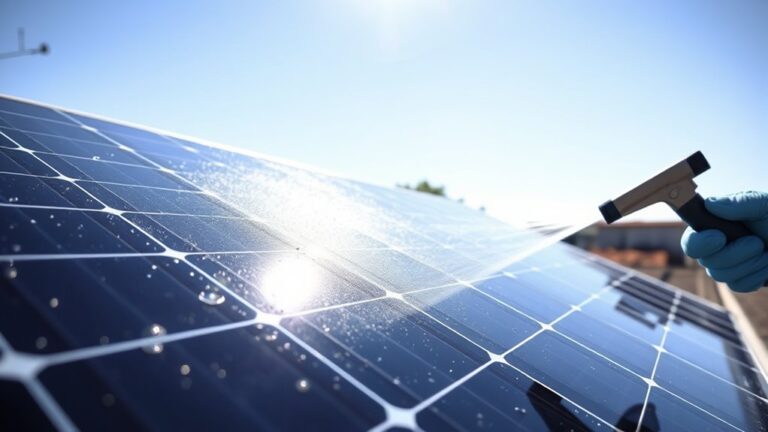
It’s also important to keep the panels clean and free from shade because dirt and shadows can seriously reduce how much light the panels absorb.
If you want to make your solar lighting truly reliable year-round, there’s plenty more to explore.
Key Takeaways
- Solar panels absorb diffuse and scattered light, which means they can still convert energy even when there’s no direct sunlight.
- Plus, advanced materials and anti-reflective coatings help soak up more light, especially when it’s cloudy or dim out.
- High-capacity batteries come into play by storing extra energy, so your solar lights keep working longer during those low-sunlight days.
- And with energy-efficient LEDs and smart sensors, power use is minimized, making the most out of the battery life.
- Don’t forget regular maintenance! Cleaning the panels and trimming any nearby foliage stops shading and keeps your lights shining bright.
How Solar Lights Capture Energy Without Direct Sunlight
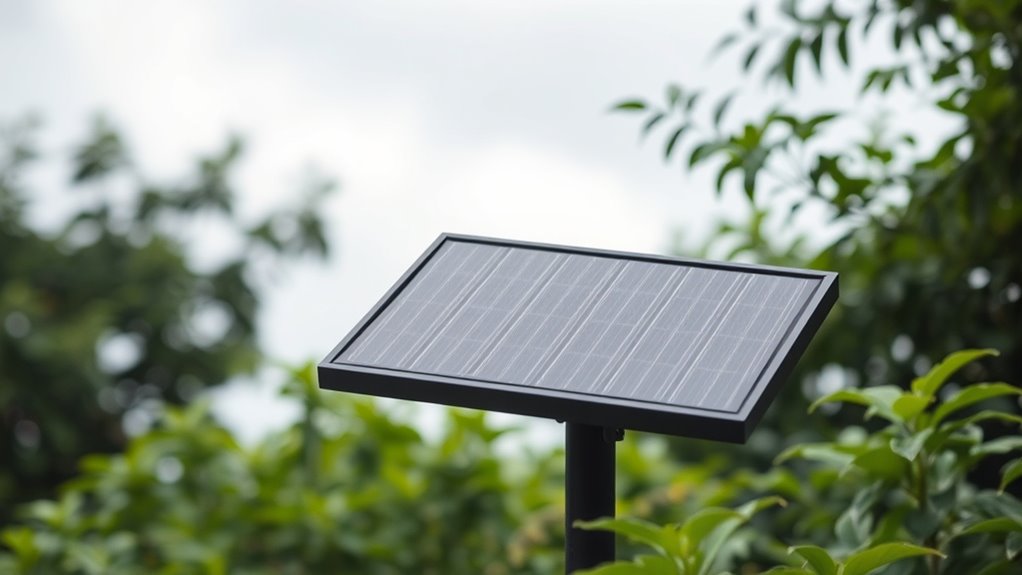
Although solar lights perform best under direct sunlight, they can still capture energy on cloudy days or in shaded areas. You might wonder how this happens since sunlight seems blocked.
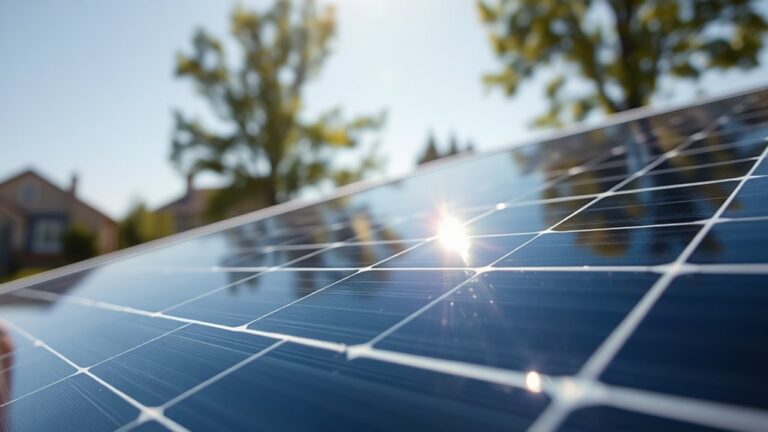
Solar panels use photovoltaic cells that absorb not only direct sunlight but also diffuse light scattered by clouds or reflected from surfaces around you. Even when the sun’s rays aren’t strong, these cells convert available light into electricity, just less efficiently.
Photovoltaic cells capture both direct and diffuse light, converting it into electricity even on cloudy days.
So, your solar light still charges, though at a slower rate. Depending on the panel’s sensitivity and your location, the energy collected can be enough to keep your lights working after dark.
This ability lets you rely on solar lighting even when perfect sunlight isn’t guaranteed in your environment.
How Photovoltaic Advances Help Solar Lights on Cloudy Days
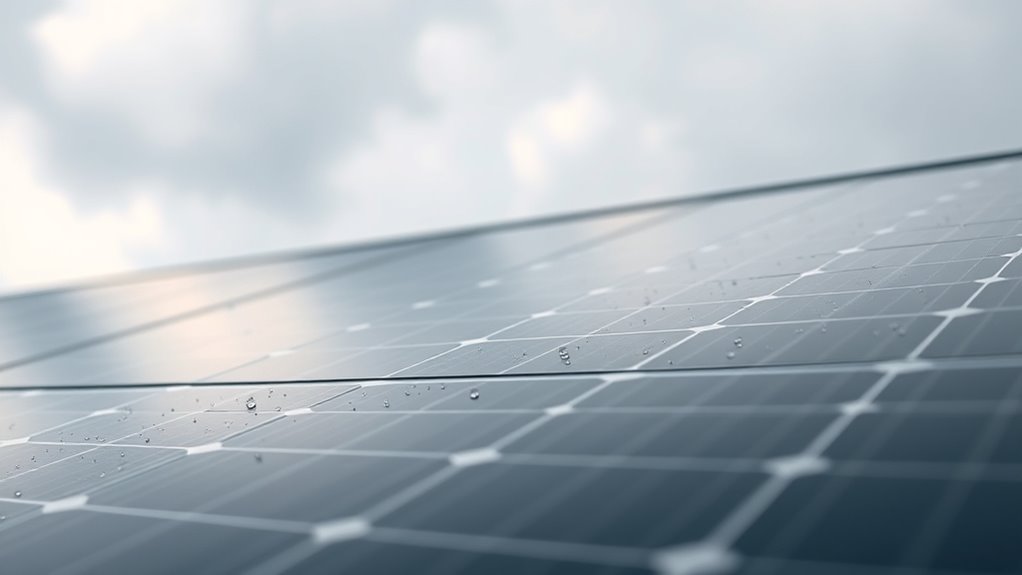
When clouds block the sun, recent advances in photovoltaic technology guarantee your solar lights still gather energy efficiently. Modern solar panels now use materials like perovskite, which absorb a broader spectrum of light, including diffuse and low-intensity rays common on cloudy days.
These panels convert indirect sunlight into electricity more effectively than older silicon-only models. Plus, improved surface coatings reduce reflection, allowing your solar cells to capture every bit of available light.
Smart designs also optimize the angle and layering of cells to maximize energy absorption, even when sunlight is scattered. Thanks to these breakthroughs, your solar lights won’t lose power just because the sky is overcast.
You can rely on them to keep shining, improving performance in all weather conditions without direct sunlight.
How Battery Storage Powers Solar Lights Overnight
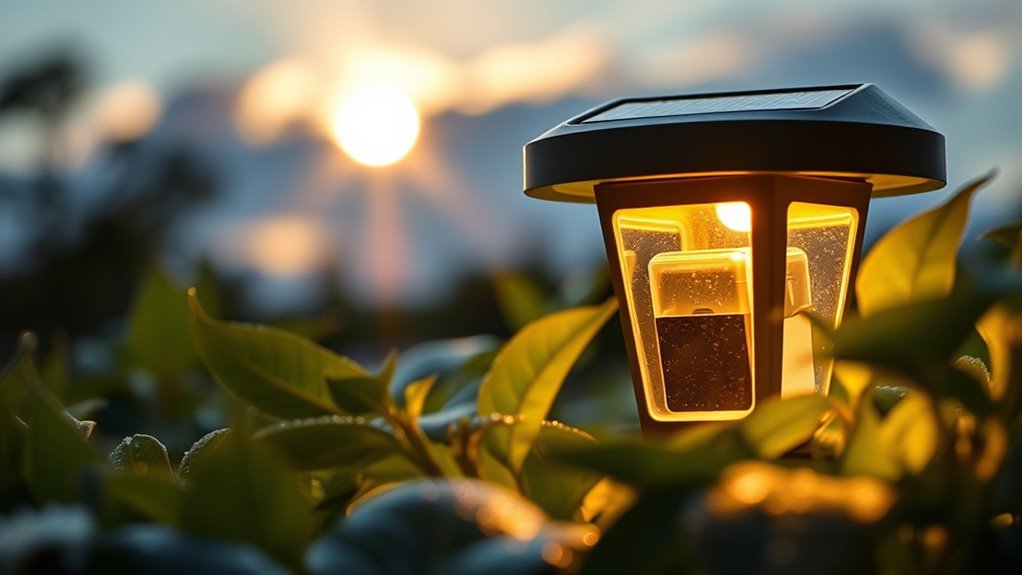
You rely on efficient battery charge cycles to keep your solar lights glowing through the night. The energy storage capacity determines how long they can shine without sunlight.
Smart power management systems make sure every bit of stored energy is used wisely until morning. It’s all about making the most of what’s stored so your lights don’t fade too early.
Efficient Battery Charge Cycles
Because solar lights rely on stored energy to shine after dusk, efficient battery charge cycles play a crucial role in their performance. You want your solar lights to maximize every bit of sunlight captured.
That means the battery must charge and discharge effectively without losing capacity quickly. Here’s how you can ensure efficient charge cycles:
- Use batteries designed for solar applications—they handle frequent charging better.
- Avoid overcharging by using controllers that cut off charging once full.
- Prevent deep discharges; keep the battery’s charge above a minimum threshold to extend life.
- Store batteries at moderate temperatures, as extreme heat or cold reduces efficiency and lifespan.
Following these steps helps your solar lights stay bright longer, even when there’s no direct sunlight around.
Energy Storage Capacity
Three key factors determine how long your solar lights can glow after sunset, with energy storage capacity playing the most critical role. The battery inside your solar light stores the energy collected during the day, powering the light through the night.
A higher capacity battery means more stored energy, allowing your lights to shine longer, even on cloudy days. You want to choose batteries with enough milliamp hours (mAh) to match your light’s power consumption and expected nighttime duration.
Keep in mind, battery type matters too—lithium-ion batteries generally hold more charge and last longer than NiMH or NiCd alternatives. So, by ensuring your solar lights have sufficient energy storage capacity, you guarantee consistent illumination when sunlight isn’t available.
Power Management Systems
Although your solar light’s battery stores the energy, an efficient power management system controls how that energy is utilized overnight. This system guarantees your light stays on as long as possible, even without direct sunlight.
Here’s how it works:
- Energy Monitoring – It constantly checks battery levels to avoid complete drain. This way, your light won’t suddenly go out when you need it most.
- Load Regulation – It adjusts the light’s brightness to conserve power when the battery runs low. So, the light dims a bit but keeps shining longer.
- Automatic On/Off – It switches the light on at dusk and off at dawn, saving energy during daylight. No need to worry about turning it on or off yourself!
- Overcharge Protection – It prevents battery damage by stopping charging once full. This helps your battery last longer and stay healthy.
Design Tricks That Make Solar Lights Shine in Shade
You don’t need direct sunlight for solar lights to work well, thanks to clever design tricks. By using advanced light absorption materials, efficient energy storage, and low power consumption, these lights can shine even in the shade.
Let’s explore how these features keep your solar lights bright when sunlight is limited. It’s pretty neat how technology makes it possible!
Advanced Light Absorption
When sunlight is limited, solar lights rely on advanced light absorption technologies to capture even the faintest rays. You can benefit from these innovations that enhance performance in shaded areas.
Here’s how they work:
- Multi-junction solar cells – These capture a broader spectrum of light, including indirect and diffuse sunlight.
- Anti-reflective coatings – They reduce light loss by trapping more photons on the surface.
- Textured surfaces – They scatter light internally, increasing the chance photons are absorbed rather than reflected away.
- Light-concentrating lenses – These focus available light onto the solar cell, boosting energy capture even under low light.
Efficient Energy Storage
Three key design tricks help solar lights store energy efficiently, ensuring they shine brightly even in shaded areas. First, high-capacity rechargeable batteries hold more energy, so you get longer light times.
Second, smart charge controllers prevent overcharging and power loss. This helps preserve battery life, so your lights last longer.
Third, energy-dense battery materials, like lithium-ion, store more power in compact sizes. That’s perfect for places with limited sunlight.
| Design Trick | Benefit | Why It Matters |
|---|---|---|
| High-capacity batteries | Longer energy storage | Extends light duration |
| Smart charge controllers | Prevents energy waste | Maintains battery health |
| Energy-dense materials | Compact and efficient storage | Maximizes power from less sunlight |
Low Power Consumption
Although solar lights rely on limited sunlight, they can still shine brightly thanks to low power consumption technologies. By using efficient components and smart design, these lights stretch every bit of harvested energy.
Here’s how they manage it:
- LED bulbs: They use energy-saving LEDs that produce more light per watt compared to traditional bulbs.
- Smart sensors: Motion and ambient light sensors make sure the light only turns on when needed. This way, they cut down on wasted energy.
- Low-voltage circuits: These circuits help minimize energy loss during operation.
- Optimized brightness levels: Adjustable brightness settings let you balance how much light you get with how much energy you use.
How to Choose Solar Lights That Work Well Without Full Sun
Selecting solar lights that perform well without full sun requires understanding how different models capture and store energy. You should look for lights with high-efficiency solar panels and larger battery capacities. They’ll charge better in low light and last longer at night.
Also, consider LED lights with low power consumption to maximize runtime. It’s all about getting the most out of the energy they collect, even when sunlight is limited.
Here’s a quick comparison to help you choose:
| Feature | Benefit | Ideal For |
|---|---|---|
| High-efficiency panels | Better energy absorption | Shaded or overcast areas |
| Larger batteries | Longer light duration | Extended night use |
| Low-power LEDs | Reduced energy use | Maximum efficiency |
Choosing based on these factors guarantees your solar lights thrive even without full sunlight. It’s a smart way to keep your outdoor spaces bright, no matter the weather.
Maintenance Tips to Keep Solar Lights Efficient All Year
To keep your solar lights running at peak performance throughout the year, you need to perform regular maintenance. Here are four key tips to ensure efficiency:
- Clean the panels weekly: Dust, dirt, and debris block sunlight, reducing charging efficiency. Use a soft cloth and mild soap. It’s a simple step that makes a big difference.
- Check for damage: Inspect wires and panels for cracks or corrosion. Fix or replace any parts that look worn out to keep everything working smoothly.
- Trim nearby foliage: Overgrown plants can shade your solar panels. So, keep the area clear to make sure your lights get plenty of sunlight.
- Store during harsh weather: If it gets really cold or there’s heavy snow, bring your lights indoors. This helps prevent damage and keeps the batteries lasting longer.
Frequently Asked Questions
Can Solar Lights Work Indoors Without Any Sunlight?
You can’t rely on solar lights indoors without sunlight since they need light to charge.
However, placing them near a bright window or using artificial light can help. But their performance won’t be as strong or consistent.
Are Solar Lights Safe During Thunderstorms?
When lightning strikes, it’s better to play it safe—solar lights are generally safe during thunderstorms since they’re low-voltage and weatherproof.
However, unplug them if you want to avoid any rare electrical surges.
How Long Do Solar Light Batteries Typically Last?
Solar light batteries typically last 1 to 3 years, depending on usage and quality.
You’ll want to replace them when you notice dimmer light or shorter run times. That way, you can keep your solar lights shining bright.
Can Pets or Wildlife Damage Solar Lights?
Yes, pets and wildlife can damage solar lights. Your curious pet might chew wires, and wildlife could knock them over.
You’ll want sturdy designs and secure placements to keep your lights shining bright without interruptions. It really helps to think about where you put them and how tough they are. That way, you won’t have to worry about them getting damaged too often.
Do Solar Lights Affect Nearby Electronic Devices?
No, solar lights don’t affect nearby electronic devices. They use low voltage and emit minimal electromagnetic interference, so your gadgets stay safe and unaffected.
You can place solar lights near electronics without worrying about disruptions or damage. It’s totally fine to have them close by!
Conclusion
You don’t need direct sunlight to get the most from your solar lights. Thanks to advances in photovoltaic technology and smart battery storage, they keep shining even on cloudy days and at night.
With thoughtful design and regular maintenance, your solar lights can perform like a sunflower turning toward every bit of light. Choose wisely and care for them well, and your outdoor space will glow beautifully, no matter the weather.
Maximizing solar light performance without direct sunlight is easier than you think. Modern solar lights are built to absorb even diffused sunlight efficiently, storing energy to brighten your outdoor areas after dusk. By selecting high-quality solar lights and maintaining them properly, you ensure consistent illumination all year round. So, whether it’s cloudy or clear, your solar lights will keep your garden or patio glowing brilliantly, making the most of every ray, no matter the weather conditions.