How Do I Know if My Solar Panels Are Working?
You can tell your solar panels are working by regularly checking their energy output against expected levels based on the time of day and weather conditions. Solar panel performance usually peaks around midday when the sun is strongest.
Cloudy days or dirt buildup, however, can lower their output, so keep an eye on those factors.
Watch for sudden drops or consistent underperformance, which might signal issues like dirt, shading, or damage to your panels. It’s a good idea to keep your panels clean and trim any shaded areas to maintain efficiency.
If you want to guarantee maximum performance and know when to seek help, keep exploring these key signs. Staying proactive helps you get the most from your solar investment and avoid surprises down the road.
Key Takeaways
- Monitor your daily kWh output and compare it to what you’d expect based on your location and the size of your panels. This helps you see if everything is on track.
- Keep an eye out for peak energy generation, usually around midday when the sunlight is strongest. That’s when your panels should be working their hardest.
- If you notice sudden drops or irregular fluctuations in energy output, it could be a sign something’s wrong. Don’t ignore those changes!
- Make it a habit to inspect your panels regularly. Look for dirt, shadows, physical damage, or debris, as these can all reduce efficiency.
- If your system’s performance consistently falls below what you expect, or if error codes pop up, it’s a good idea to schedule a professional inspection. Better safe than sorry!
Expected Solar Panel Energy Output by Time and Condition
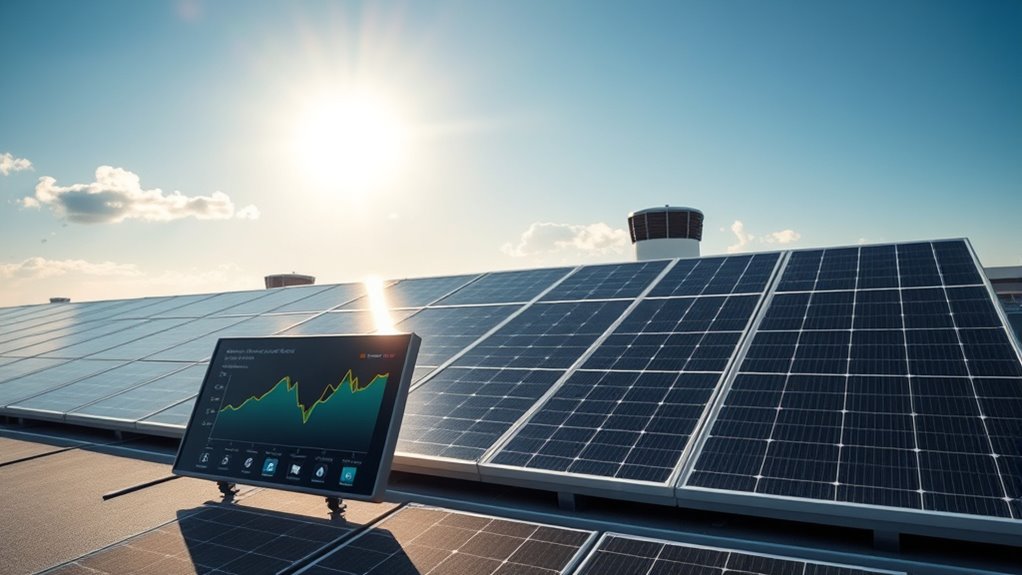
Although your solar panels generate energy throughout the day, their output varies depending on the time and weather conditions. You’ll notice they produce the most power during midday when the sun is highest.
Early mornings and late afternoons yield less energy because the sun’s angle reduces the panels’ exposure. Cloudy and rainy days also impact performance, as the panels receive less direct sunlight.
Snow or dirt buildup can further decrease efficiency. Temperature plays a role too; panels work best in cooler weather, so extreme heat might slightly lower their output.
Understanding these factors helps you set realistic expectations for daily energy production and recognize when something might be off with your system. Keeping an eye on these patterns ensures your solar panels perform at their best.
How to Interpret Your Solar Panel Monitoring Data
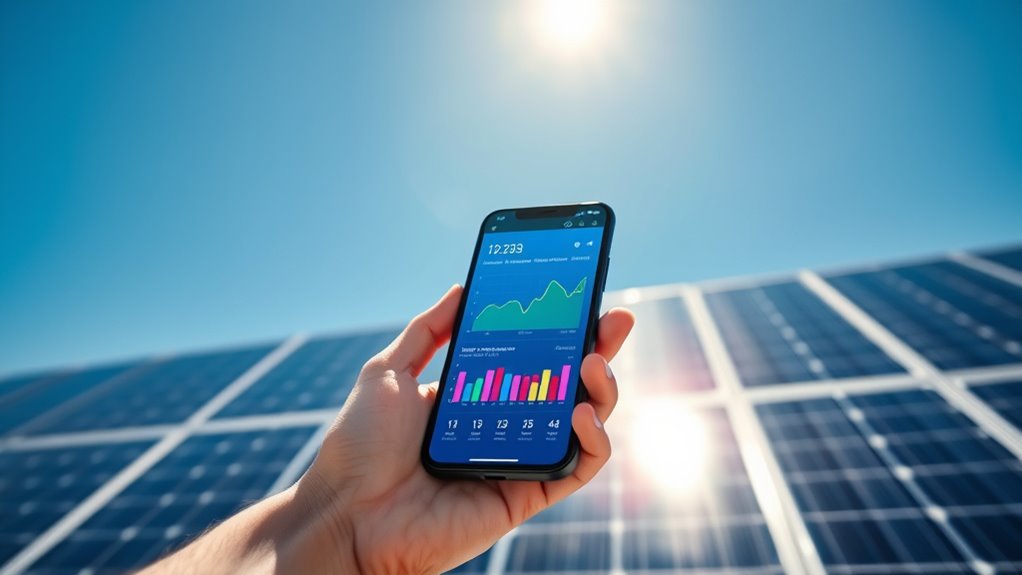
You’ll want to understand your solar panel’s energy output to spot any performance changes. Keep an eye on fluctuations that might signal issues or shading problems.
It’s helpful to compare your actual data with the expected output. That way, you’ll know if your system’s running smoothly or if something needs attention.
Understanding Energy Output
When you check your solar panel monitoring data, understanding the energy output is key to knowing if your system is performing well. Look at the total kilowatt-hours (kWh) produced daily, weekly, or monthly—this shows how much electricity your panels generate.
Compare this output to your system’s expected performance based on your location, panel size, and sunlight hours. Keep an eye on peak production times, usually midday, to ensure your panels hit their maximum potential.
If your energy output aligns with these expectations, your system is working effectively. You can also track cumulative energy output over time to see long-term trends.
This clear view helps you confirm your solar investment is paying off by producing clean, renewable energy consistently. It’s a great way to stay on top of how well your panels are doing.
Identifying Performance Fluctuations
Since solar panel output can vary daily due to weather, shading, or system issues, it’s important to recognize and interpret these performance fluctuations accurately.
By monitoring your system regularly, you’ll notice patterns that help you spot when something’s off. Check your dashboard for sudden drops or unusual spikes in energy production, which could indicate shading or technical faults.
| Date | Output (kWh) | Weather Condition |
|---|---|---|
| April 1 | 25 | Sunny |
| April 2 | 18 | Cloudy |
| April 3 | 12 | Rainy |
| April 4 | 0 | Heavy Shade |
| April 5 | 24 | Sunny |
Use this data to spot inconsistencies and investigate causes quickly. It really helps you stay on top of your system’s performance.
Comparing Expected Vs. Actual
How do you know if your solar panels are truly performing as they should? Start by comparing the expected energy output with the actual data from your monitoring system.
Manufacturers provide estimated production figures based on factors like panel capacity, location, and weather patterns. Check your system’s daily, weekly, or monthly energy reports and see if they align with these estimates.
Small deviations are normal due to weather changes, but consistent underperformance might indicate issues like shading, dirt buildup, or equipment faults. Use your monitoring app or portal to track trends over time rather than focusing on a single day’s output.
How Dirt and Shadows Affect Solar Panel Performance
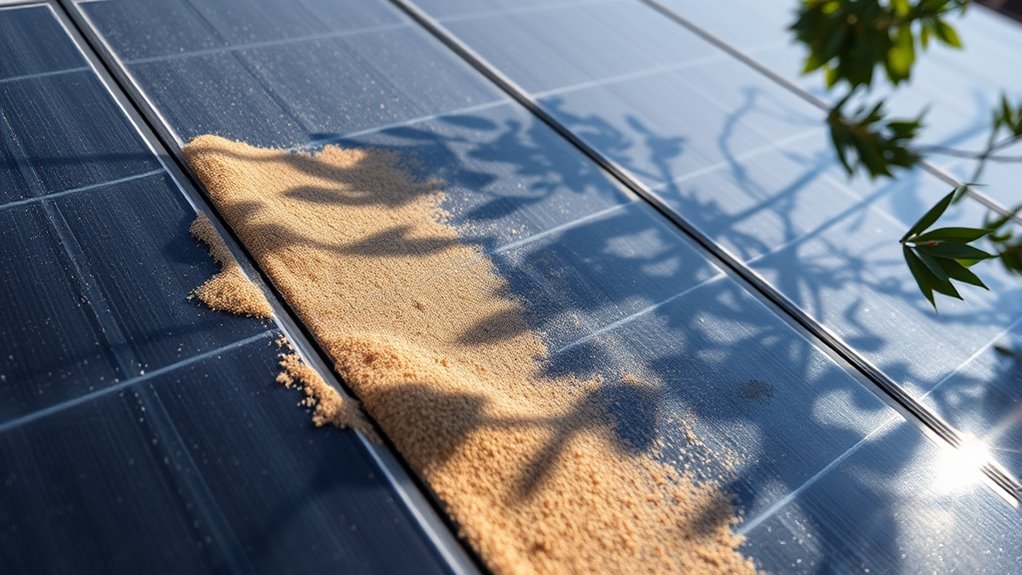
Have you noticed a drop in your solar panels’ efficiency despite plenty of sunlight? Dirt buildup and shadows can considerably reduce their performance.
Even a thin layer of dust or leaves blocks sunlight from reaching the cells. Shadows from nearby trees, chimneys, or wires can cause uneven shading, leading to power loss.
Here’s how common issues impact your panels:
| Issue | Effect on Performance |
|---|---|
| Dust | Reduces output by up to 25% |
| Leaves | Blocks sunlight intermittently |
| Bird Droppings | Causes localized shading |
| Shadows | Creates hotspots, reduces power |
| Dirt & Grime | Lowers efficiency steadily |
Regular cleaning and trimming nearby foliage can help maintain ideal energy production. It’s a simple way to keep your panels working their best!
How to Spot Damage and Wear on Solar Panels
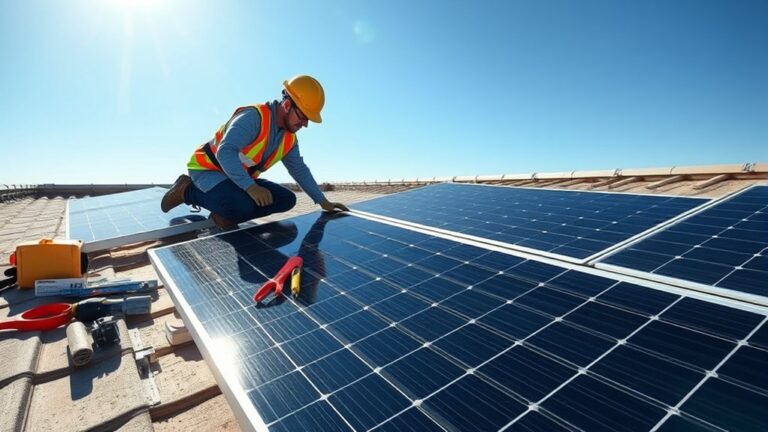
Keeping your solar panels clean helps maintain their efficiency, but physical damage and wear can also impact performance. You should regularly inspect your panels for cracks, chips, or scratches on the surface, as even minor damage can reduce energy output.
Also, look for discoloration or dark spots, which might indicate internal cell damage. These little signs can mean your panels aren’t working as well as they should.
Don’t forget to check the mounting hardware and wiring for signs of rust, corrosion, or loose connections. These issues can affect power flow, so it’s important to catch them early.
Pay attention to any unusual noises or flickering in your system, as these may signal electrical issues. If you notice anything unusual or damaged, it’s best to contact a professional to assess and repair your panels promptly.
Catching problems early helps guarantee your solar setup runs smoothly and efficiently. It’s all about keeping everything in tip-top shape!
Simple Maintenance Tips to Keep Solar Panels Efficient
Although solar panels are designed to be durable, you should perform simple maintenance regularly to guarantee they operate at peak efficiency. First, keep your panels clean by gently rinsing them with water to remove dust, dirt, or bird droppings. Avoid abrasive materials that might scratch the surface.
Next, trim nearby trees or bushes to prevent shading, which reduces energy output. Check mounting hardware and wiring for loose connections or corrosion, tightening or cleaning as needed.
Also, inspect for debris buildup around panels that might block sunlight. Finally, monitor your system’s output through your inverter or monitoring app to spot any sudden drops in performance early.
These straightforward steps help you maintain your solar investment and maximize energy production. It’s really about keeping things simple and staying on top of small tasks so your panels keep working great.
When Should You Call a Solar Panel Professional?
Regular maintenance can catch many minor issues, but some problems require professional attention to guarantee your solar panels continue running effectively. You should call a solar panel professional if you notice a significant drop in energy output despite clean panels and ideal weather.
Significant drops in energy output despite clean panels and good weather warrant professional solar panel inspection.
If your inverter shows error codes or warning lights, it’s a clear sign to get expert help. Damage from storms, such as cracked panels or loose wiring, also needs professional repair.
Additionally, if you spot unusual noises, burning smells, or exposed wires, don’t wait—contact a professional immediately. Scheduling an annual inspection with a certified technician can prevent problems before they affect performance.
Trusting experts ensures your system stays safe and efficient over the long term. It’s always better to be proactive than to deal with bigger issues later on.
Frequently Asked Questions
How Long Do Solar Panels Typically Last?
You can expect your solar panels to last about 25 to 30 years. They’ll still produce energy afterward, but their efficiency gradually decreases.
Can Solar Panels Work During a Power Outage?
Of course, your solar panels won’t keep the lights on during a power outage—unless you’ve got a battery backup or an off-grid system.
Otherwise, they shut down for safety, ironically leaving you in the dark.
Do Solar Panels Increase My Home’s Property Value?
Yes, solar panels can increase your home’s property value by making it more energy-efficient and attractive to buyers. Many buyers appreciate lower utility costs, so your investment often pays off when you sell your home.
Plus, having solar panels can make your property stand out in the market. It’s a win-win because you save on energy bills while boosting your home’s appeal.
Are Solar Panels Covered by Homeowners Insurance?
Yes, your solar panels are usually covered by homeowners insurance. You’ll want to check your policy and update coverage if needed.
It’s important to protect your panels from damage, theft, or liability just like your other home assets. That way, you’re fully covered without any surprises.
What Incentives or Rebates Are Available for Solar Installation?
You can get federal tax credits, state rebates, and local incentives for solar installations.
Check for utility company discounts, net metering benefits, and sometimes even low-interest loans to help you save on your solar setup costs.
These options can really make a difference in lowering your upfront expenses. So, it’s definitely worth exploring what’s available in your area!
Conclusion
You’ve learned how to check if your solar panels are working efficiently, from monitoring output to spotting damage. Remember, “a stitch in time saves nine”—regular maintenance and quick action can prevent bigger issues down the line.
Keep an eye on your panels and clean them when needed. Don’t hesitate to call a professional if something seems off.
With a little care, your solar panels will keep powering your home effectively for years to come. Regularly checking your solar panels’ performance and addressing any problems early ensures maximum energy output. This way, you can enjoy the full benefits of solar energy, save on electricity bills, and contribute to a greener planet. Staying proactive with maintenance is key to keeping your solar panels working efficiently and extending their lifespan.