Blog

  • How Do You Replace Your Roof With Solar Panels in 3 Steps?

    To replace your roof with solar panels in three steps, first assess your roof’s age, condition, and material. This helps guarantee it’s ready and sturdy enough for installation.

    Next, choose high-quality, efficient solar panels that fit your space and style. It’s important to pick panels that work well for your needs and look good on your home.

    Finally, hire licensed professionals to install the system securely. They’ll connect it safely and activate it with your utility.

    Keep exploring to understand each step in detail for a smooth, long-lasting solar upgrade. You’ll want to make sure everything goes just right!

  • How Does Solar Energy Work at Night?

    You can use solar energy at night by tapping into power stored during the day. Solar panels capture sunlight and turn it into electricity when it’s sunny, but they don’t work without light.

    To keep your home powered after dark, battery systems or thermal storage save excess energy from the sun. These solutions release stored power when you need it, ensuring steady electricity even without sunlight.

    If you want to understand how this works and other ways to maximize solar power anytime, keep exploring. It’s pretty cool how technology helps us use the sun’s energy around the clock!

  • Do You Still Have an Electric Bill With Solar Panels?

    You’ll likely still have an electric bill with solar panels because they only produce power during sunlight hours. They can’t cover all your energy use, especially at night or on cloudy days.

    Plus, fixed fees from your utility usually remain. But if your system is sized well and you use net metering credits effectively, you could reduce or even eliminate costs.

    To understand why bills persist and how to maximize your savings, keep exploring these essential factors.

  • How Do Solar Panels Work in Shade?

    When your solar panels get shaded, they produce less power because shaded cells block sunlight, reducing output considerably. Since panels are wired in series, even small shadows can affect the whole system.

    Luckily, bypass diodes let current flow around shaded parts, preventing major losses and hot spots. While partial shade usually won’t damage panels, persistent shading can stress them over time.

    If you want to explore how to minimize shade’s impact, keep going. There are ways to make sure your panels keep working efficiently even with some shade.

  • How Do Solar Panels Work in Snow?

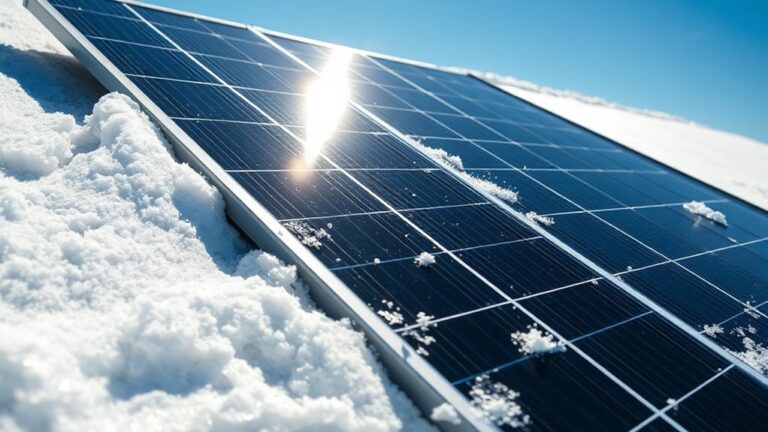
    You can depend on your solar panels to generate power even when snow is present. Snow may temporarily reduce output by covering the panels, but partial exposure and reflected light still allow energy production.

    The panels’ angled design helps snow slide off naturally, while heat absorption speeds melting. Proper maintenance and safe snow removal guarantee they stay efficient and undamaged.

    Keep exploring to discover tips on maximizing your solar power during snowy weather. It’s easier than you might think to keep your system working great all winter long!

  • Do Solar Panels Produce Radiation?

    You don’t need to worry about harmful radiation from solar panels. They emit only very low levels of non-ionizing electromagnetic fields, similar to what your microwave or Wi-Fi router produces.

    These levels are far below safety limits and don’t pose health risks. Solar panels don’t release dangerous ionizing radiation like X-rays or gamma rays.

    If you keep exploring, you’ll discover how these panels stay safe and debunk common myths about their radiation.

  • What Noise Do Solar Panels Make?

    You won’t hear your solar panels themselves since they don’t have moving parts and are silent. However, the equipment that powers them, like inverters and cooling fans, can produce low humming, buzzing, or whirring sounds.

    These noises are usually quiet, similar to a soft conversation, and can be influenced by wind or loose fittings. If you want to understand what causes these sounds and how to reduce them, there’s more to explore about solar panel noise.

  • Do Solar Lights Need Batteries to Work?

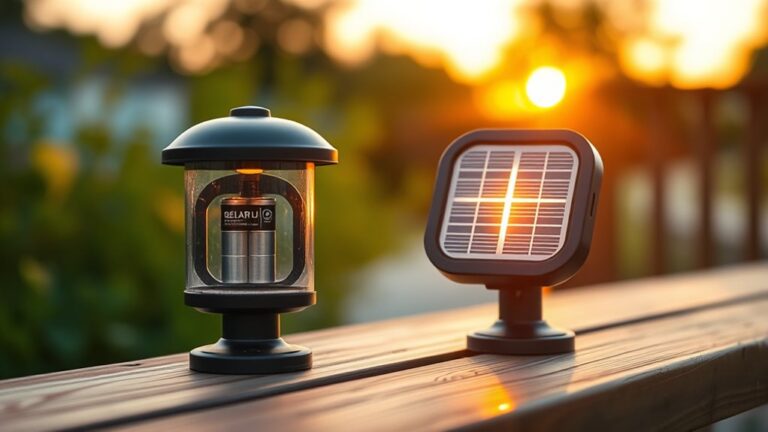
    Yes, you need batteries for solar lights to work properly. The solar panels convert sunlight into electricity, but batteries store that energy so the lights can shine after dark.

    Without batteries, the lights would only work during the day when the sun is out. Rechargeable batteries are designed to handle repeated charging and keep your lights bright longer.

    If you want to understand how they charge, what types to use, and how to maintain them, keep exploring the details ahead.

  • What Batteries Do Solar Lights Have?

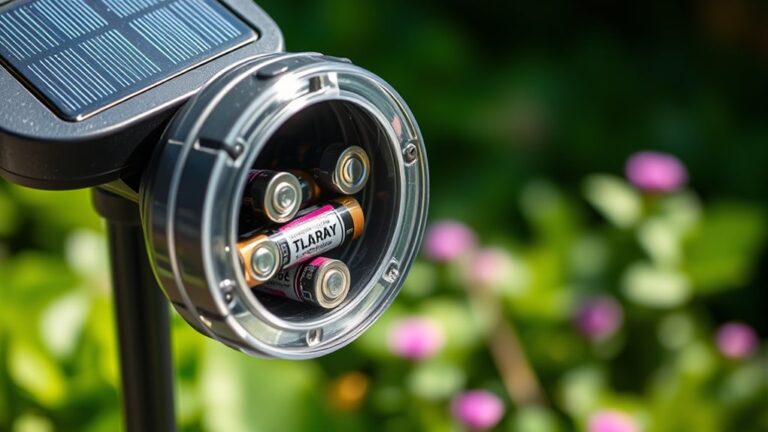
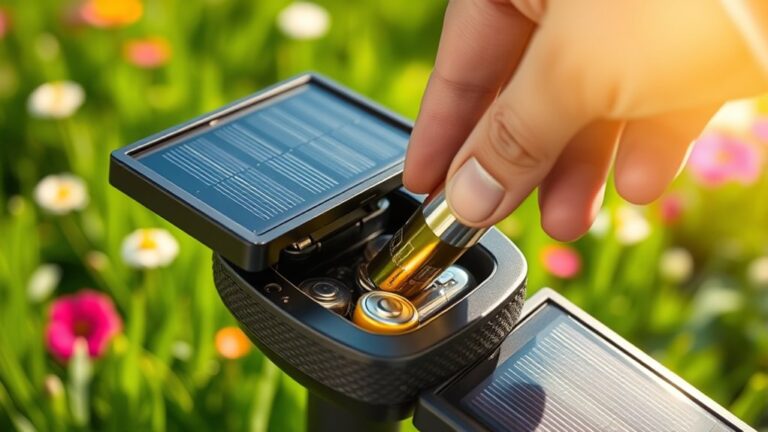
    Solar lights typically use rechargeable batteries like NiMH, NiCd, or lithium-ion to store energy from the sun. NiMH batteries offer good capacity and lifespan, while NiCd are tough but have lower capacity.

    More modern lights favor lithium-ion batteries because they’re lighter, last longer, and hold more charge. Choosing the right battery affects your light’s brightness and runtime.

    And knowing when to replace and maintain them can keep your lights shining bright longer. There’s more to discover about these batteries and care tips.

  • Build a DIY Solar Power Generator in 3 Easy Steps

    To build your DIY solar power generator in three easy steps, start by gathering key parts: solar panels, a deep cycle battery, a charge controller, an inverter, and cables.

    Next, securely mount your solar panels in sunlight, connect them to the charge controller, then link the controller to the battery and battery to the inverter.

    Finally, test the system by plugging in a small device to guarantee everything works.

    Keep following along to discover tips for safe use and maintenance.