Author: Admin

  • Do Solar Panels Attract Lightning and How to Protect Your Home

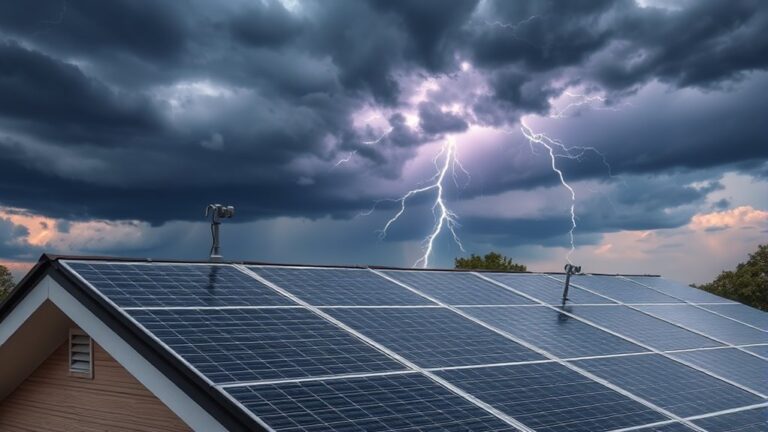
    You don’t need to worry about your solar panels attracting lightning, as they usually sit flat on your roof and don’t stand out as targets.

    However, lightning can cause electrical surges that damage your panels and home wiring. To protect your system, make certain of proper grounding, install surge protectors, and consider lightning rods.

    Turning off inverters during storms also helps prevent damage. Keep following to discover more ways to safeguard your solar setup and home from lightning-related risks.

  • Do Solar Bug Zappers Work and How Can You Use Them Effectively?

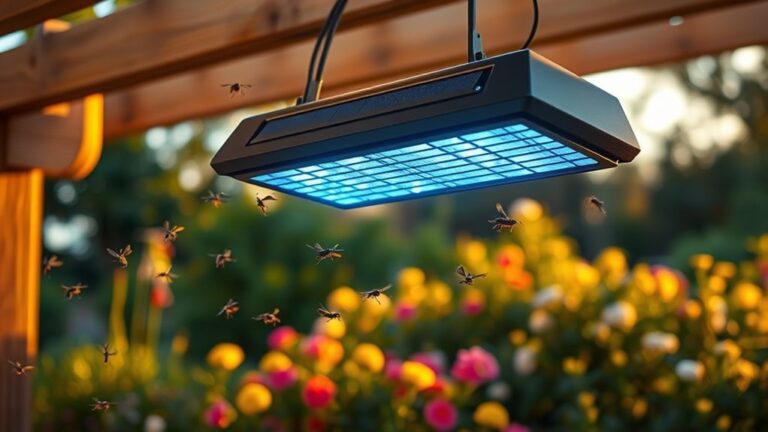
    Solar bug zappers attract insects using UV LED lights and kill them with an electric grid. They work best on bugs drawn to light like moths and beetles—not so much on mosquitoes.

    To use them effectively, place your zapper where it gets full sunlight for charging. Also, keep it away from other lights and near bug hotspots.

    Make sure to keep it clean and protect it from harsh weather to maintain performance. Keep going to uncover more ways to optimize your solar bug zapper’s success.

  • How Do LED Lights Charge Solar Panels Step by Step

    To charge solar panels with LED lights, position your LEDs about 1-2 feet away, shining directly on the panel without shadows. Use LEDs with a brightness around 5000K-6500K and secure wiring with proper insulation and resistors for current control.

    Turn on your LEDs in a dark environment to stimulate the photovoltaic cells, generating a small but steady charge. Measuring with a multimeter helps optimize output.

    Keep going to uncover more tips for maximizing this setup’s efficiency. It’s a neat way to experiment with solar energy on a small scale!

  • How Do Bubbles Go on a Solar Cover: Up or Down?

    You should always place the bubbles on your solar cover facing down. This orientation traps heat more effectively, creating an insulating layer against the water that keeps your pool warmer longer.

    It also protects the bubbles from sun, wind, and chemicals, extending your cover’s lifespan and preventing damage. Incorrect placement reduces efficiency and causes quicker heat loss.

    If you want to get the most from your solar cover, understanding why bubble direction matters is a great next step. It really makes a difference in how well your pool stays warm!

  • Do All Solar Lights Need Batteries?

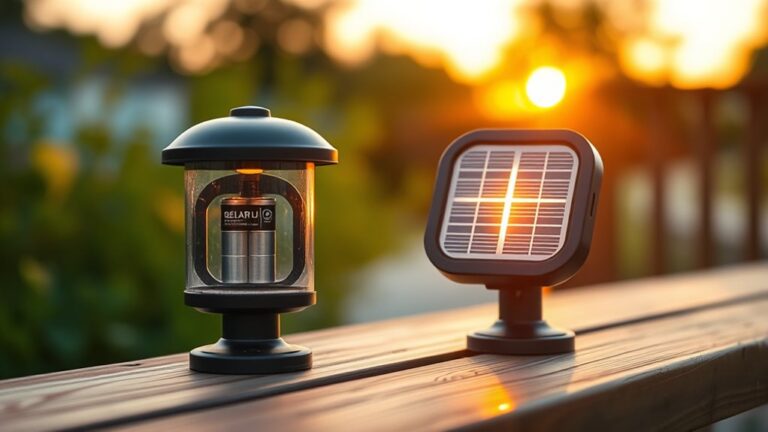
    You don’t always need batteries for solar lights, but most include rechargeable ones to store energy for nighttime use. Without batteries, your solar lights only work during the day, turning off after sunset.

    Rechargeable batteries help your lights shine longer and perform consistently through many charge cycles. Some models use capacitors for brief illumination instead.

    If you want to find the best option for your needs, understanding these differences will guide your choice. It’s all about picking what works best for you!

  • How Can You Use Regular Batteries in Solar Lights?

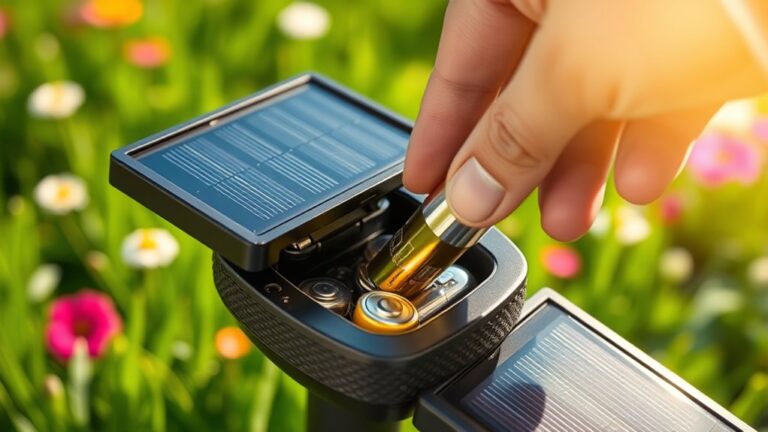
    You can use regular batteries in solar lights by choosing ones that match the size and voltage required, then installing them with correct polarity to avoid damage. Remember not to mix old and new batteries or different brands, as this lowers performance.

    Keep your batteries stored in a cool, dry place to extend their life. While regular batteries can work, they might not last as long or perform as well as rechargeables.

    Learn how to get the best results and avoid common pitfalls. It’s all about making sure you use the right batteries and handle them properly to keep your solar lights shining bright.

  • How You Can Use Regular AA Batteries in Solar Lights

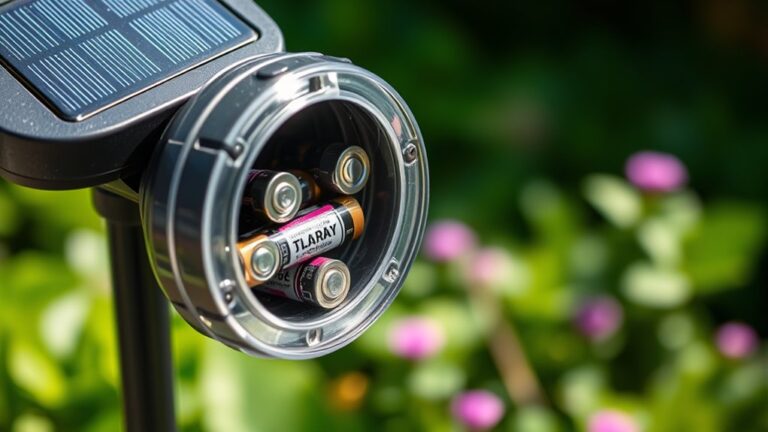
    You can use regular AA batteries in your solar lights by choosing the right type—alkaline or rechargeable NiMH works best—and making sure they fit and match the voltage specs.

    Simply open the battery compartment, insert the batteries following polarity markings, and close it securely. Rechargeables offer longer life and eco benefits, while alkalines are cheaper but drain faster.

    To keep your lights shining bright, it helps to maintain batteries properly. Keep exploring for tips on boosting solar light performance and battery care.

  • How Do You Use a Regular Battery in a Solar Light?

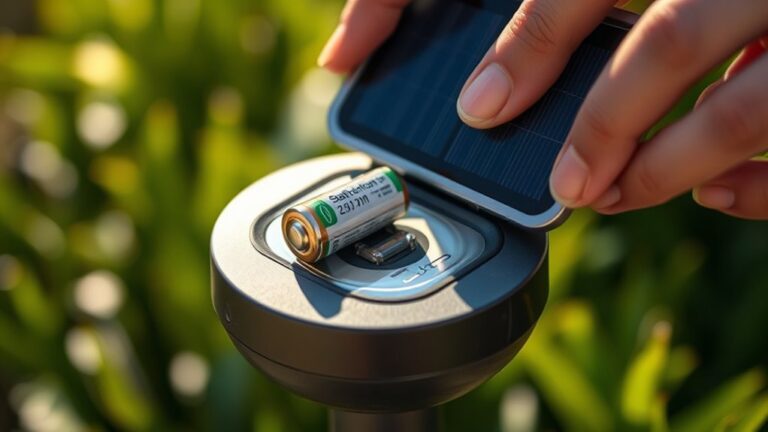
    You can use regular batteries in your solar light temporarily by choosing the right type, typically alkaline AA or AAA. Just avoid rechargeable or lithium batteries unless the device supports them.

    Make sure to insert the batteries with the correct polarity and secure the compartment tightly. Also, place the solar panel where it gets plenty of sunlight.

    Keep an eye out for corrosion or reduced performance. When you can, switch back to solar power to protect your light’s lifespan.

    Learn how to maximize your light’s efficiency and avoid common issues—it really helps keep everything running smoothly!

  • What Does It Take for You to Run a House on Solar Power Alone?

    To run your house solely on solar power, you’ll need to size your system carefully based on your daily energy use and sunlight availability. Choosing the right panels and battery storage guarantees you have power even during cloudy days or outages.

    You’ll also want a reliable backup, like a generator or grid connection, plus regular monitoring and maintenance to keep everything efficient. If you want to make the most of solar energy, understanding these key steps is essential.

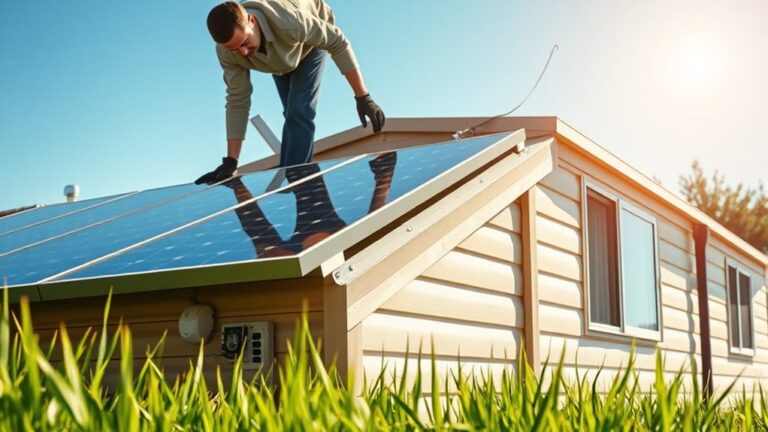
  • How Do You Put Solar Panels on Mobile Homes Step-by-Step?

    Start by inspecting your mobile home roof for damage, space, and orientation to guarantee it’s suitable for solar panels. Choose the right panel type and size based on your energy needs, then gather mounting brackets and safety gear designed for mobile homes.

    Clean and prepare the roof, securely mount the panels, and connect the wiring to your electrical system with proper breakers. Finally, maintain and monitor your system to keep it efficient and lasting.

    Keep going to uncover detailed steps and tips. You’ll find it easier than you think once you break it down step-by-step!