How You Can Install Solar Panels Yourself
You can install solar panels yourself by first evaluating your energy needs and measuring your roof’s size and sun exposure. This helps you figure out how many panels you’ll need and where to place them for the best sunlight.
Choosing the right panels based on efficiency and cost is key to getting the most out of your investment.
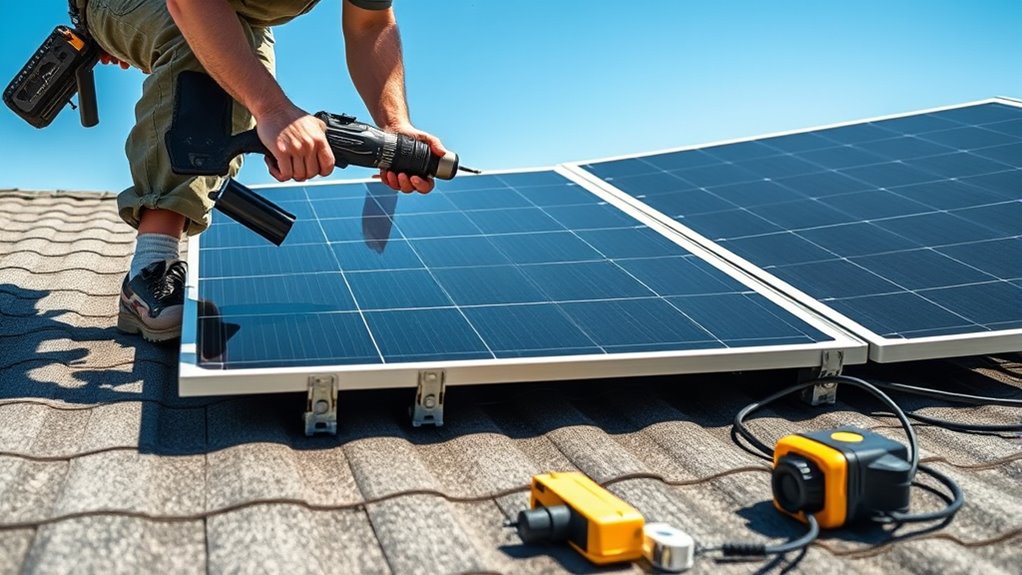
Next, gather essential tools like a drill and multimeter. Mount the brackets securely to make sure your panels stay put.
Then, wire the panels safely. Connecting your system to your electrical panel with proper grounding is crucial for safety and performance.
Don’t forget to regularly test and clean your setup. Keeping it well-maintained ensures your solar power system stays efficient and safe over time.
Follow these steps, and you’ll discover how to build a reliable, sustainable solar power system all on your own.
Key Takeaways
- Assess your energy needs by reviewing electricity bills and measuring roof size and orientation for optimal panel placement. This step helps you understand how much power you’ll need and where to put the panels for the best sun exposure.
- Select appropriate solar panels based on efficiency, cost, and available roof space. Don’t forget to gather all necessary installation tools and safety gear before you start.
- Securely mount panels using brackets. Then, connect the wiring properly with MC4 connectors to ensure everything is safe and functional.
- Make sure to ground the system correctly and install a circuit breaker. These steps are crucial for safety and preventing electrical issues.
- Test system voltage with a multimeter to confirm everything is working as it should. Also, inspect connections regularly and always follow safety precautions during installation and maintenance.
- Clean your panels routinely to keep them efficient. Remove any debris, inspect for damage, and perform maintenance as needed to extend the system’s lifespan.
How to Choose the Right Solar Panels for Your Home
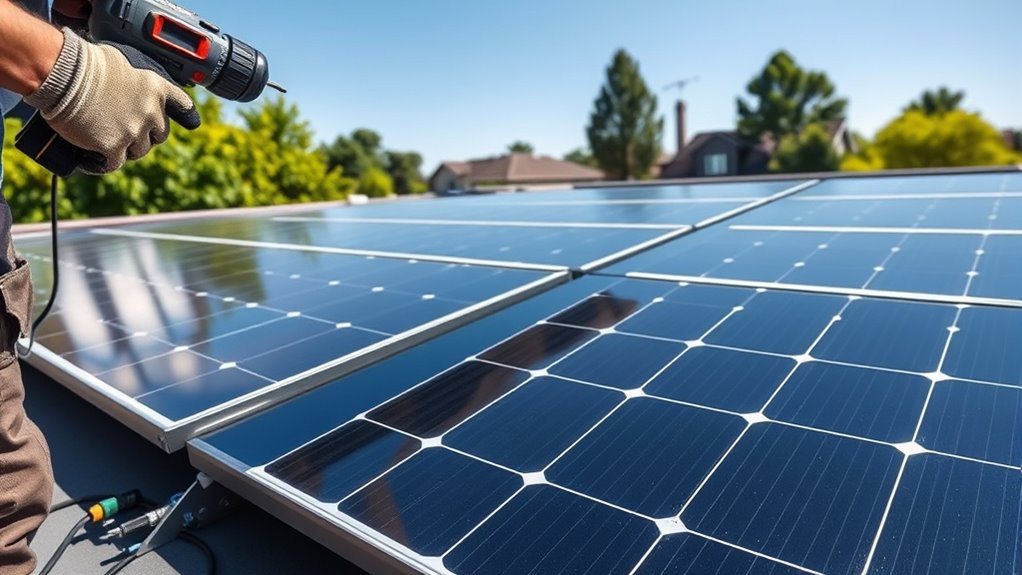
Before you start shopping for solar panels, you’ll want to assess your energy needs and roof space carefully. Look at your past electricity bills to estimate your average daily usage. This helps you determine how many panels you’ll need to generate enough power.
Start by reviewing your energy use and roof size to figure out how many solar panels you need.
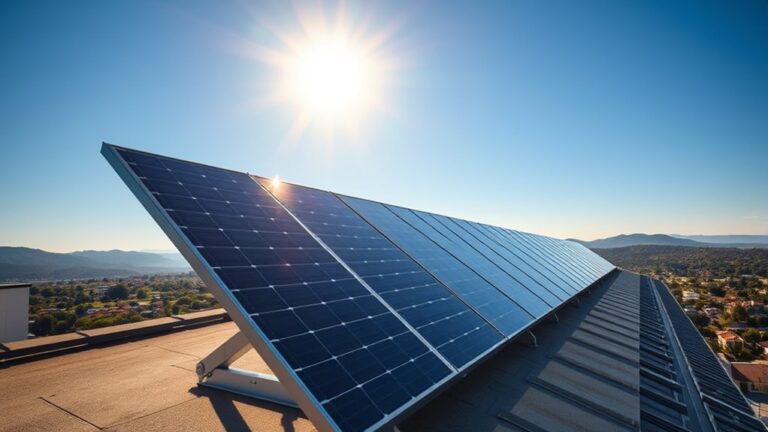
Next, measure your roof’s dimensions and consider its orientation and shading. South-facing roofs get the most sunlight, while trees or nearby buildings might block rays.
Then, decide on the panel type: monocrystalline panels offer higher efficiency but cost more, while polycrystalline panels are more affordable with slightly less efficiency. Also, check the panel’s wattage rating and warranty terms to guarantee reliability.
Prioritizing these factors ensures you pick the right solar panels that fit your home’s unique setup and energy goals. It’s all about finding what works best for you!
What Tools You Need Before Installing Solar Panels
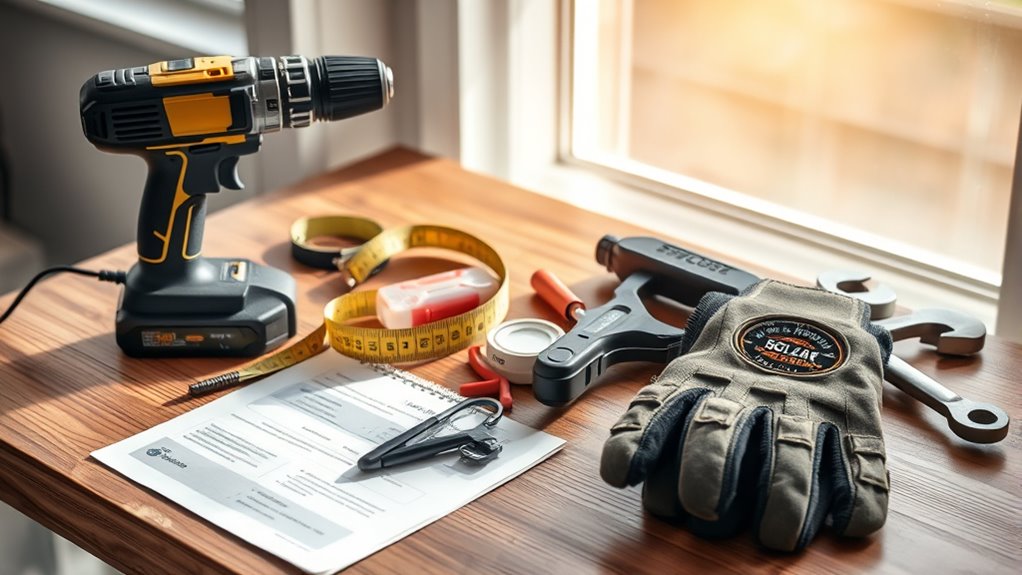
Although installing solar panels might seem straightforward, having the right tools on hand makes the process much smoother and safer. Before you start, make sure you gather everything you need to avoid delays and frustration.
Here are the essential tools you’ll want:
- Cordless drill with various bits: For drilling holes and securing mounts quickly.
- Socket wrench set: To tighten bolts and nuts firmly.
- Multimeter: To test electrical connections and ensure everything works correctly.
- Ladder and mounting hardware: To safely access your roof and secure panels in place.
Having these tools ready will help you work efficiently and confidently. Remember, preparation is key to a successful solar panel installation.
How to Stay Safe While Installing Solar Panels
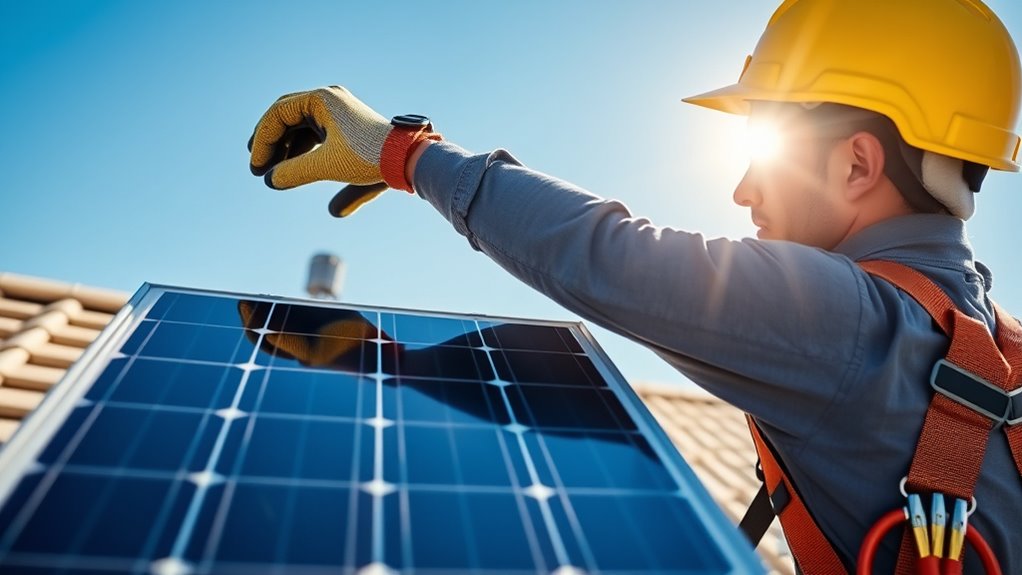
Before you start installing solar panels, make sure you wear proper protective gear to keep yourself safe. Always follow safe ladder practices to prevent falls, and take electrical safety measures seriously to avoid shocks.
Staying cautious in these areas will help you complete your project without accidents. It’s really all about being careful and prepared every step of the way.
Proper Protective Gear
While installing solar panels can be an exciting project, you’ll need the right protective gear to keep yourself safe throughout the process. Proper equipment reduces the risk of injury and guarantees you work efficiently.
Make sure you have safety glasses to protect your eyes from debris and electrical sparks. Work gloves that provide grip and shield your hands from sharp edges.
Don’t forget non-slip shoes to prevent falls, especially on sloped roofs. And hard hats to guard against head injuries from falling objects or accidental bumps.
Wearing this gear helps you focus on the installation without unnecessary hazards. So, don’t skip these essentials—they’re your first line of defense during the project.
Prioritize safety and prepare well before you start climbing or handling electrical components. It’s worth taking the time to gear up right!
Safe Ladder Practices
How can you make certain your ladder stays secure when installing solar panels? First, choose a ladder that’s tall enough to reach your roof without standing on the top rungs.
Set it on firm, level ground, and use ladder stabilizers or anti-slip feet to prevent slipping. Always angle the ladder correctly—about one foot out for every four feet up.
Secure the ladder at the top, either by tying it off or having someone hold it steady. Climb carefully, facing the ladder and keeping three points of contact at all times.
Avoid overreaching; move the ladder as needed. Never carry heavy tools or panels while climbing; use a rope or hoist instead.
Following these simple steps will keep you safe and steady during your solar panel installation.
Electrical Safety Measures
Securing your ladder properly helps prevent falls, but dealing with electricity during solar panel installation presents its own risks that require careful attention. To stay safe, always remember that electricity can be deadly, so treat every wire as if it’s live.
Before you start, turn off the main power supply to avoid accidental shocks. Use insulated tools designed for electrical work to reduce risk. Also, wear rubber-soled shoes and safety gloves to protect yourself from electrical currents.
Here are key electrical safety measures:
- Double-check that power is off before handling wiring
- Use a voltage tester to confirm circuits are de-energized
- Avoid working in wet conditions to prevent electrocution
- Follow local electrical codes and consider consulting a professional
Staying cautious guarantees a safer solar panel installation experience. Take your time, and don’t rush—your safety is worth it!
Mounting and Wiring Your Solar Panels, Step by Step
Before you begin mounting and wiring your solar panels, make certain you have all the necessary tools and safety gear in place. Start by securely attaching the mounting brackets to your roof or chosen structure, ensuring they’re level and properly spaced.
Next, fix the solar panels onto these brackets, fastening them tightly to withstand wind and weather. When wiring, connect the panels in series or parallel based on your system’s design, using MC4 connectors for safe, waterproof connections.
Route the cables neatly to avoid damage, securing them with cable clips. Double-check all connections for tightness and correct polarity.
Finally, ground the system properly to prevent electrical hazards. Taking these steps carefully ensures a sturdy, efficient solar setup ready for the next phase.
Connecting Your Solar Panels to Your Home’s Electrical Panel
Once your solar panels are mounted, wired, and grounded properly, you’ll connect them to your home’s electrical panel to start harnessing solar energy. Begin by installing a dedicated circuit breaker for your solar system.
After mounting and grounding, connect your solar panels to a dedicated breaker in your home’s electrical panel.
Then, connect the solar inverter output to this breaker, making sure all connections are secure and comply with local electrical codes. Don’t forget to turn off the main power before working inside the panel. Safety is key throughout this process.
Here are some key steps to follow:
- Install a proper solar breaker in your electrical panel.
- Connect the inverter output to the breaker.
- Use appropriate wiring rated for your system’s amperage.
- Double-check all connections and follow local code requirements.
How to Test and Maintain Your DIY Solar Power System
Now that your panels are connected, it’s important to regularly inspect all connections to guarantee they’re secure and free of corrosion.
You’ll also want to measure your system’s voltage to confirm everything is working properly.
Don’t forget to clean your panels regularly to keep them operating at peak efficiency.
Inspect Panel Connections
How do you guarantee your solar panels keep delivering peak power? Regularly inspecting panel connections is key.
Loose or corroded connections reduce efficiency and can cause system failures. Start by checking all wiring terminals for tightness and signs of corrosion or damage.
Clean connections with a soft brush if needed, and apply dielectric grease to prevent oxidation. Also, make sure connectors click firmly into place to avoid intermittent contact.
Focus on these steps:
- Tighten any loose screws or bolts on connection points
- Look for discoloration or frayed wires indicating wear
- Remove dirt and debris around connection areas
- Verify all connectors are properly seated and locked
Measure System Voltage
After confirming your panel connections are secure and clean, the next step is to measure your system’s voltage to verify everything’s functioning properly. Grab a digital multimeter and set it to measure DC voltage.
Connect the positive lead to the positive terminal and the negative lead to the negative terminal of your solar panel or battery bank. Check the reading against your system’s rated voltage—typically 12V, 24V, or 48V.
If the voltage is notably lower than expected, it could indicate faulty wiring, a depleted battery, or shading issues. Regularly measuring system voltage helps you catch problems early and ensures your system operates efficiently.
Always take safety precautions, like wearing insulated gloves, to avoid electric shock while testing your solar power system. It’s better to be safe than sorry!
Clean Panels Regularly
Although solar panels are designed to withstand outdoor conditions, you’ll want to clean them regularly to keep their efficiency high. Dirt, dust, and debris can block sunlight and reduce energy output.
To maintain the best performance, make cleaning a routine part of your system care.
Here’s how to clean your panels effectively:
- Use a soft cloth or sponge with mild soapy water to avoid scratching the surface.
- Rinse panels gently with clean water, preferably early morning or late afternoon when panels are cool.
- Avoid harsh chemicals or abrasive tools that can damage coatings.
- Inspect panels for cracks or damage during cleaning to catch issues early.
Regular cleaning helps your DIY system deliver maximum power and extends its lifespan. So, don’t skip it!
Frequently Asked Questions
How Much Can I Save on Electricity Bills With Solar Panels?
You can save up to 50-70% on your electricity bills with solar panels, depending on your location, energy usage, and system size. Over time, these savings can cover installation costs and reduce your overall expenses considerably.
It’s pretty amazing when you think about it. Solar panels not only cut down your bills but also add value to your home. Plus, the more energy you use from the sun, the less you rely on the grid.
Are There Any Tax Credits or Incentives for Installing Solar Panels?
Yes, you can get tax credits like the federal Investment Tax Credit (ITC), which covers a percentage of your solar installation costs.
Many states and local programs offer additional incentives, so check what’s available in your area. It’s a great way to save some money while going green!
How Long Does a Typical Solar Panel Installation Last?
Your solar panels can last 25 to 30 years, symbolizing a steadfast partnership with the sun. With proper care, you’ll keep harvesting clean energy, letting your investment shine brightly through decades of power and savings.
It’s pretty amazing when you think about it—decades of reliable energy right on your roof. Just a little maintenance here and there, and you’re set to enjoy all the benefits for years to come.
Can I Install Solar Panels on a Rented Property?
You usually can’t install solar panels on a rented property without your landlord’s permission. Talk to them first, since installations might require approval.
If permanent changes aren’t allowed, you might want to consider portable solar options instead. They’re easier to set up and don’t need any major modifications.
What Are the Environmental Benefits of Using Solar Energy?
You’ll reduce greenhouse gas emissions, cut air pollution, and conserve natural resources by using solar energy. It’s renewable, sustainable, and lowers your carbon footprint.
That means you’re helping protect the planet for future generations while saving on energy costs. Using solar energy is a smart choice all around!
Conclusion
So, you’re ready to become your own solar superhero—minus the cape but with all the wiring drama. Just remember, installing solar panels yourself isn’t as simple as snapping a selfie; it takes tools, safety smarts, and a bit of patience that even your Wi-Fi router envies.
But hey, if you survive the mounting and wiring chaos, you’ll enjoy free energy—and bragging rights that make you the neighborhood’s brightest star. Shine on, DIY warrior!
Installing solar panels yourself might seem daunting at first, but with the right preparation, it’s totally doable. You’ll need to gather the proper tools, understand basic electrical wiring, and prioritize safety throughout the process. Taking your time and following instructions carefully will save you headaches later on.
In the end, not only will you reduce your electricity bills, but you’ll also contribute to a greener planet. So, roll up your sleeves and dive into this rewarding project—because installing solar panels yourself means harnessing free, renewable energy while gaining the skills and confidence to power your home like a pro.