Does a Solar Panel Need Direct Sunlight to Optimize Performance?
You don’t need direct sunlight for your solar panels to work, though full sun does maximize their performance. Solar panels start producing electricity with daylight, even when the sky is cloudy or there’s some shade. This happens because of diffused light, which still reaches the panels and allows them to generate power.
While cloudy days or shading can lower the amount of energy your system produces, your solar setup remains effective overall.
Other factors like the sun’s angle, how long the day lasts, and how your panels are positioned also play a big role in energy generation. Knowing these details helps you get the most from your solar panels and shows that they can perform well beyond just bright, direct sunlight.
Key Takeaways
- Solar panels start generating electricity as soon as there’s daylight. They don’t need direct sunlight to begin producing power.
- While direct sunlight gives you the best output, panels still work pretty well under diffused or partial sunlight conditions. So, even on less sunny days, they’re pulling their weight.
- If it’s cloudy or shaded, power drops to about 10-25%, but the panels keep producing usable energy. It’s not ideal, but it’s better than nothing.
- Positioning and tilting your panels right makes a big difference. It helps them catch both direct and scattered sunlight, which boosts overall performance.
- Knowing that full sun isn’t a must helps you set more realistic expectations. Plus, it’s great for figuring out the best spot to install your system.
Do Solar Panels Need Direct Sunlight to Work?
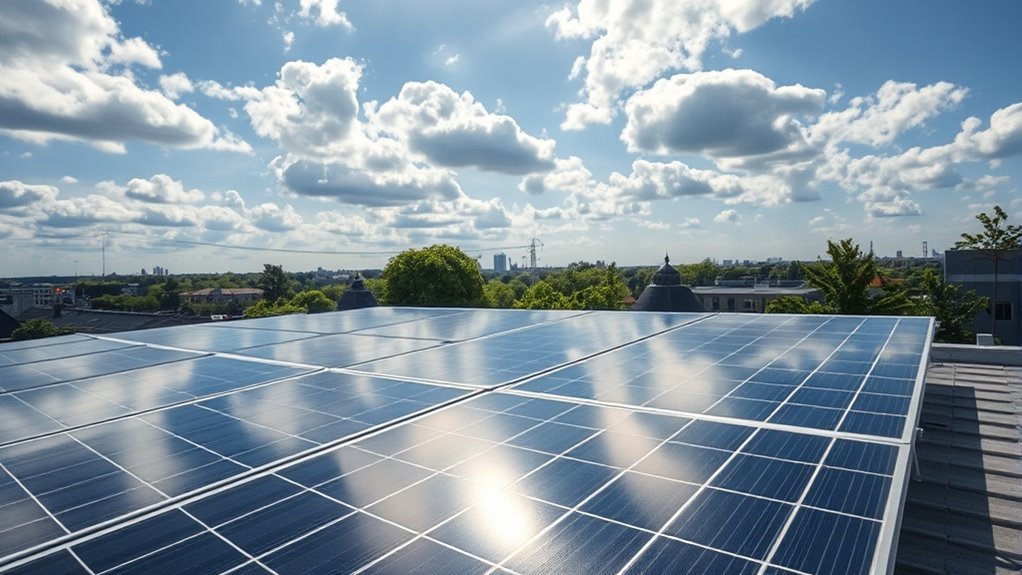
Although solar panels perform best under direct sunlight, they don’t need it to generate electricity. When sunlight hits the solar cells, it excites electrons, creating a flow of electricity.
Even if the light isn’t direct, diffuse sunlight still carries enough energy for the cells to work. You’ll find solar panels begin producing power as soon as daylight appears, not just in full sun.
However, the amount of electricity depends on the light intensity. So, while bright, direct sunlight maximizes output, your panels will still function on overcast mornings or in shaded spots.
The key is that solar panels rely on light, not necessarily direct rays, to convert solar energy into usable electricity. This means you can benefit from them in various lighting conditions.
How Solar Panels Perform on Cloudy and Shaded Days
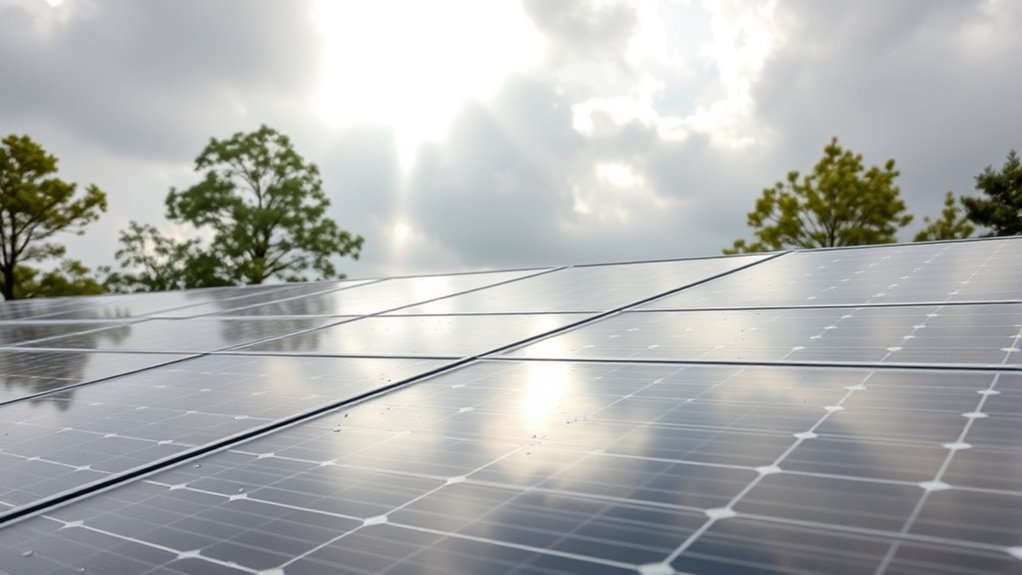
When clouds cover the sky or shadows fall on your panels, they still produce electricity, but at a reduced rate. Solar panels rely on sunlight, not just direct rays, so even diffused light on cloudy days generates power.
However, the output can drop to 10-25% of what you’d get under clear skies. If parts of your panels are shaded—by trees or buildings—you’ll notice a similar decrease.
Shading affects the flow of electricity through the panel’s cells, which can substantially impact overall performance. To keep your system efficient, position panels where shading is minimal throughout the day.
You don’t need perfect sun, but avoiding shadows helps maintain steady energy production even when the weather isn’t ideal.
How Sun Angle and Day Length Affect Solar Panel Output
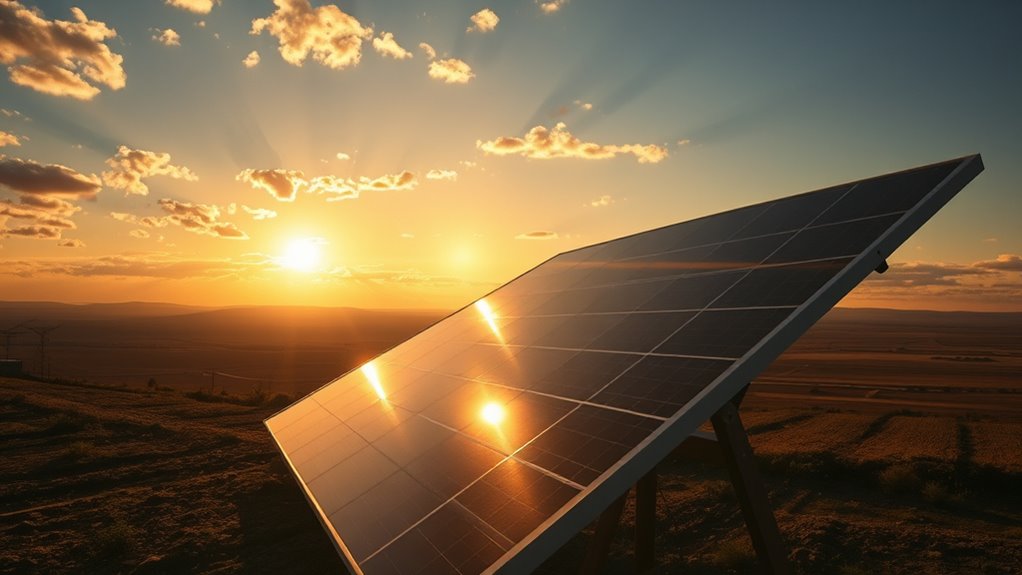
Cloudy skies and shading can lower your solar panels’ output, but the sun’s position and how long it shines each day also play a big role. When the sun sits higher in the sky, usually around midday, its rays hit your panels more directly, boosting their efficiency.
Early mornings and late afternoons, when the sun is low, result in slanted rays that reduce the energy your panels produce. Additionally, longer daylight hours during spring and summer give your panels more time to generate power, increasing daily output.
Conversely, shorter days in fall and winter mean less total sunlight, so your panels naturally produce less energy. Understanding these patterns helps you anticipate your system’s performance throughout the year and optimize placement or usage accordingly.
How Indirect Sunlight Affects Solar Panel Efficiency
You might wonder how solar panels perform when sunlight isn’t direct. Even on cloudy days, diffused light still reaches your panels and generates electricity, though at reduced efficiency.
Understanding this can help you set realistic expectations for your system’s output in less-than-perfect weather. It’s all about knowing what to expect, so you’re not caught off guard when the sun hides behind the clouds.
Diffused Light Impact
Although direct sunlight delivers the highest energy output, solar panels can still generate power from diffused light on overcast days or in shaded areas. When sunlight scatters through the atmosphere, it becomes diffused, meaning it reaches your panels from multiple angles rather than a direct beam.
This scattered light still contains enough energy for your solar panels to convert into electricity, though at a reduced efficiency compared to direct rays. You’ll notice that panels designed with advanced materials and anti-reflective coatings perform better under these conditions.
While the energy yield drops, it doesn’t drop to zero. So, you don’t need perfectly clear skies for your solar setup to work, but understanding diffused light’s impact helps you set realistic expectations about your panel’s daily performance.
Cloudy Day Performance
When sunlight passes through thick clouds, it becomes indirect and less intense, which reduces the energy your solar panels can capture. But don’t worry—your panels don’t stop working entirely. They still generate power, just at a lower rate.
Understanding how cloudy conditions affect efficiency helps you set realistic expectations and optimize your system.
Here’s what you should know about cloudy day performance:
- Solar panels can produce 10-25% of their usual output under heavy cloud cover.
- Light diffusion scatters sunlight, slightly boosting energy capture compared to total shade.
- Panels with higher efficiency ratings perform better in low-light conditions.
- Regular cleaning ensures maximum light absorption, especially when sunlight is already limited.
Best Ways to Position Solar Panels Without Direct Sunlight
You can still get good solar panel performance without direct sunlight by adjusting their angles to capture more diffused light. Make sure to position panels where shade won’t block even indirect rays throughout the day.
Taking these steps helps you maximize energy output in less-than-ideal conditions. It’s all about making the most of the light you do have, even if the sun isn’t shining straight on your panels.
Optimal Panel Angles
Even without direct sunlight, you can boost your solar panel’s efficiency by adjusting its angle to capture the most available light. Angling your panels properly helps maximize exposure to ambient and scattered light throughout the day.
Here are key tips to optimize your panel angles:
- Tilt panels toward the equator (south in the northern hemisphere, north in the southern) for better light capture.
- Adjust the tilt seasonally—steeper in winter, flatter in summer—to align with the sun’s lower or higher path.
- Avoid flat placements; a slight angle prevents water and dust buildup that reduce efficiency.
- Use adjustable mounts if possible to fine-tune angles based on weather and light conditions.
These steps guarantee your panels make the most of indirect sunlight, enhancing overall energy output. It’s a simple way to get better performance without extra cost or effort.
Utilizing Diffused Light
How can solar panels perform efficiently without direct sunlight? You can maximize energy capture by positioning your panels to absorb diffused light, which comes from scattered sunlight on cloudy or hazy days.
Instead of relying solely on direct beams, angle your panels to face the general direction of the sun, optimizing exposure to ambient daylight. Avoid flat, horizontal placements since tilting panels slightly improves their ability to catch scattered rays.
Materials in modern panels also help convert diffused light into electricity effectively, so don’t worry if the sun isn’t blazing. Just keep your panels clean and free of dirt, because grime reduces their ability to absorb any light.
Avoiding Shade Obstacles
Although direct sunlight boosts solar panel efficiency, avoiding shade is just as crucial when positioning your system. Even small shadows can markedly reduce energy output, so you’ll want to carefully assess your installation site.
Here are some smart ways to avoid shade obstacles:
- Choose a clear, open area free from trees, buildings, or other obstructions.
- Install panels on adjustable mounts to change the angle and avoid shadows throughout the day.
- Trim nearby vegetation regularly to prevent growth from casting shadows.
- Use microinverters or power optimizers to minimize the impact of shaded cells on the whole system.
Debunking Common Myths About Solar Panels and Sunlight
While many believe solar panels only work under direct sunlight, that’s not entirely true. You might think panels become useless on cloudy days, but they still capture diffused light and generate power, just at reduced efficiency.
Another myth is that solar panels don’t work in cold weather. In fact, cooler temperatures can actually improve performance, since heat lowers panel efficiency.
You might also hear that solar panels need constant sun exposure, but partial shade only decreases output—you don’t need full sun all day.
Understanding these misconceptions helps you set realistic expectations and optimize your system’s placement. So, don’t let these myths discourage you; solar panels can be effective even without perfect, direct sunlight.
Frequently Asked Questions
How Does Temperature Affect Solar Panel Efficiency?
You’ll notice solar panels become less efficient as temperatures rise because heat increases resistance in their cells. Cooler conditions help them perform better, so keeping panels ventilated can boost their overall energy output.
It’s pretty interesting how just a bit of heat can make such a difference. So, if you’re thinking about installing panels, consider places where they can get some airflow. That way, they’ll stay cooler and work more efficiently!
What Maintenance Is Required for Optimal Solar Panel Performance?
You should clean your solar panels regularly and check for shading or debris. Also, inspect wiring and connections to make sure everything’s in good shape.
Don’t forget to monitor the output performance as well. Doing these things helps your panels work efficiently and last longer.
This way, you’ll maximize your energy production without any hassle. It’s all about keeping things simple and consistent!
Can Solar Panels Store Energy for Nighttime Use?
Think of solar panels as sun catchers—they don’t store energy themselves, but you can hook them up to batteries.
Those batteries act like your home’s nightlight, keeping power flowing when the sun sets.
How Do Different Solar Panel Types Compare in Efficiency?
You’ll find monocrystalline panels most efficient, followed by polycrystalline, which are slightly less so but cheaper. Thin-film panels are less efficient but flexible and lightweight.
Choose based on your budget, space, and energy needs. It really depends on what works best for you!
Are Solar Panels Harmful to the Environment?
You won’t find solar panels harmful in daily use; they reduce carbon emissions. However, their manufacturing involves energy and materials that impact the environment.
Still, using solar power helps you cut pollution and fight climate change effectively. It’s a smart way to make a positive difference for the planet.
Conclusion
You don’t need direct sunlight to get the most out of your solar panels, but maximizing exposure definitely helps. Even on cloudy or shaded days, your panels can still generate power, though efficiency might dip.
By positioning them right and understanding how light angles play a role, you’ll keep your energy flowing. Remember, every cloud has a silver lining—your solar setup can shine bright, rain or shine!
In short, while direct sunlight optimizes solar panel performance, indirect light still powers your system. Proper placement and angle adjustment are key to making the most of available sunlight. So, whether it’s sunny, cloudy, or shaded, your solar panels can keep generating clean energy efficiently.