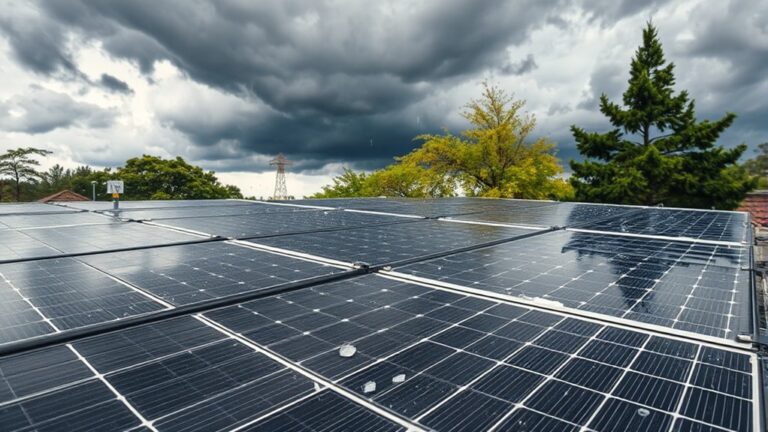
How Much Energy Can a Solar Panel Produce?
You can expect a typical solar panel to produce between 250 and 400 watts of power under ideal sunlight conditions. How much energy a solar panel can produce really depends on several factors.
Daily energy output varies based on your location, panel size, and the weather.
Things like panel orientation, tilt, shading, and temperature can influence how much electricity you actually get. Understanding these elements helps you get a clearer picture of your solar panel’s performance.
By calculating your panel’s daily and yearly output, you’ll be able to optimize its performance.
This way, you can make the most out of your solar investment and enjoy reliable clean energy for years to come. It’s all about knowing what affects your panel’s energy production and making smart adjustments.
Key Takeaways
- Solar panel energy output depends on its wattage and average daily sunlight hours. A 250W residential panel can produce roughly 1 to 1.5 kWh per day under optimal conditions.
- Geographic location and weather play a big role in how much energy a panel can generate annually. So, where you live really matters.
- Proper orientation, tilt, and regular maintenance can boost a panel’s actual energy production. It’s worth paying attention to these details.
- On the flip side, shading, dirt, and high temperatures can reduce solar panel efficiency and overall energy output. Keeping panels clean and shaded-free helps a lot.
How Solar Panels Convert Sunlight Into Electricity
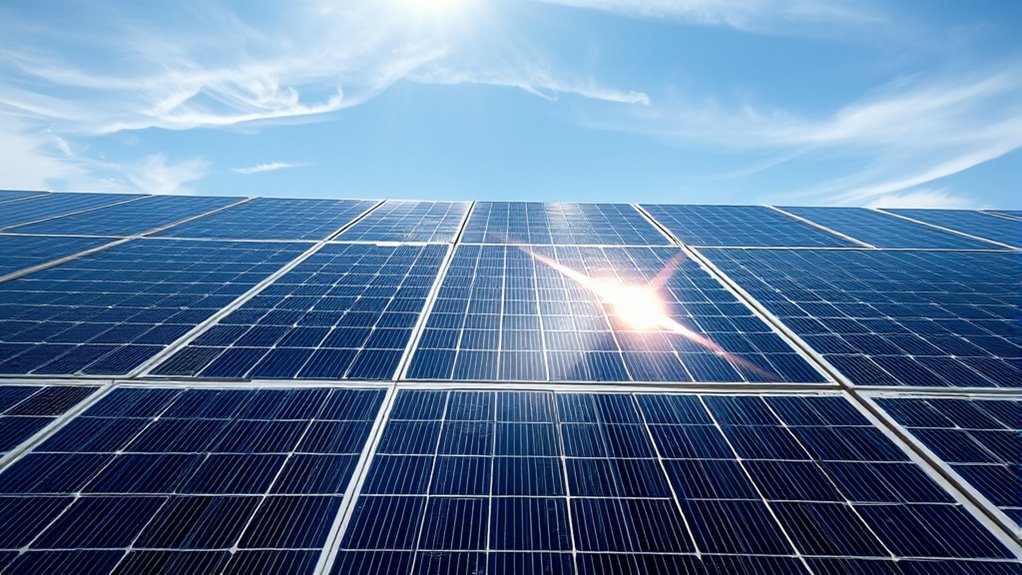
Although solar panels might seem complex, they work by converting sunlight directly into electricity through a process called the photovoltaic effect. When sunlight hits the solar cells, it excites electrons in the material, usually silicon, causing them to flow and create an electric current.
You’ll find that each solar cell has a built-in electric field that pushes these electrons in a specific direction, generating direct current (DC) electricity. To make this energy usable for your home or grid, an inverter converts the DC into alternating current (AC).
What Factors Affect Solar Panel Energy Output
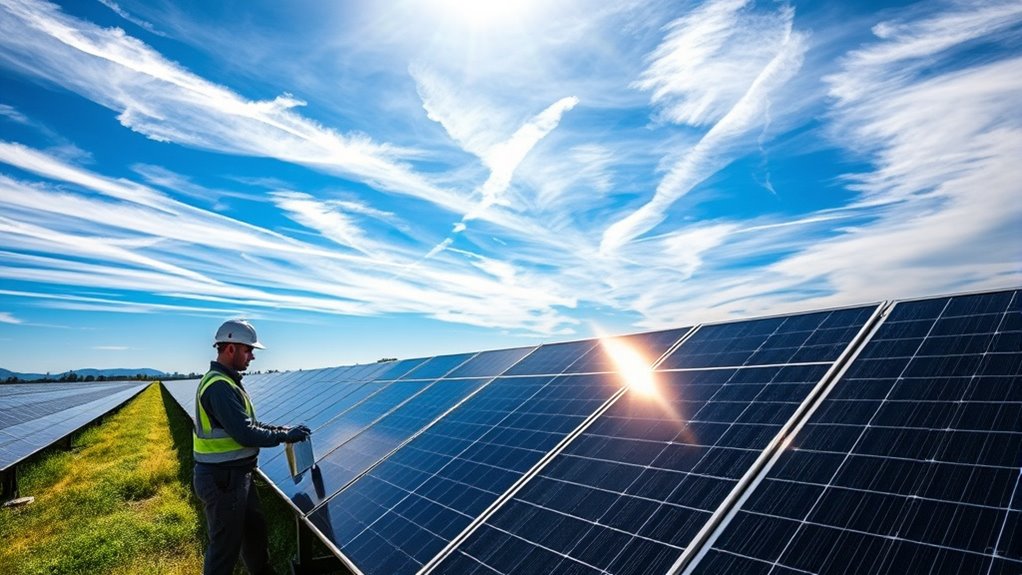
You’ll notice that the direction your solar panels face plays a big role in how much energy they produce.
Weather conditions like clouds, rain, or snow can also impact their efficiency.
Let’s explore how these factors affect your solar panel’s output.
Panel Orientation Impact
Because the angle and direction of your solar panels directly influence how much sunlight they capture, panel orientation plays an essential role in energy output. You’ll want to position your panels to face true south in the Northern Hemisphere or true north in the Southern Hemisphere for maximum exposure.
The tilt angle should match your latitude to optimize sunlight absorption throughout the year. If your panels are angled too steeply or shallowly, they won’t capture as much solar energy, especially during peak sunlight hours.
Adjusting the tilt seasonally can help improve efficiency, but many opt for a fixed angle for simplicity. Even small deviations from the ideal direction or angle can reduce energy production, so careful planning can markedly boost your solar panel’s performance.
Weather Conditions Effects
When weather conditions change, they directly impact how much energy your solar panels can produce. Sunlight intensity, temperature, cloud cover, and precipitation all play key roles.
For instance, cloudy days reduce sunlight, lowering output, while high temperatures can decrease panel efficiency. Rain can clean your panels but also block sunlight temporarily.
Wind can cool panels, improving performance. Here’s a quick overview:
| Weather Factor | Effect on Output | Notes |
|---|---|---|
| Sunlight | Increases output | Clear skies maximize energy |
| Temperature | High temps reduce output | Panels work best at ~25°C |
| Cloud Cover | Decreases output | Thick clouds cut sunlight |
| Rain | Temporary decrease | Cleans panels for better use |
| Wind | Slight increase | Cools panels, boosts output |
Understanding these helps you anticipate energy production changes.
How Location and Weather Influence Solar Panel Power
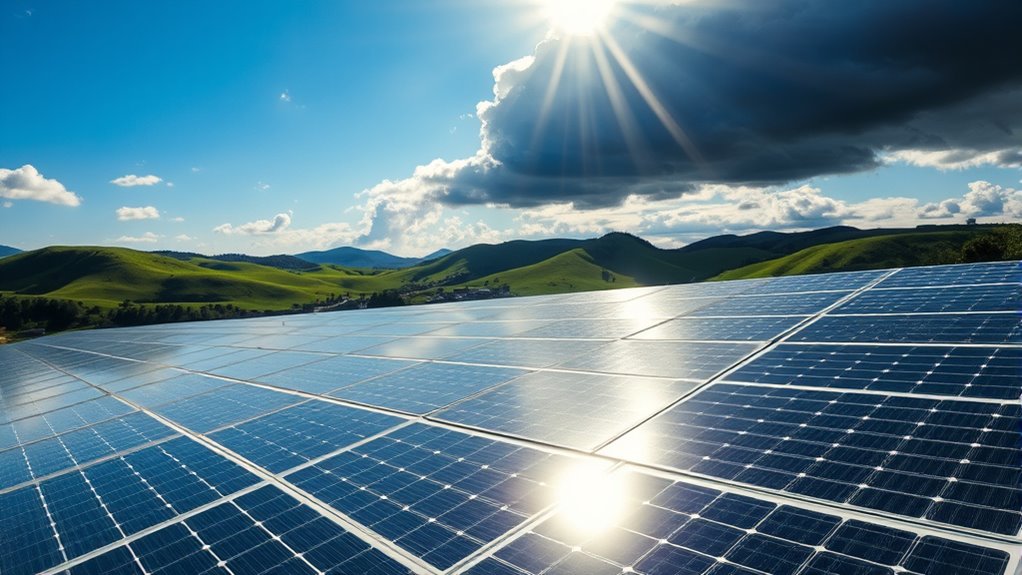
Your solar panel’s energy output depends heavily on where you place it, since geographic location affects sunlight exposure.
You’ll also notice that weather changes, like cloudy or rainy days, can cause fluctuations in power production.
Understanding these factors helps you optimize your solar setup for the best results.
Geographic Impact on Output
How much power your solar panels generate depends heavily on where you install them. Geographic factors influence the intensity and duration of sunlight your panels receive, which directly affects their energy output.
If you’re in a location closer to the equator, you’ll benefit from stronger, more consistent sunlight year-round. On the other hand, panels in higher latitudes might face shorter daylight hours during winter, which can reduce overall production.
Consider these geographic elements:
- Latitude: Determines sun angle and daylight length, impacting energy capture.
- Altitude: Higher elevations often get more sunlight due to thinner atmosphere.
- Shading from terrain: Mountains or tall buildings can block sunlight during parts of the day.
Weather Variability Effects
Geographic factors set the stage for solar panel performance, but weather variability plays a big role in day-to-day energy output. When clouds roll in, they block sunlight, cutting your panel’s power considerably.
Rain or snow may reduce efficiency temporarily, but they also help clean your panels, which can boost performance afterward. Temperature matters too—panels operate best in cooler weather because excessive heat lowers their efficiency.
Wind can cool panels, improving output on hot days, but storms might cause damage or shading. If you live in an area with frequent weather changes, expect fluctuating energy production.
Understanding local weather patterns helps you estimate your solar system’s real-world performance and plan accordingly, so you don’t get caught off guard by sudden drops in power generation.
How Much Energy Do Different Solar Panel Sizes Produce?
Although solar panels come in various sizes, each size produces a different amount of energy that can impact your overall power output. When choosing a panel, consider how its size aligns with your energy needs and space availability.
Here’s a quick breakdown:
- Small panels (around 100 watts): Ideal for charging small devices or RVs, producing roughly 100 watts per hour in prime conditions.
- Medium panels (250-350 watts): Common for residential use, these panels generate enough energy to power most household appliances.
- Large panels (400+ watts): Used in commercial or high-demand settings, they provide maximum power output per panel but require more space.
How to Calculate Your Solar Panel’s Daily and Yearly Output
Understanding the energy production of different solar panel sizes helps you estimate how much power you can expect daily and yearly.
To calculate daily output, multiply your panel’s wattage by the average sunlight hours your location receives.
For yearly output, multiply the daily output by 365 days.
Keep in mind, factors like shading or temperature can affect these numbers.
| Panel Wattage (W) | Avg. Sunlight (hrs/day) | Daily Output (Wh) |
|---|---|---|
| 100 | 5 | 500 |
| 250 | 5 | 1,250 |
| 300 | 4.5 | 1,350 |
| 400 | 6 | 2,400 |
Multiply daily output by 365 to find yearly energy production. It’s a simple way to get a good estimate of your solar panel’s performance over a year.
Tips to Maximize Your Solar Panel’s Energy Production
To get the most from your solar panels, you need to pay attention to how you install and maintain them. Proper placement, regular cleaning, and monitoring are key to maximizing energy production.
First, install your panels where they get direct sunlight for most of the day. Avoid shadows from trees or buildings—they can really cut down on how much energy you get.
Next, clean your panels regularly to remove dust, dirt, and debris that can block sunlight. It’s best to do this every few months with a soft brush and mild detergent.
Finally, keep an eye on your system’s performance using monitoring tools. This way, you can catch any issues early before they affect your energy output.
- Position panels facing true south (or true north in the southern hemisphere) for optimal sun exposure
- Clean panels every few months with a soft brush and mild detergent
- Inspect wiring and inverters regularly to ensure efficient operation
Frequently Asked Questions
How Long Do Solar Panels Typically Last?
You can expect solar panels to last about 25 to 30 years. They gradually lose efficiency over time, but with proper maintenance, they’ll keep producing clean energy for decades.
That means you’ll save money and reduce your carbon footprint for a long time. It’s a smart investment that pays off in more ways than one.
What Maintenance Do Solar Panels Require?
You just need to clean your solar panels a few times a year and check for debris or shading.
Also, inspect wiring and connections occasionally to guarantee everything’s secure and functioning well.
No heavy maintenance required!
Are Solar Panels Recyclable?
Yes, you can recycle solar panels, turning yesterday’s sunlight catchers into tomorrow’s energy heroes.
Don’t toss them—many materials like glass and aluminum get reused, helping you shrink your carbon footprint while powering a greener future.
Can Solar Panels Work During Power Outages?
You can’t rely on solar panels during power outages unless you have a battery storage system. Without batteries, your panels shut down for safety.
Do Solar Panels Increase Home Value?
Yes, installing solar panels generally increases your home’s value. Buyers often appreciate lower energy bills and eco-friendly features.
Conclusion
Now that you understand how solar panels work and the factors influencing their output, you can better estimate your energy production. Did you know a typical 300-watt panel can produce about 1.2 to 1.5 kilowatt-hours daily under ideal conditions?
By choosing the right location, weather, and panel size, you can maximize your solar power. These factors play a huge role in how much energy your system generates.
Keep these tips in mind, and you’ll make the most of your solar investment while reducing your carbon footprint. Remember, optimizing your solar panel setup not only saves money but also supports a cleaner environment. So, whether you’re new to solar energy or looking to upgrade, understanding energy production helps you get the best returns from your solar panels.