How Much Electricity Does a Solar Panel Generate?
A typical 300-watt solar panel generates about 1.2 to 1.6 kilowatt-hours of electricity daily under ideal conditions.
How much electricity a solar panel generates depends on several factors like sunlight intensity, temperature, shading, and the angle of the panel.
Your panel’s output is also influenced by its size and efficiency. Larger or more efficient panels can boost production significantly.
Plus, where you live plays a big role since sunlight hours vary by location.
By taking all these factors into account, you can estimate your yearly energy output. This helps you understand how much you’ll save on your electricity bills and how much you’ll reduce your carbon footprint.
Exploring these aspects can guide you to maximize your solar setup and get the most out of your investment.
It’s pretty exciting to see how solar energy can power your home while being kind to the planet!
Key Takeaways
- A typical 300-watt solar panel produces 1.2 to 1.6 kWh of electricity daily under ideal conditions. Sunlight intensity, panel angle, and shading significantly impact daily electricity generation.
- Larger panels and higher efficiency ratings increase total power output and energy production. So, if you want more juice, go bigger or get better technology.
- Geographic location and available sunlight hours affect how much electricity a panel generates annually. This means where you live really matters when it comes to solar power.
- Accounting for efficiency losses, a 300W panel with 5 sunlight hours produces about 438 kWh per year. Not bad, right? It adds up over time!
How Much Electricity Can a Solar Panel Produce Daily?
Although the exact amount varies by location and panel size, a typical solar panel can generate between 250 to 400 watts of electricity daily under ideal conditions. You’ll find that this output depends largely on how much sunlight the panel receives throughout the day.
On average, a 300-watt panel might produce around 1.2 to 1.6 kilowatt-hours (kWh) of electricity daily. This means you could power small household devices or contribute to your overall energy needs.
If you install multiple panels, your daily electricity generation multiplies accordingly. Knowing these figures helps you estimate how many panels you’ll need to meet your energy goals.
What Factors Affect Solar Panel Output?
Because several variables influence how much electricity a solar panel produces, understanding these factors can help you optimize your energy output. You need to take into account environmental and installation elements that directly impact performance.
- Sunlight Intensity – The more direct sunlight your panel receives, the more electricity it generates.
- Temperature – High heat can reduce efficiency, so cooler conditions often improve output.
- Shading – Even small shadows from trees or buildings can considerably decrease power production.
- Panel Angle and Orientation – Positioning your panels to face the sun maximizes exposure throughout the day.
How Do Size and Efficiency Affect Solar Panel Output?
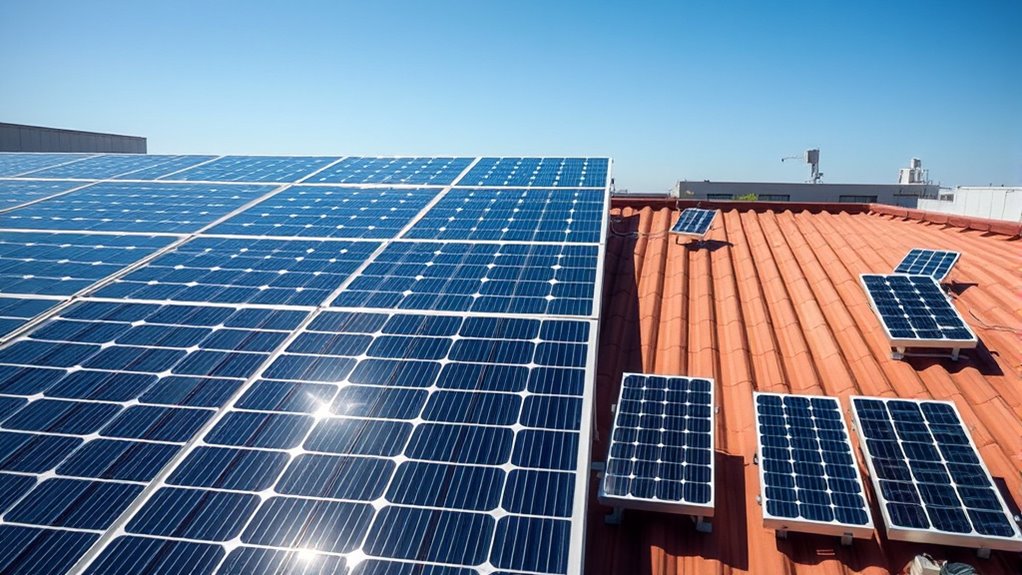
Your solar panel’s size directly influences how much sunlight it can capture, while its efficiency rating shows how well it converts that sunlight into electricity. The bigger the panel and the higher the efficiency, the more power you can expect to generate.
Understanding these two factors helps you choose the right panel for your energy needs. It’s all about finding the best fit for your home or business, so you get the most out of your investment.
Panel Size Impact
When you choose a solar panel, its size plays a vital role in how much electricity it can generate. Larger panels typically have more surface area to capture sunlight, resulting in higher power output.
But size isn’t the only thing to think about. You also need to consider these key points:
- Surface Area – Bigger panels capture more sunlight, increasing electricity production.
- Installation Space – Make sure you have enough room for larger panels to maximize output.
- Weight and Handling – Larger panels are heavier and may require sturdier mounts.
- Cost vs. Output – Bigger panels usually cost more but can provide better value per watt.
Efficiency Ratings Explained
While panel size affects how much sunlight you can capture, efficiency ratings reveal how well a solar panel converts that sunlight into usable electricity. Efficiency is measured as a percentage, showing the portion of sunlight turned into electrical power.
For example, a panel with 20% efficiency converts 20% of incoming solar energy into electricity. Higher efficiency means you get more power from the same surface area.
If you have limited roof space, choosing panels with better efficiency is vital to maximize output. Conversely, if space isn’t an issue, you might opt for lower-efficiency panels that cost less but require more area.
Ultimately, balancing panel size and efficiency helps you design a system that meets your energy needs without wasting space or money. It’s all about finding what works best for your situation.
Why Do Location and Sunlight Hours Matter for Solar Panels?
Because solar panels rely directly on sunlight to produce electricity, the amount of sunlight your location gets plays a huge role in how well they work. If you live somewhere with fewer sunlight hours or lots of cloudy days, your panels won’t generate as much power as in sunnier spots.
Here’s why location and sunlight hours matter:
- Sunlight Intensity: Stronger sunlight means more energy for your panels.
- Day Length: Longer days give your panels more time to make electricity.
- Seasonal Changes: Solar output changes with the seasons, which affects your yearly total.
- Geographical Factors: Things like latitude and altitude can change how much sun your panels get and how well they perform.
Knowing these things helps you set realistic expectations for what your solar panel system can produce.
How to Estimate Your Solar Panel’s Yearly Output
Understanding how location and sunlight hours affect your solar panels sets the stage for estimating their yearly electricity output. To do this, first find the average daily sunlight hours your area receives.
Multiply that by your solar panel’s wattage to get the daily energy production in watt-hours. Then, factor in the panel’s efficiency and any potential losses from shading or dirt, usually about 15-20%.
Finally, multiply this adjusted daily output by 365 to estimate yearly production. For example, a 300-watt panel in an area with 5 sunlight hours daily would generate roughly 300 x 5 = 1,500 watt-hours per day.
After efficiency losses, expect about 1,200 watt-hours daily, or around 438 kilowatt-hours yearly. This method gives you a practical estimate of your solar panel’s annual electricity generation.
How Solar Panels Reduce Your Electricity Bills and Carbon Footprint
If you install solar panels, you’ll see a noticeable drop in your electricity bills by generating your own power instead of relying solely on the grid. This means you pay less for energy and reduce your dependence on fossil fuels.
Plus, solar energy is clean, so it lowers your carbon footprint. Here’s how solar panels help you save money and the planet:
- Cut monthly electricity costs by producing free power from sunlight.
- Reduce greenhouse gas emissions by using renewable energy.
- Increase your home’s energy independence and resilience.
- Potentially earn credits or incentives through net metering programs.
Frequently Asked Questions
How Long Do Solar Panels Typically Last?
Solar panels typically last around 25 to 30 years. You’ll notice a gradual efficiency drop over time, but that’s completely normal.
They’ll keep producing electricity well beyond that timeframe if you maintain them properly. So, taking care of them is definitely worth it!
What Maintenance Do Solar Panels Require?
Think of your solar panels like your car’s windshield—they need occasional cleaning and inspection. You’ll want to remove dirt, check for damage, and make certain connections are tight.
Usually, just a quick wash twice a year keeps them efficient. It’s pretty simple but really makes a difference. Keeping them clean helps catch any issues early too!
Can Solar Panels Work During Cloudy Days?
Yes, your solar panels can work on cloudy days, but they’ll produce less electricity since they rely on sunlight.
You’ll still get some energy, just not as much as on bright, sunny days.
So, even when it’s overcast, your panels are doing their job, just at a lower level.
It’s good to remember that solar panels don’t need direct sunlight to generate power—they can use diffused light too.
Are Solar Panels Affected by Extreme Weather?
Yes, solar panels can lose up to 25% efficiency during extreme heat. You’ll want to make certain they’re durable and well-installed because hail, snow, and strong winds can damage them.
This can affect their performance and lifespan considerably. So, it’s really important to choose quality panels and get them professionally installed.
How Much Do Solar Panels Cost to Install?
You’ll typically pay between $15,000 and $25,000 to install solar panels, depending on system size and location.
Incentives and tax credits can lower costs, so be sure to check local programs before you decide. It’s always worth exploring what’s available in your area!
Conclusion
By harnessing the sun’s powerful embrace, your solar panels become a steady river of clean energy, flowing into your home and cutting your electricity bills. Remember, size, efficiency, and location are your guiding stars, shaping how much power you capture.
Each ray you catch not only lights your world but also helps heal the planet. So, let your solar journey shine bright, turning sunlight into savings and hope for a greener tomorrow.
When it comes to how much electricity a solar panel generates, factors like panel size, efficiency ratings, and your geographic location play a big role. The more sunlight your panels soak up, the more clean energy you produce, reducing your reliance on traditional power sources.
In the end, solar panels don’t just save you money—they contribute to a sustainable future. By choosing solar, you’re making a smart investment in clean electricity that benefits both your home and the environment. Let the power of the sun brighten your life and lower your electricity bills!